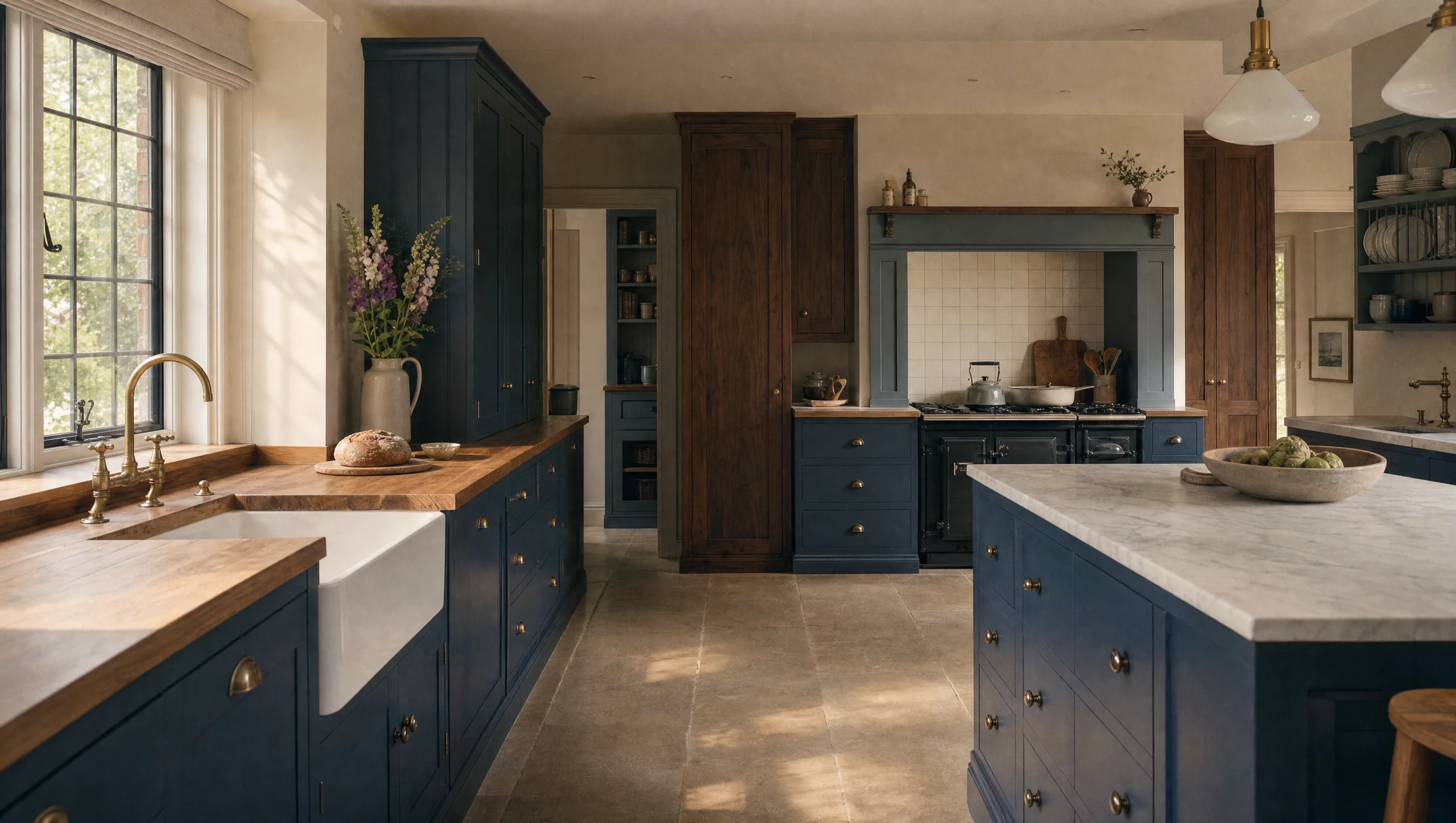
Our painted in-frame kitchen in colour, with oak left bare where it earns it. Paint and timber in the same room, and two worktop materials rather than one.
What The Norfolk is: a painted in-frame kitchen in colour
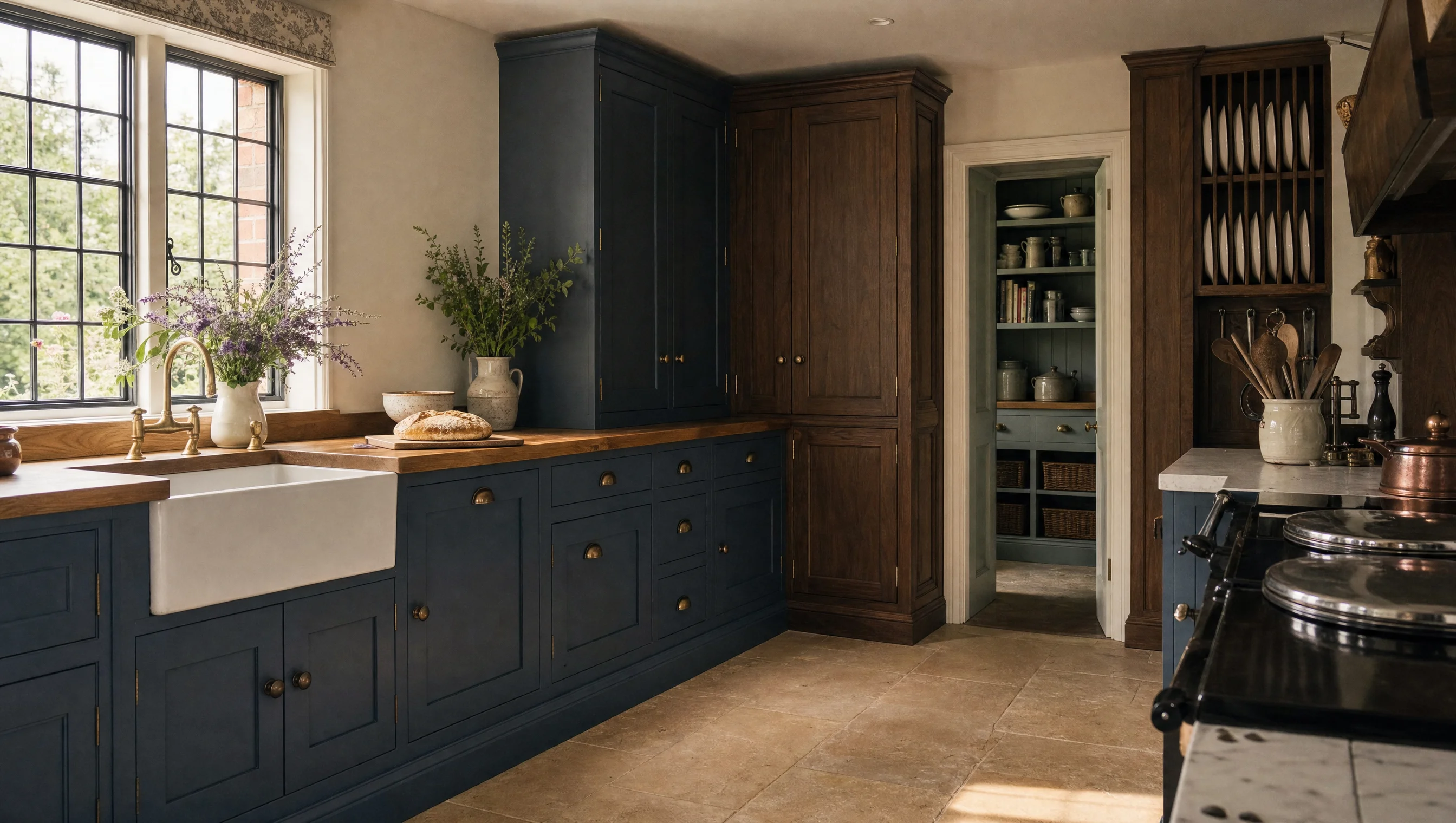
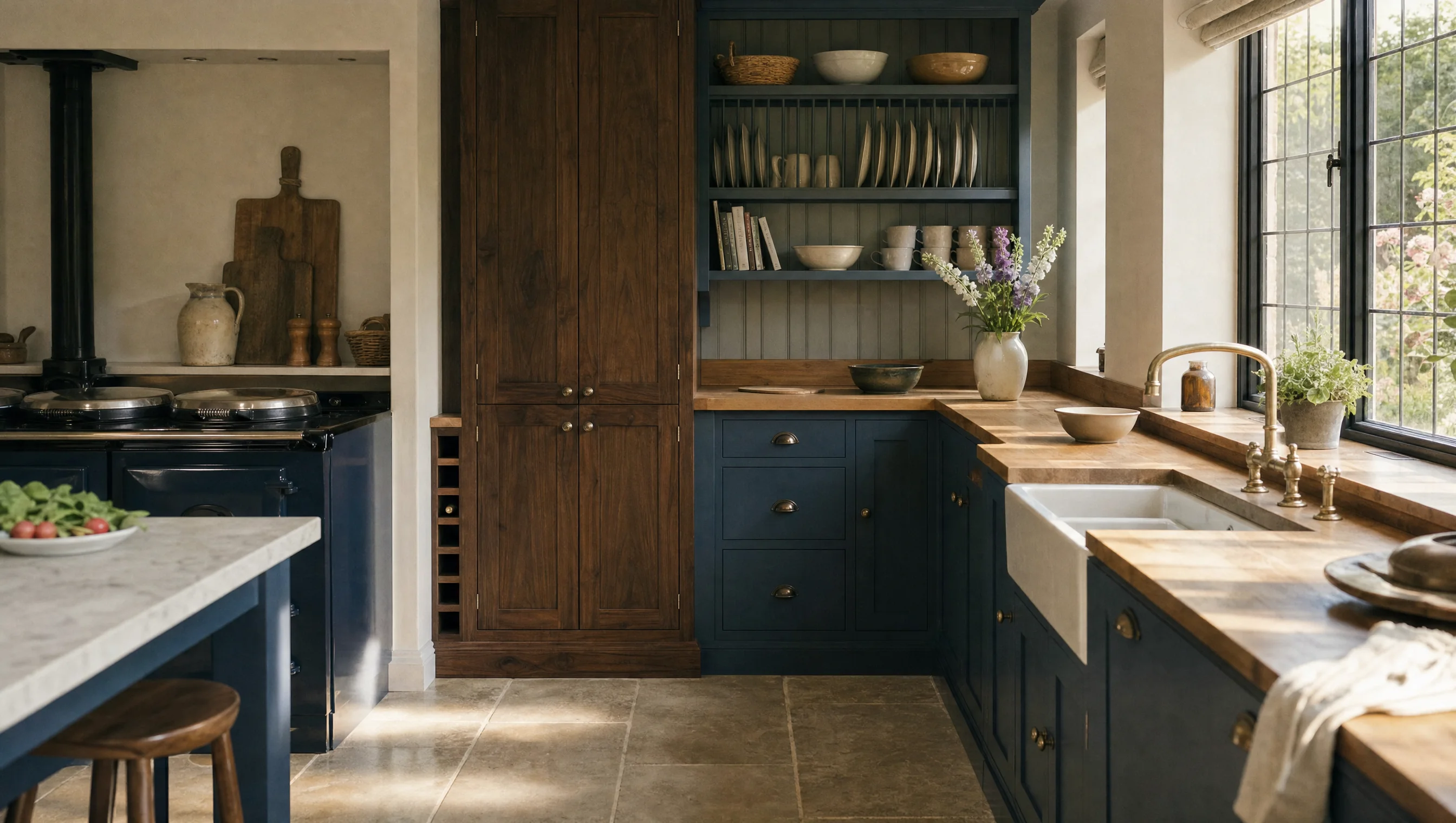
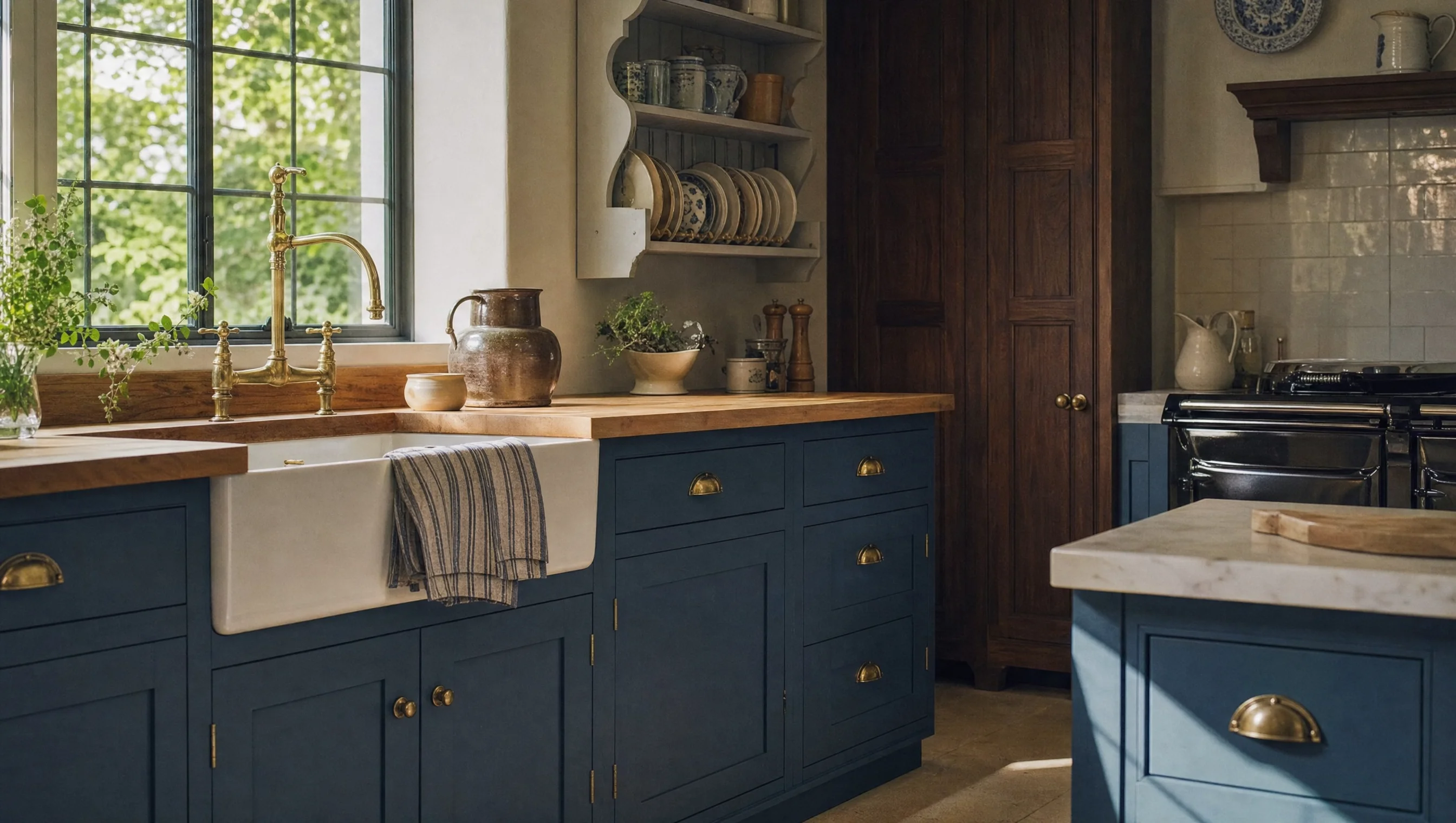
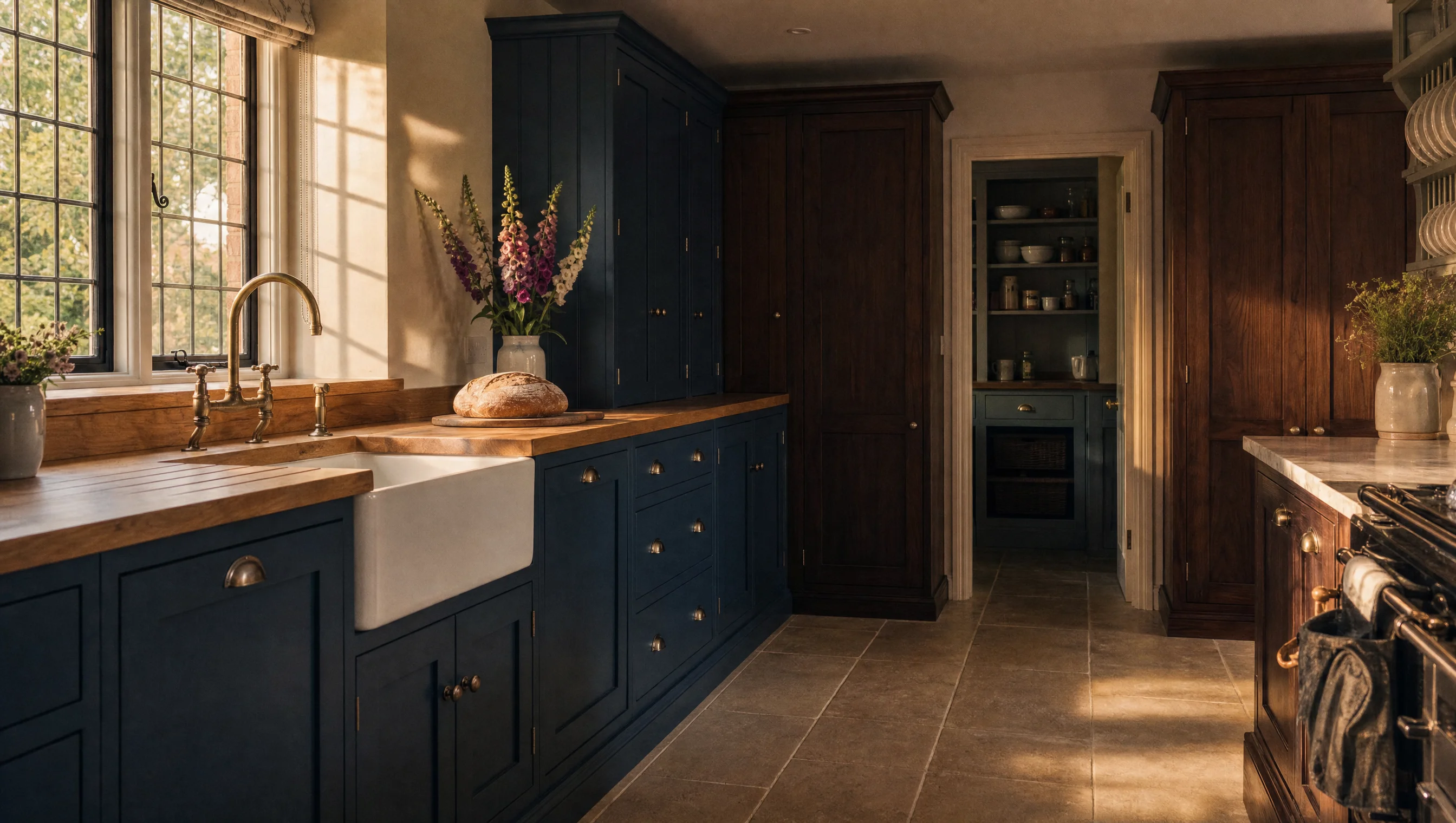
The Norfolk is our painted in-frame kitchen where the colour is the point. A flat panel and a plain rail, the same construction as The Suffolk, but painted in a strong colour and set against oak that is left unpainted — the larder, the worktops, sometimes a run of open shelving.
It is the range for a room that wants warmth without ornament. There is no carving on this door and no moulding beyond a simple bead. What does the work is the contrast: painted cabinetry, bare oak, stone, and brass left to dull.
How it is built
In-frame, as all our painted kitchens are. The door sits within a solid timber face frame rather than lapped over the front of a box, with a 3mm reveal drawn before anything is machined. Every commission is drawn twice — once in CAD and again at full size as a rod. Carcasses are high-grade birch ply with solid backs. Drawer boxes are dovetailed. Runners and hinges are Blum and Häfele.
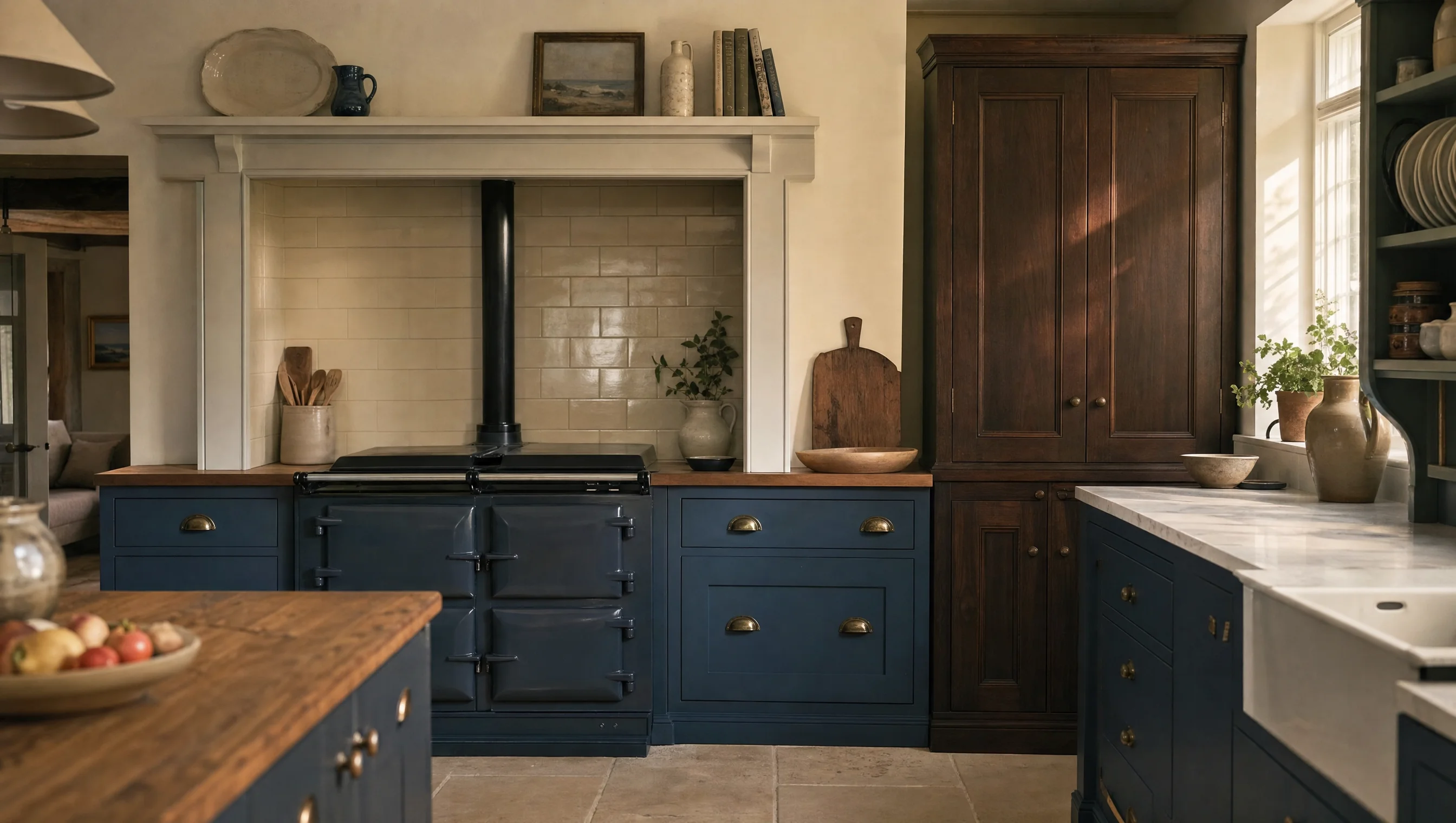
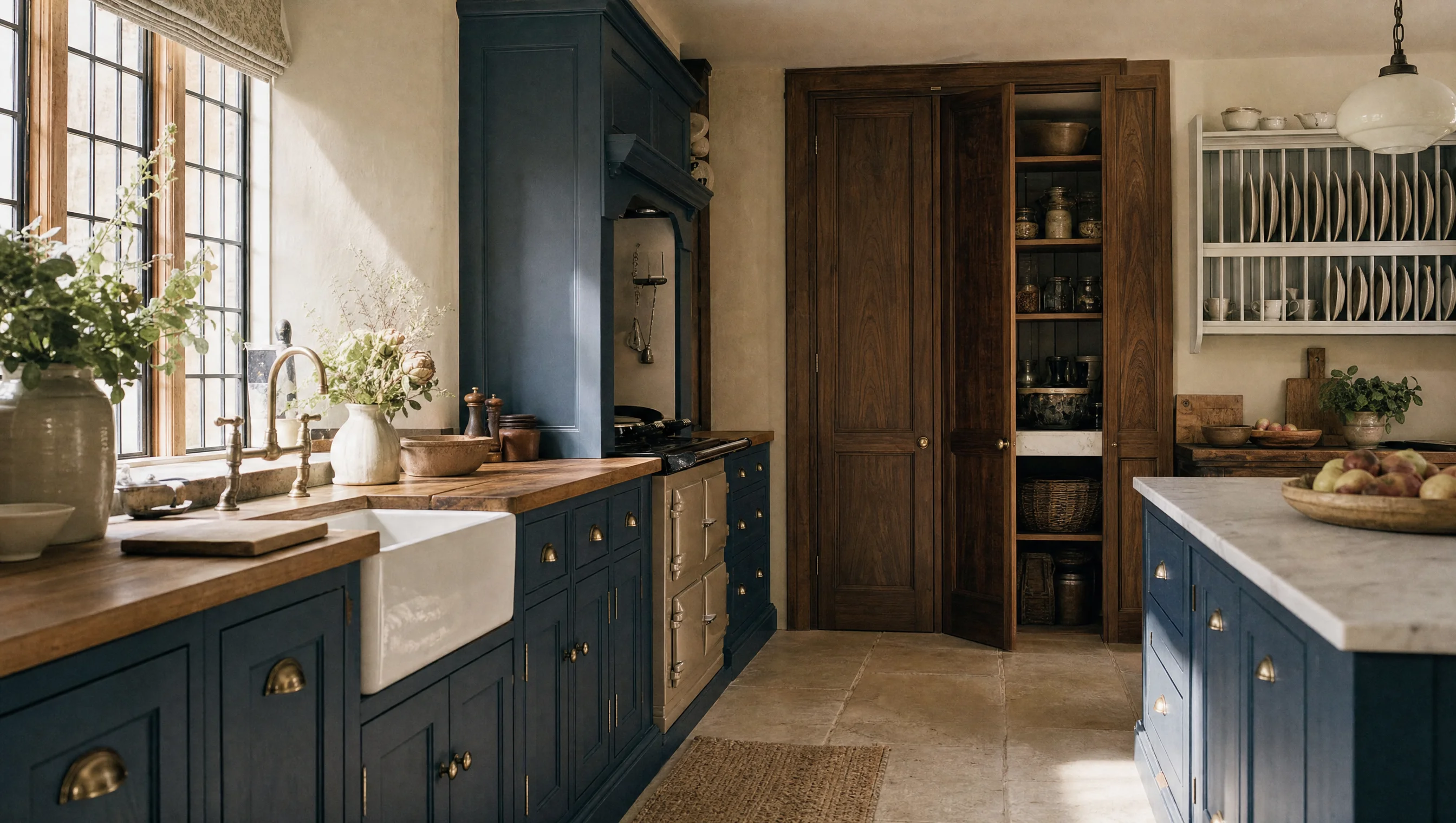
The larder is built as a separate piece, in oak, and stands within the run rather than matching it. That is deliberate: it reads as furniture that was already in the room.
Timber and paint
Doors and frames are tulipwood or maple. Both take paint without telegraphing grain and both stay still. Paint is Little Greene, Farrow & Ball, our own mixes, or a RAL or NCS reference matched to an architect’s schedule, applied here by our own polisher rather than sent out.
The unpainted work is oak, selected for grain and colour across the whole room so the larder, the worktops and any open shelving read as one timber rather than three.
Hardware
Aged brass, mostly: cup pulls on the drawers, knobs on the doors, a brass tap over a fireclay sink. Unlacquered brass darkens over a few years. That is the reason to choose it, but it should be a decision rather than a surprise.
Worktops
Two materials, deliberately. Oiled oak on the working runs — thick, warm and repairable — and stone on the island, usually a marble or a quartzite where the pattern earns the money. Mixed runs are normal in this range. The joins and the overhangs are detailed on the drawing rather than decided on site.
Where it belongs
Rooms with some height and some light: rectories, farmhouses with decent windows, barn conversions where the room is generous. Strong colour needs air around it. Put the same kitchen in a low room with one small window and it closes in.
What The Norfolk is not good for
Two things. If you want a kitchen that recedes into the room, this is the wrong one. It is a coloured kitchen and it will always be the first thing you see. The Suffolk does that job better.
And if you want everything to match, the mixed timbers and the two worktop materials will read as inconsistent to you rather than deliberate. That is a genuine preference and worth knowing about yourself before you commission a room built on contrast. If it is ornament you are after rather than colour, The Essex is the one that carries it.
Specification
| Door style | In-frame flat panel, plain stile and rail. No applied moulding, no carving. |
|---|---|
| Frame | Solid timber face frame, doors set within it flush. 3mm reveals, drawn before manufacture. |
| Carcass | High-grade birch ply with solid backs. No MDF, no particleboard. |
| Drawer box | Dovetailed solid timber on Blum runners. |
| Timbers | Tulipwood or maple to take paint. Oak for the larder, worktops and open shelving. |
| Finish | Hand-painted in our own paint shop — sprayed, brushed, or sprayed and then brushed on the frames. |
| Hardware | Aged and unlacquered brass. Cup pulls, knobs, Samuel Heath where it suits the room. |
| Worktops | Oiled oak to the runs, stone to the island. Mixed materials are normal in this range. |
Questions
Is this just The Suffolk in a colour?
No, though the door is close. The Suffolk is a single quiet finish across the room and nothing is left bare. The Norfolk is built around contrast — painted cabinetry against unpainted oak, and two worktop materials in one room. Those are drawing decisions, not paint decisions, and they change how the room is planned.
Will the paint chip?
Yes, eventually, at the handle and at the sink, as any painted door does in a working kitchen. Strong colour shows a chip more than an off-white does. It touches in, we leave you the paint, and we come back inside the first year. If you want a surface that never asks anything of you, take The Scandi and have it oiled.
Why oak on the runs and stone on the island?
Because they do different jobs. Oak is warm, quiet under the hands and repairable with a scraper and oil. Stone takes heat and water at the island where people gather and where the pattern is worth looking at. You can have one material throughout if you would rather, and plenty do.
Can I have it in an off-white?
You can, and then you are close to The Suffolk with an oak larder, which is a good kitchen. But the range is drawn around colour. If the colour goes, ask us whether The Suffolk is the more honest starting point for what you actually want.
Does the brass have to be unlacquered?
No. Lacquered brass keeps its colour and looks the same in ten years. Unlacquered darkens unevenly where hands go, which is the point of it for most people who choose it. We will show you both, aged and new, before you decide.
What does it cost?
The Norfolk sits alongside our other painted in-frame ranges. What moves the number is the length of frame more than anything else, then the worktop, the ironmongery, and how much of the rest of the house we are making at the same time. You get a fixed quotation before any timber is cut.
Can I see one?
Come to the workshop at Mickfield. We will show you doors, paint samples finished as your kitchen would be finished, and the drawings for rooms we have made. Visits are by appointment.
Building in Norfolk itself? We work across the county regularly — barns, rectories and country houses — and any of the seven ranges can be made for a house there. See bespoke kitchens in Norfolk.
Our clients’ kitchens are private, and most ask that they are not photographed or published. The images and walkthrough films here are visualisations rather than photographs of a client’s house, built from our own workshop drawings and our own photographs of the work on site and finished with AI. None of it is stock imagery and none of it is somebody else’s work. If you would like to see drawings, samples and references for completed work, we will show you in person — visits to the Mickfield workshop are by appointment.
From the journal
Notes from the workshop on drawings, joinery, pantries and the practical side of commissioning a kitchen.
- For the architect: what we need, and when
- Ironmongery, honestly: what brass, bronze, iron and the rest look like after ten years
- Oak Moves. Here Is How We Build for It.
- Dovetails, dominos and dowels: what actually holds a drawer together
- The larder, the pantry, and why they are not the same room
- Two Surveys, Not One
- Pantry or scullery: which room do you need?
- What kitchen drawings should show
- What separates a handmade kitchen from a fitted one
- In-frame explained
- What a bespoke kitchen costs in 2026
- Choosing timber for a painted kitchen
- The scullery is back
- Designing a kitchen island that actually works
- Hand-painted or sprayed
- Georgian proportion in a modern kitchen
- Worktops: stone, timber, composite
- Fitting a kitchen into a listed building
- A day in the workshop at Mickfield
- From brief to installation
Start a conversation
Tell us about the room, the house and roughly when you would like to be cooking in it. We will tell you honestly whether we are the right people for it.
Make an enquiry