
How a commission works
Seven stages, from the first telephone call to the adjustment visit six months after your kitchen is fitted.
Before anything is drawn
Most commissions begin with a telephone call. We ask what the room is, what is wrong with it, when you want to be cooking in it, and roughly what you have set aside. If the brief and the budget do not meet, we say so on that call rather than three meetings later.
Our kitchens start at £35,000. Most finish between £65,000 and £120,000. That conversation takes about twenty minutes and costs nothing.
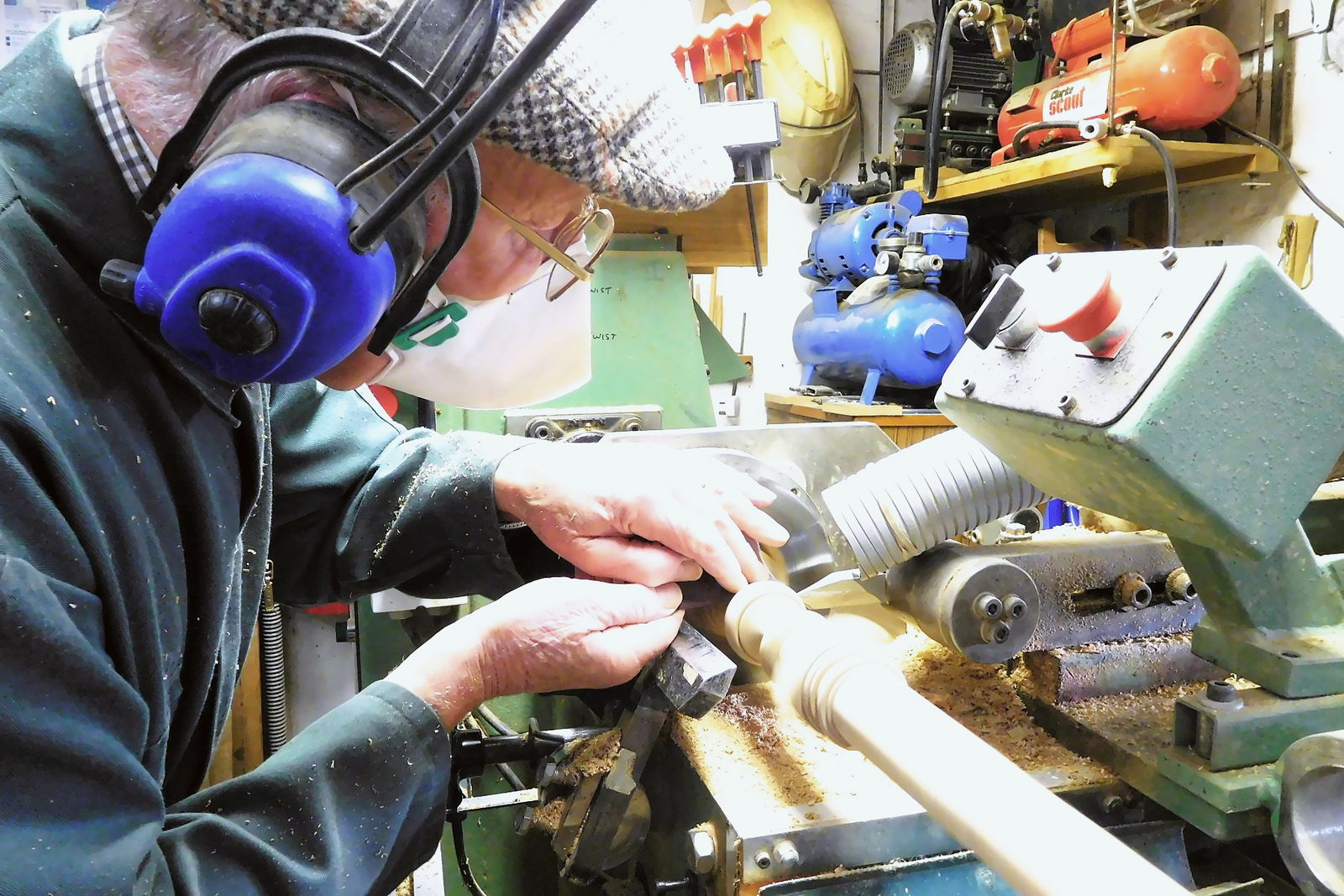
We are a joinery house that makes kitchens. The same benches make our windows, staircases, panelling, doors, libraries, gun rooms and yacht joinery, and we hold Grade I and Grade II* listed experience. If your kitchen has to meet the rest of the house, say so on that first call.
The seven stages
Every commission runs the same way, whether it is a scullery in a Suffolk farmhouse or a full joinery programme in a Grade II* house. The table below is the whole of it. Nothing happens off the end of it.
Dates are set at stage four and put in writing. We book a fitting slot then, not before.
Stages one and two cost nothing. Stage three costs £500 and comes back to you. Nothing else is payable until you have seen drawings and a fixed price with your name on it.
The design fee
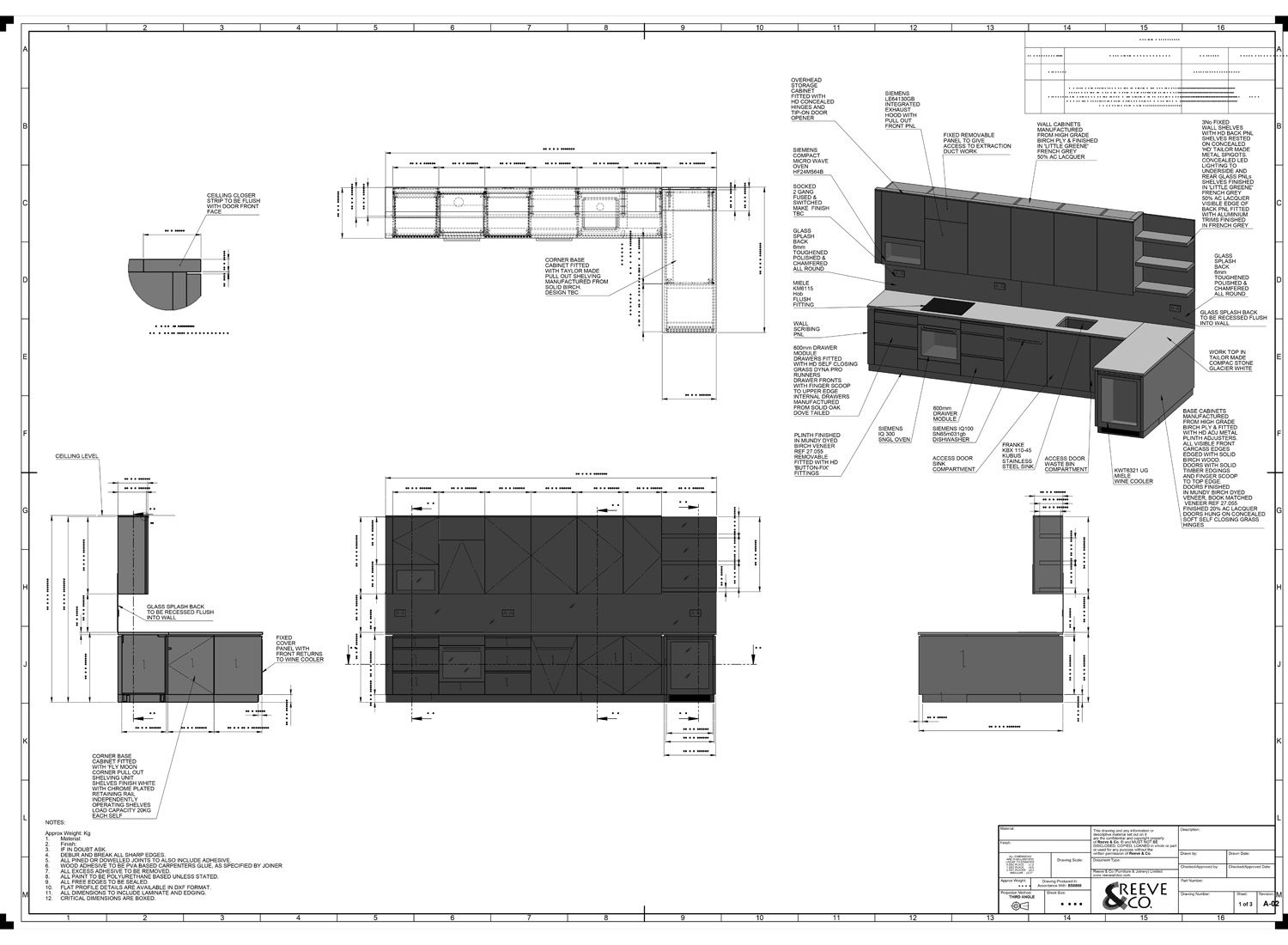
£500, payable when we begin drawing. It pays for the measured survey, a plan and full elevations, one rendered visual, timber and paint samples finished as specified, and an itemised quotation.
It is credited in full against any commission you place. Not part of it. All of it. If you decide against us, you owe nothing further and the drawings remain ours.
The fixed quote
We do not cut timber against an estimate. The quotation you sign is the price you pay, fixed against the drawings, the specification and the hardware schedule attached to it.
Stone is the one exception. Worktops are templated after the cabinets are standing, and supplied at cost plus fitting. We carry an allowance in the quotation and show you the merchant’s invoice against it.
The quotation is itemised line by line, cabinet by cabinet, with the hardware schedule and appliance allowances shown separately. You can see what each piece costs, and you can take one out.
Changes
Change whatever you like before the cutting list is released. It costs nothing and we would rather you did it then.
After that the boards are machined and the joints are cut, so a change means new material and new labour. We will price it and tell you what it does to the programme before we touch anything.
Two rounds of revision are included in the design fee, before the order is placed. Most clients use one and a half. That is the moment to move an island or lose a wall cupboard.
One project manager
The person who takes your brief is the person who hands the kitchen over. Oliver Manning runs the design and stays with the job. Paul Sims runs it through the workshop. You are not passed down a chain of account handlers.
Workshop visits are by appointment. We are twelve miles from Ipswich, about thirty from Bury St Edmunds, Cambridge and Colchester, and an hour from London by rail. Most clients come once during machining and once during finishing.
Payment runs in three after the design fee: 40 per cent on order, 50 per cent on delivery, and the balance when fitting is complete. Nothing is due on the final stage until your kitchen is in and you have looked at it.
After handover
We come back at six months, once the house has been through a heating season, and adjust every door and drawer. Half a day, at our cost, whether anything has moved or not.
The guarantee is ten years on everything we make and install: cabinetmaking, joinery, finishing and installation. Hardware carries its own maker’s guarantee, which we will confirm in writing for the hardware specified on your job.
We keep your drawings, cutting list, paint code and hardware schedule for as long as the company exists, so a single replacement door can be made in ten years to the same profile and the same colour.
| Stage | What happens | Who | How long | What you pay |
|---|---|---|---|---|
| One. First conversation | Telephone or email. Room, brief, timing, budget. We say plainly whether we are the right house for the job. | Torben Reeve or Oliver Manning | Twenty minutes | Nothing |
| Two. Visit and survey | We come to the house. Measure the room, check floors, walls, levels and services, and look at the building itself. | Oliver Manning | Two to three hours, within a fortnight | Nothing |
| Three. Design | Plan, elevations, one rendered visual, timber and paint samples, itemised quotation. Presented in person. | Oliver Manning, with Paul Sims on construction | Three to four weeks | £500, credited in full |
| Four. Revision and order | Two rounds of revision included. Specification frozen. Fixed quotation signed. Fitting slot booked. | Oliver Manning | One to two weeks | 40 per cent deposit |
| Five. Drawing and making | SolidWorks and SketchUp drawings, 1:1 rods set out, machining, assembly, finishing, dry-fit in the workshop. | The bench and the finishing room | Nine to thirteen weeks | 50 per cent on delivery |
| Six. Delivery and installation | Blanket-wrapped from Mickfield. Fitted by the people who built it. Stone templated, then fitted. | Steve Bell, Jason Price, Gary Blake | Three to seven days on site | Nothing |
| Seven. Handover and six-month visit | Walk round, care notes, spare paint, keys. We return at six months to adjust doors and drawers. | Oliver Manning | Half a day, then half a day at six months | 20 per cent on handover |
Start a conversation
Tell us about the room, the house and roughly when you would like to be cooking in it. We will tell you honestly whether we are the right people for it.
Make an enquiry