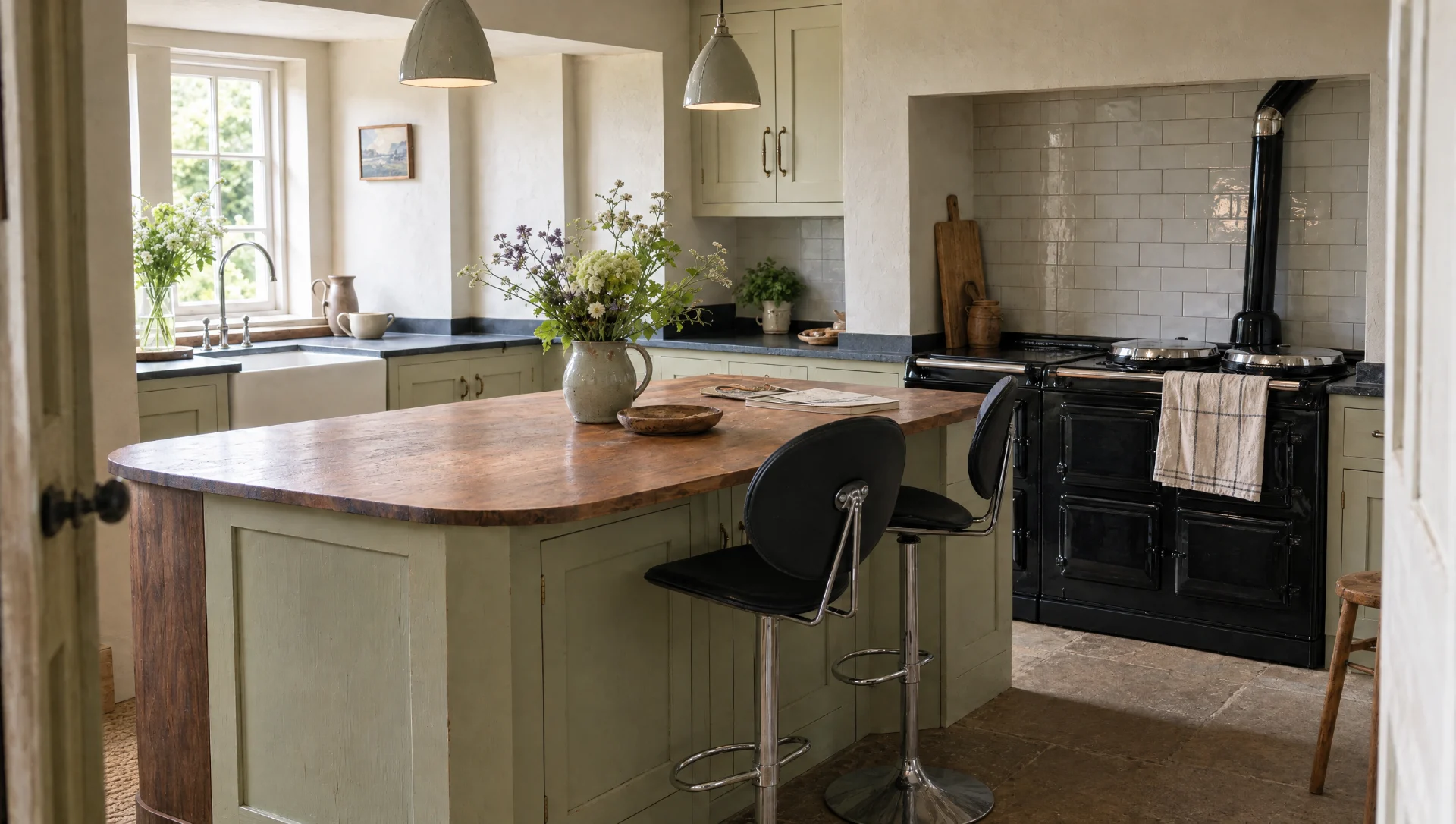
What The Suffolk is: a hand-painted in-frame kitchen
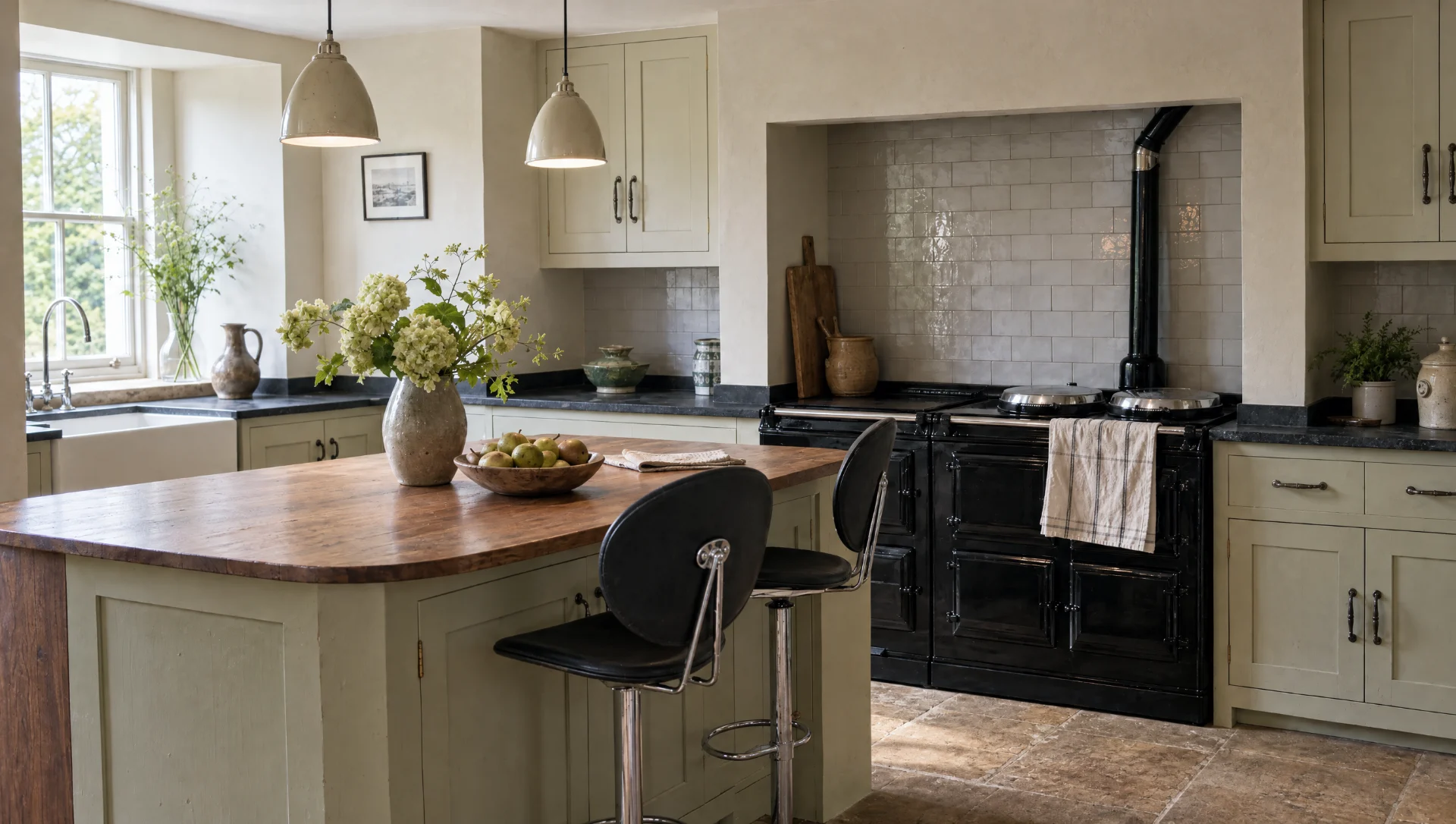
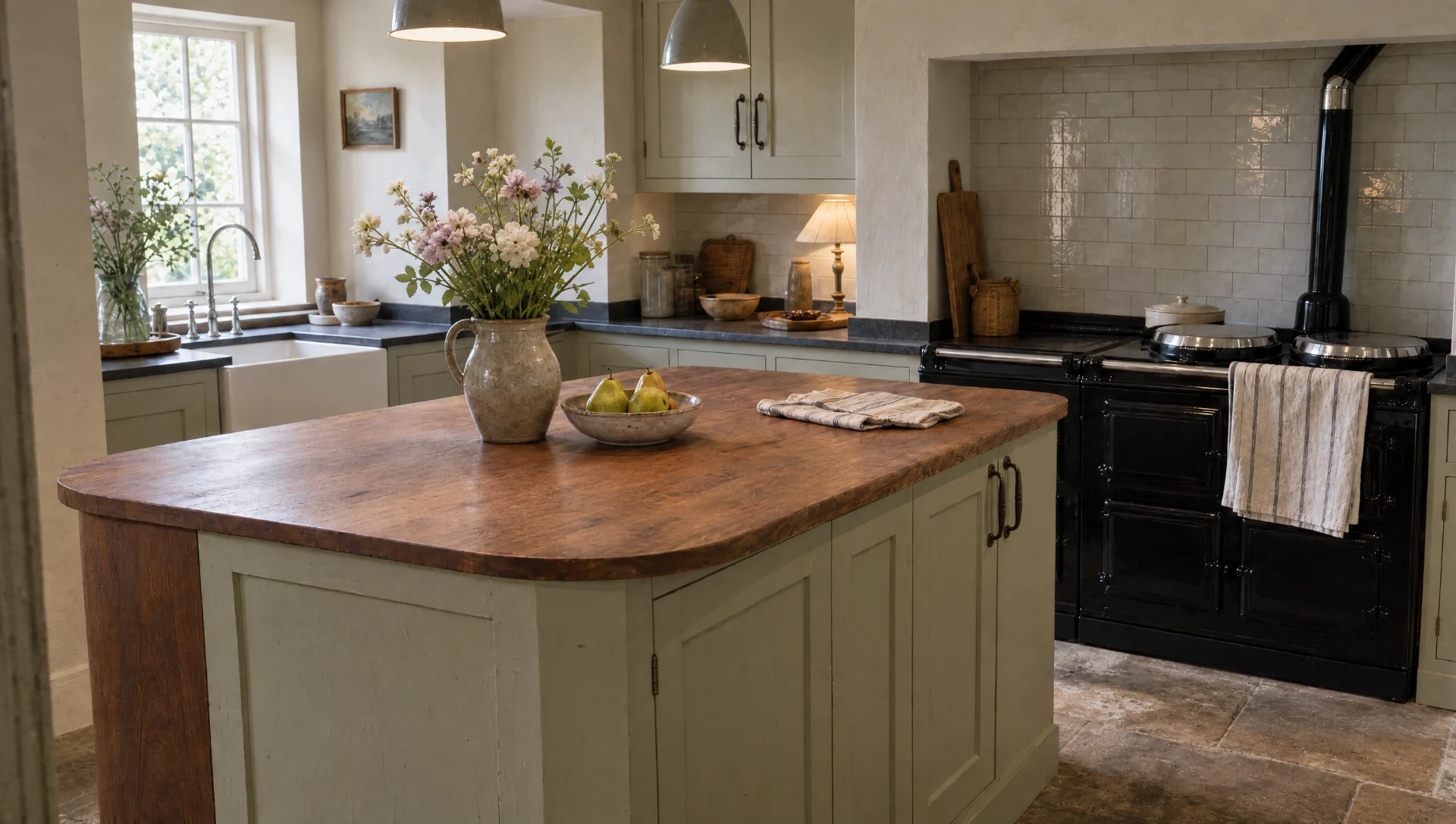
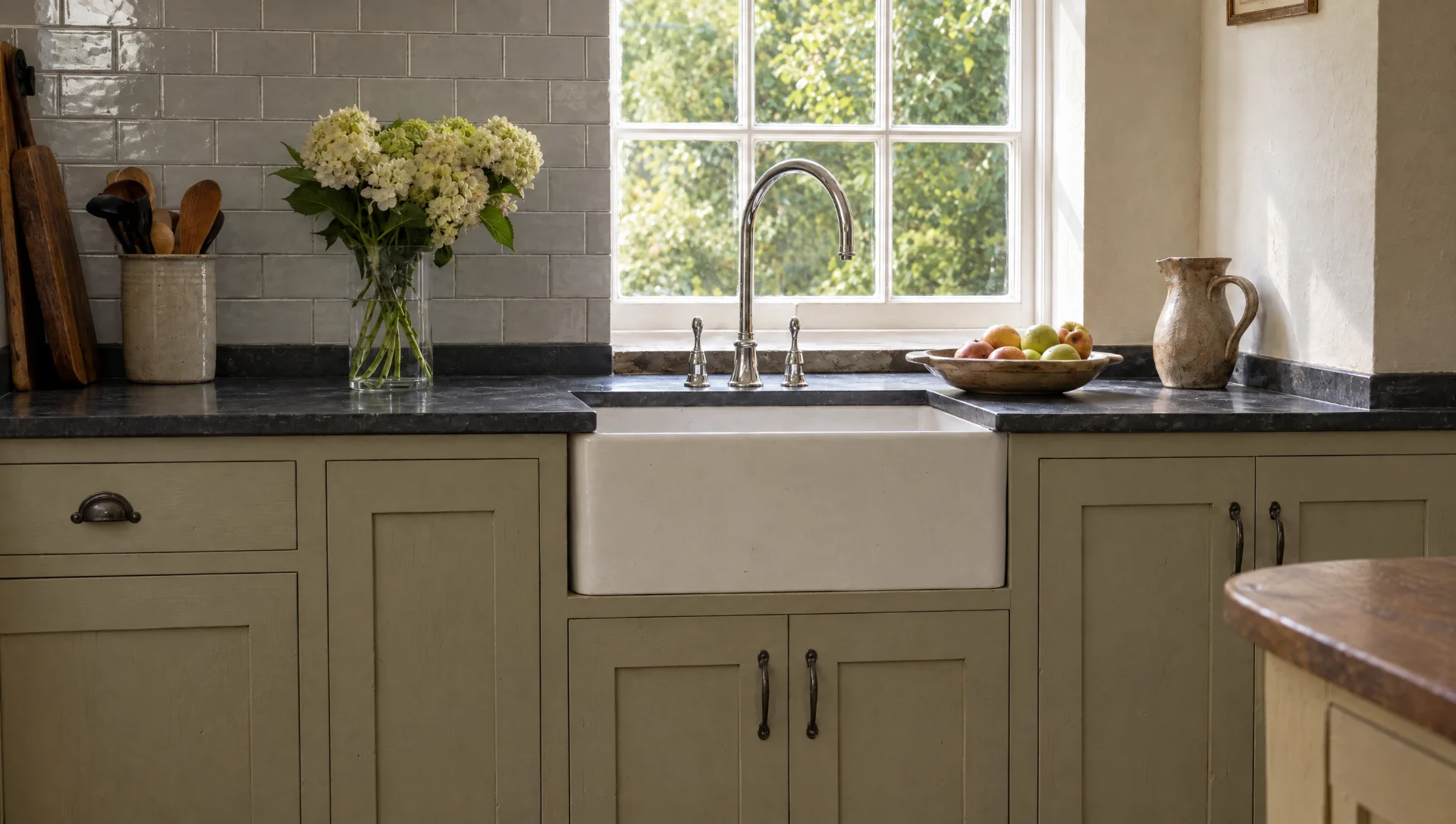
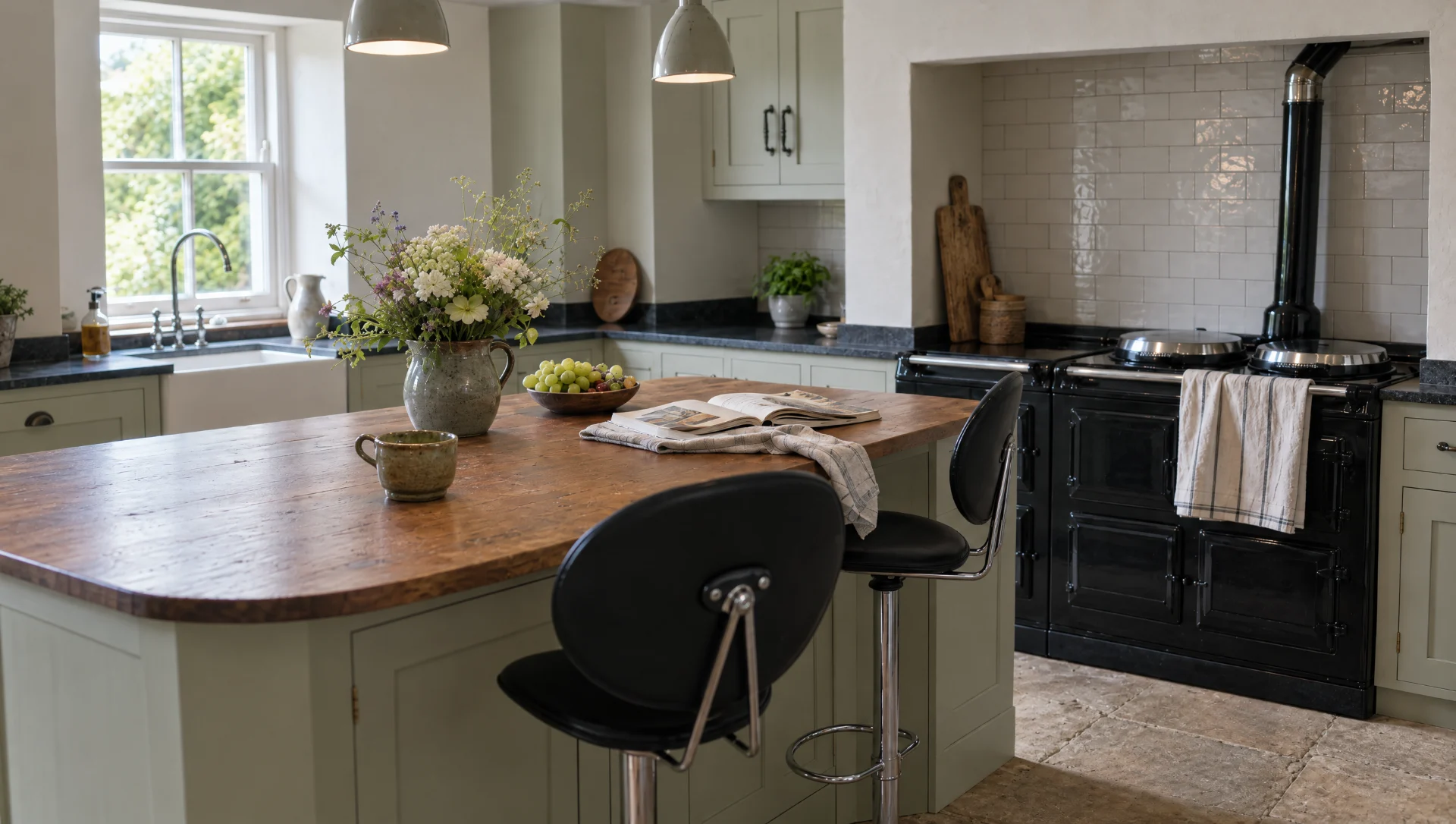
The Suffolk is our hand-painted in-frame kitchen, shaker in form. A flat centre panel, a plain stile and rail, a solid timber face frame, and paint. There is no moulding on the door, no carving, no astragal glazing and no applied ornament anywhere in the range. It is the door most people mean when they ask for a painted English kitchen, and it is the door we make most. What it is not is a Shaker front bought in and painted. The frames are cut, jointed and fitted here, and the reveal around every door is set on the drawing before anything is machined.
How it is built
In-frame means the door sits within the face frame, flush with it, rather than lapped over the front of the box. It is slower. It also punishes error, because a 3mm reveal shows everything. Every hinge line and every reveal is drawn before manufacture in SolidWorks, then again at full size as a 1:1 rod pinned above the bench while the parts are cut. Drawer boxes are dovetailed. Backs are solid. Where we use ply it is high-grade birch, not MDF and not particleboard. Runners and hinges are Blum and Häfele.
Timber and paint
Doors and frames are tulipwood or maple. Both take paint without telegraphing grain and both stay still. Carcasses are birch ply. Paint is Little Greene, Farrow & Ball, our own mixes, or a RAL or NCS reference matched to an architect’s schedule. It is applied here by our own polisher, a trained French polisher: sprayed, hand-brushed, or sprayed and then brushed on the frames. Nothing goes out to a paint shop.
Hardware
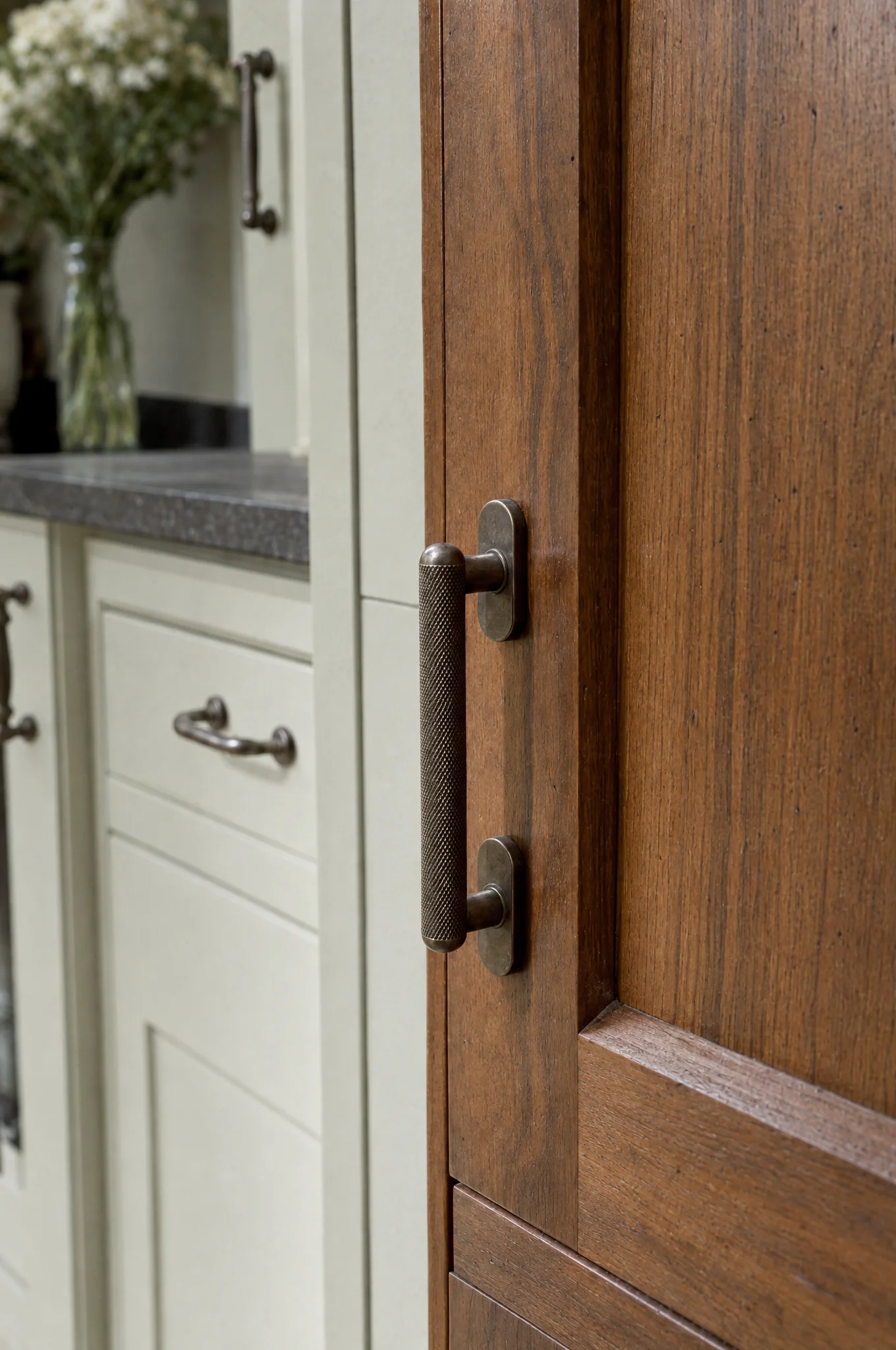
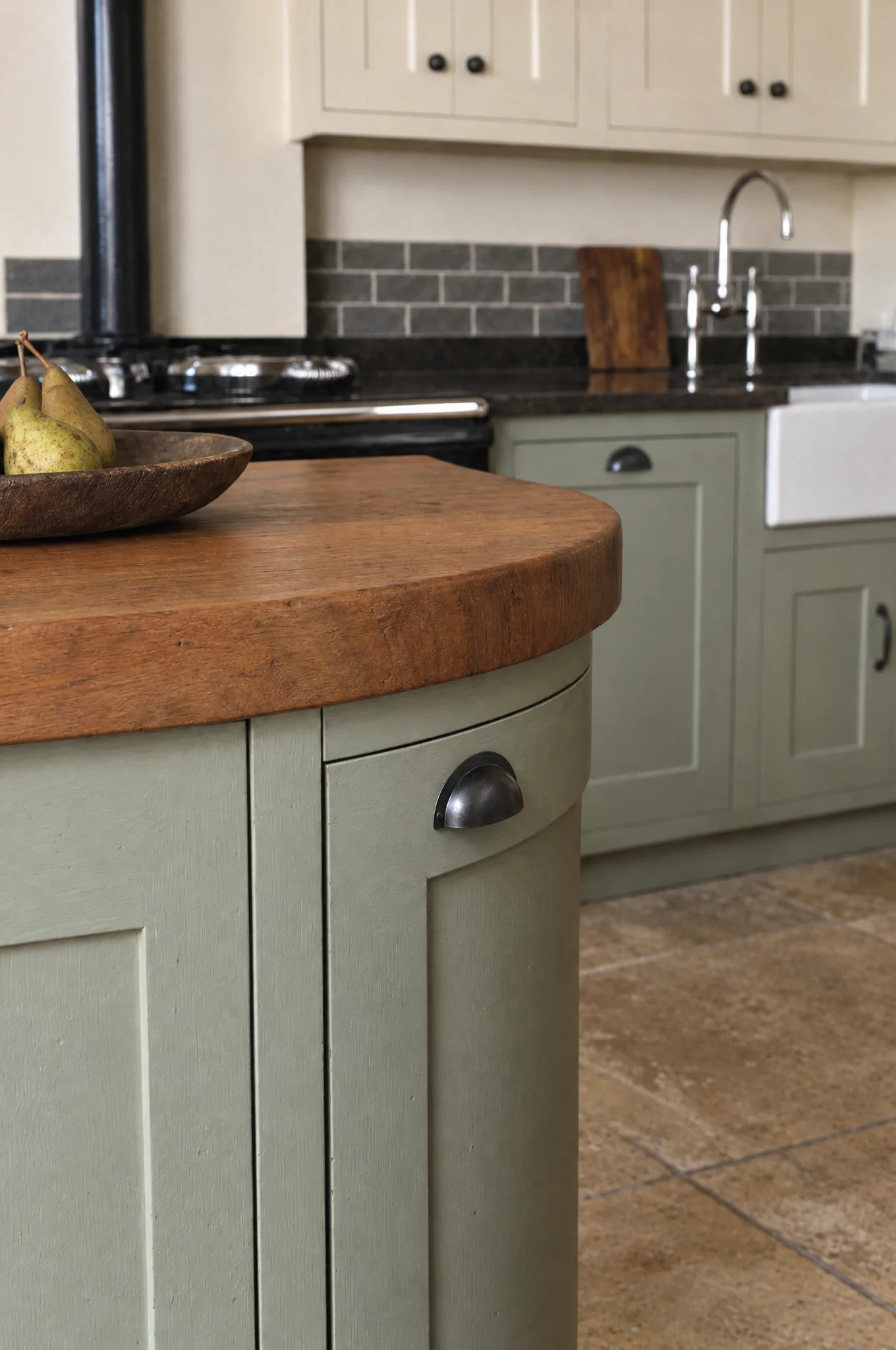
Butt hinges. Cup pulls, bin pulls, knurled T-bars, pewter D-handles, unlacquered brass, aged bronze, black-oxidised steel, ceramic, leather. Samuel Heath where it suits the room. We do not use catalogue hardware packs and we do not put the same handle on every kitchen because it photographs well. Unlacquered brass will darken over a few years. That is the reason to choose it, but it should be a decision rather than a surprise.
Worktops
Honed Carrara, Calacatta, Statuario, Belgian Black, limestone, slate, brushed granite. Silestone, Caesarstone, Dekton and Sensa where a household wants a surface that will not etch. Solid oak, walnut, iroko and end-grain block on an island or a baking run. Mixed runs are normal — stone on the sink run, timber on the table end — and the joins and overhangs are detailed on the drawing rather than decided on site. Our own team templates, transports, fits and seals.
Where it belongs
Rectories, farmhouses, Georgian townhouses, cottages with low ceilings, and new houses that would like to look older than they are. It works in a small room because there is nothing on the door to crowd it, and it works in a long one because the frame gives a run of cupboards a rhythm. Boot rooms, pantries, back kitchens and utilities usually come with it, drawn in the same set and made at the same time.
What The Suffolk is not good for
Two things. If you want a room with ornament — carved corbels, a moulded overmantel above the range, glazing bars — The Suffolk will read as under-dressed, and no amount of colour will fix it. Take The Essex instead. And paint is a maintenance decision. A painted door in a working family kitchen chips at the handle and marks at the sink. Tulipwood moves a little across a heating season and a hairline can open at a panel joint. It touches in, we leave you the paint and we come back inside the first year, but if you want a surface that never asks anything of you, take The Scandi and have it oiled.
And if you want that same plain in-frame door in strong colour rather than a quiet off-white, set against oak that is left unpainted, that is The Norfolk.
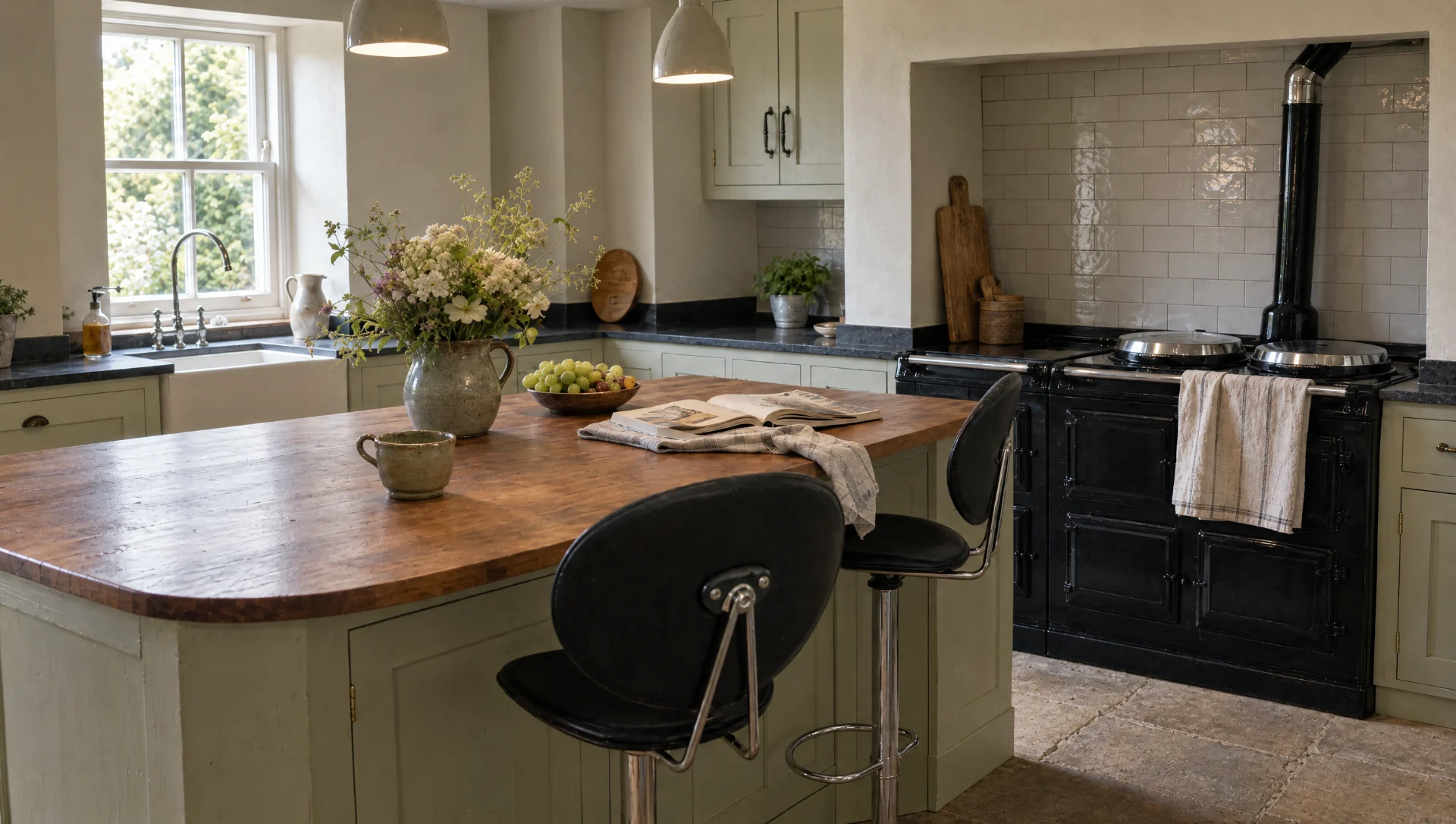
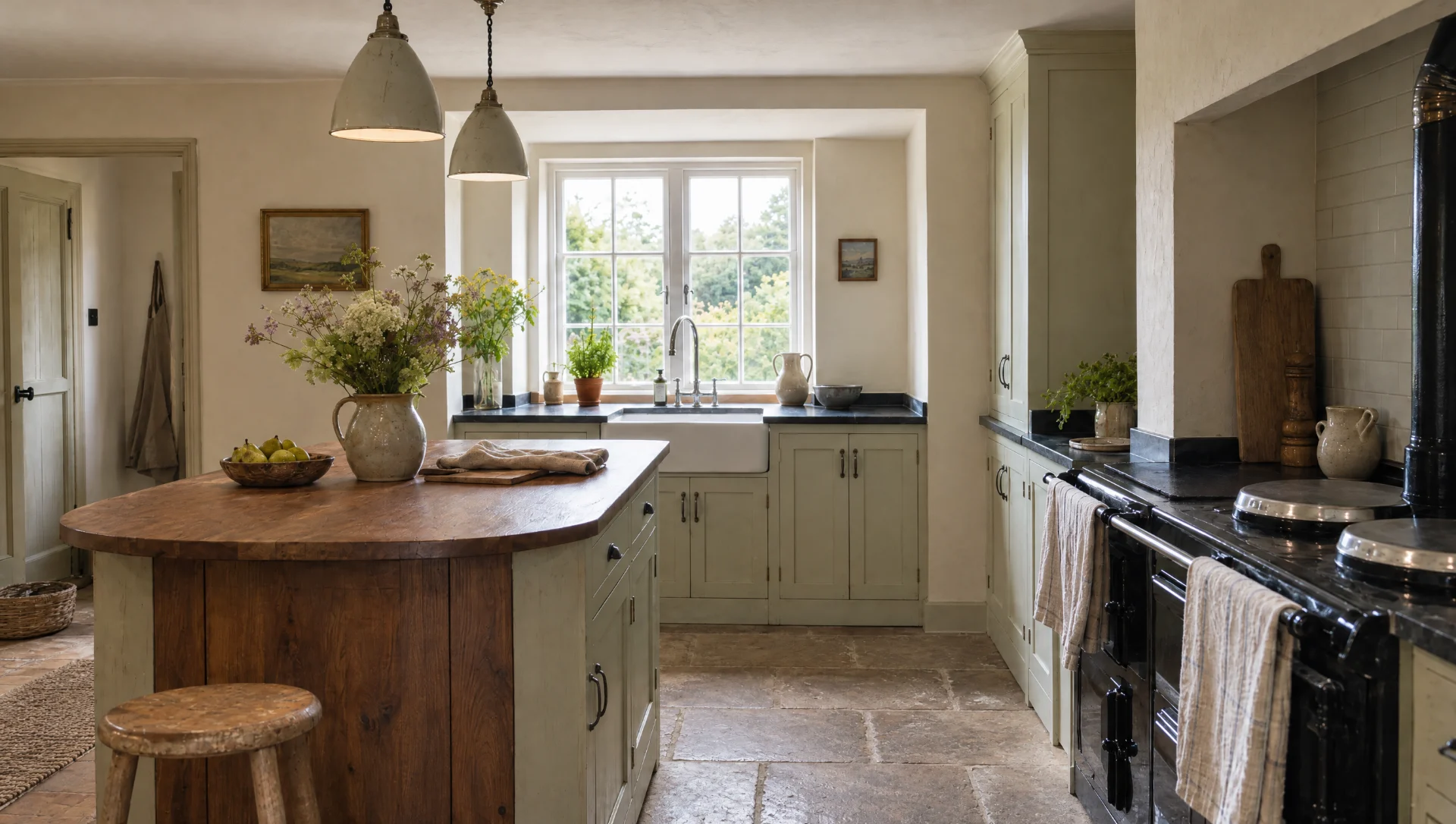
Our clients’ kitchens are private, and most ask that they are not photographed or published. The images and walkthrough films here are visualisations rather than photographs of a client’s house, built from our own workshop drawings and our own photographs of the work on site and finished with AI. None of it is stock imagery and none of it is somebody else’s work. If you would like to see drawings, samples and references for completed work, we will show you in person — visits to the Mickfield workshop are by appointment.
Specification
| Door style | In-frame recessed panel. Flat centre panel, plain stile and rail, no applied moulding. |
|---|---|
| Frame | Solid timber face frame, doors set within it flush. 3mm reveals, drawn before manufacture. |
| Carcass | High-grade birch ply. Solid backs, not stapled hardboard. No MDF, no particleboard. |
| Drawer box | Dovetailed as standard, solid timber, Blum runners, soft close. |
| Timbers | Tulipwood or maple doors and frames. Oak, walnut, cherry or sycamore for interiors and open shelving. |
| Finish | Hand-painted in-house. Little Greene, Farrow & Ball, bespoke mixes, RAL and NCS matching. Sprayed, hand-brushed or both. |
| Hardware | Butt hinges. Cup pulls, bin pulls, knurled T-bars, pewter, unlacquered brass, aged bronze, ceramic. Samuel Heath. Blum and Häfele mechanisms. |
| Worktops | Marble, limestone, slate, granite, Belgian Black; Silestone, Caesarstone, Dekton, Sensa; solid oak, walnut, iroko, end-grain block. Templated and fitted by us. |
| Lead time | 14–20 weeks from brief to installation. Three to seven days on site. |
| From price | From £35,000. Design fee £500, credited in full against the order. |
The name
Named for the county it is made in, and for the first of them — a Suffolk farmhouse where the client wanted a kitchen that looked as though it had always been there.
Questions
Is this the same thing as a Shaker kitchen?
More or less, and we are content for you to call it that. Shaker describes a flat recessed panel in a plain stile and rail, which is what a Suffolk door is. The difference sits behind the door. Most painted Shaker kitchens are overlay, meaning the door lands on the front of the box. Ours sit inside a solid timber face frame, which takes longer to make and is unforgiving to fit, and it is the reason the reveals stay even along a nine-metre run rather than wandering.
Can you match a colour we already have in the house?
Yes. Bring us a door, an offcut of skirting or the old tin and our polisher will match it. We work from Little Greene and Farrow & Ball as standard, mix our own when nothing in a fan deck is right, and match to RAL or NCS where an architect has specified a reference. One thing worth deciding early: if the existing paintwork has faded, tell us whether you want the colour as it was mixed or as it looks now. Those are two different mixes and only one of them will sit properly with the room.
What happens when a door gets chipped?
It gets touched in. We leave a small tin of the finish coat at handover, and we come back once inside the first year to deal with anything that has marked or moved as the house has settled around the kitchen. That visit is included. After that, a chip on a painted door is five minutes with a fine brush. A broken door is a different matter, but we keep the drawings and the paint reference for every kitchen we have made, so a single front can be remade and finished to match.
What does a Suffolk kitchen cost?
From £35,000. What moves the number is the size of the room, the worktop, the hardware and how much of the rest of the house we are making at the same time. The design fee is £500 and it comes off the price in full when you order. You get a fixed quote before any timber is cut. Changes made before manufacture cost nothing, so we would rather you changed your mind at the drawing stage. Changes after machining cost money, and we tell you the figure before we start.
How long does a hand-painted in-frame kitchen take?
Fourteen to twenty weeks from brief to installation, and three to seven days on site. The long part is not the making, it is the drawing and the paint: the rod is set out full size before anything is machined, and brushed coats need time between them that you cannot compress. Stone is templated after the cabinets are in, which adds time at the end. If you are working to a date, tell us early and we will say honestly whether the programme holds.
How is The Suffolk different from The Essex?
The door. The Suffolk is a flat centre panel in a plain stile and rail, with no moulding, no carving and no astragal glazing anywhere in the range. The Essex is the same in-frame construction with a moulded door — ovolo, ogee, bolection, or a profile drawn for the room — and carving, corbels and mantels where the room asks for them. Behind the door they are built the same way. If the house is plain, the Suffolk is usually right. If it has run mouldings and architrave in every room, the Essex will sit better.
What are the carcases and drawers actually made from?
High-grade birch ply, not MDF, with solid backs. Drawer boxes are dovetailed. The face frame is solid timber and the door sits inside it with a 3mm reveal, which is why the frames are cut, jointed and fitted here and the reveal is set on the drawing before anything is machined. Hinges and runners are Blum and Häfele.
Who paints it, and where?
Our own polisher, in the finishing room at Mickfield. He is a trained French polisher. Brushed work is done on trestles here and sprayed work goes through our own spray department. Nothing goes out to a paint shop. Paint is Little Greene, Farrow & Ball, our own mixes, or a RAL or NCS reference where an architect has specified one.
What does the £500 design fee buy?
A measured survey, drawn elevations of every run, a rendered visual, finished timber and paint samples, and an itemised quotation. It is credited in full against the order.
What guarantee comes with a hand-painted in-frame kitchen?
Ten years on our cabinetmaking, joinery and installation. If a joint opens, a frame racks or a carcase fails, we come and put it right. There is a six-month visit to adjust doors and drawers once the house has settled around the kitchen, and we keep parts for life, so a hinge or a runner can be replaced years later without changing the kitchen.
Which worktops suit a hand-painted in-frame kitchen?
Honed marble, Belgian Black, limestone, slate and brushed granite all sit well against painted in-frame work. Where a household wants a surface that will not etch we specify a sintered or engineered stone instead. Solid oak, walnut, iroko and end-grain block work on an island or a baking run. Mixed runs are normal, and the joins and overhangs are detailed on the drawing rather than decided on site.
Will it work in a listed building or a house that is not square?
Yes, and most of what we make goes into houses that are not square. The face frame is what makes it possible: the frame is scribed to the wall and the door hangs inside it, so the reveals stay even even where the wall does not. In a listed building the questions are consent and reversibility rather than construction, and we have written about that at length in the journal.
Can we see a hand-painted in-frame kitchen being made before we commit?
Yes. The workshop at Mickfield is open by appointment, Monday to Friday, and there is usually a kitchen on the benches at every stage — frames being jointed, drawers going together, doors on trestles in the finishing room. It is twelve miles from Ipswich and about an hour and a quarter from London by rail. Most people who come out have already seen photographs; what the visit tells you is how the work is put together and who is putting it together.
Do you fit it yourselves?
Yes. Our own team templates, transports, fits and seals. Three to seven days on site for a kitchen. We do not hand the boxes to a third-party fitter and hope, because the reveals we spend the drawing on are made or lost in the fitting.
Do you work outside Suffolk?
Regularly. Most of our work is in Suffolk, Essex, Norfolk, Cambridgeshire and London, and we install further afield — including abroad, where crating, freight, insurance and documentation are priced inside one contract rather than left to you.
Can you make the rest of the joinery in the house to match?
Yes, and it is often the reason people come to us. Square & True is the kitchen work of Reeve & Co Interiors, a Suffolk joinery house that also makes panelling, libraries, staircases and whole-house fit-outs. The same makers, the same benches and the same paint, so a boot room or a study reads as part of the house rather than an addition to it.
Is there a minimum size for a Suffolk kitchen?
Not a size — a floor. Our kitchens start at £35,000, and below that we cannot make the thing described on this page. Small rooms suit The Suffolk particularly well: there is nothing on the door to crowd a low ceiling, and a plain frame gives a short run the same rhythm it gives a long one.
Start a conversation
Tell us about the room, the house and roughly when you would like to be cooking in it. We will tell you honestly whether we are the right people for it.
Make an enquiry