
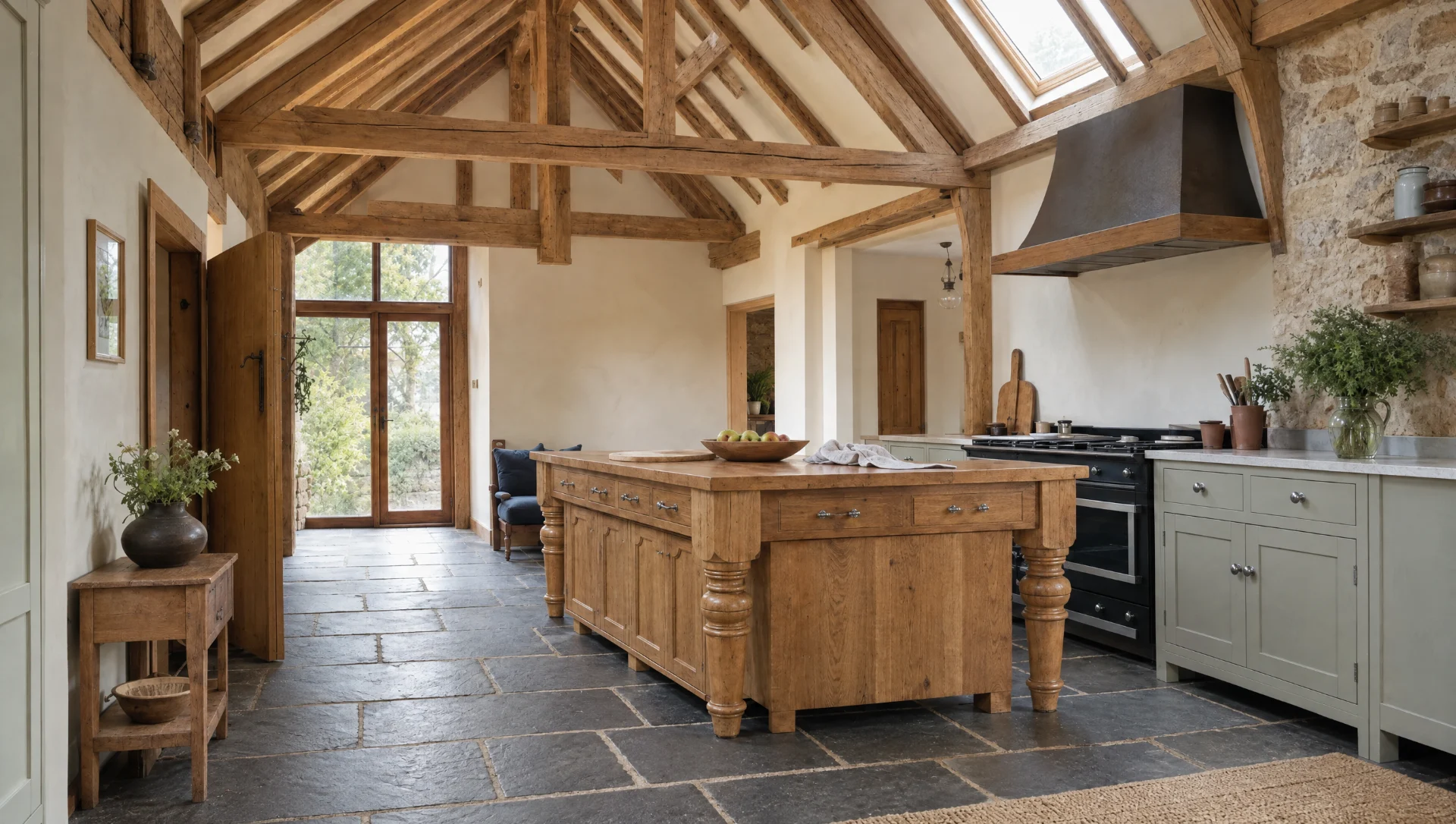
What freestanding kitchen furniture is
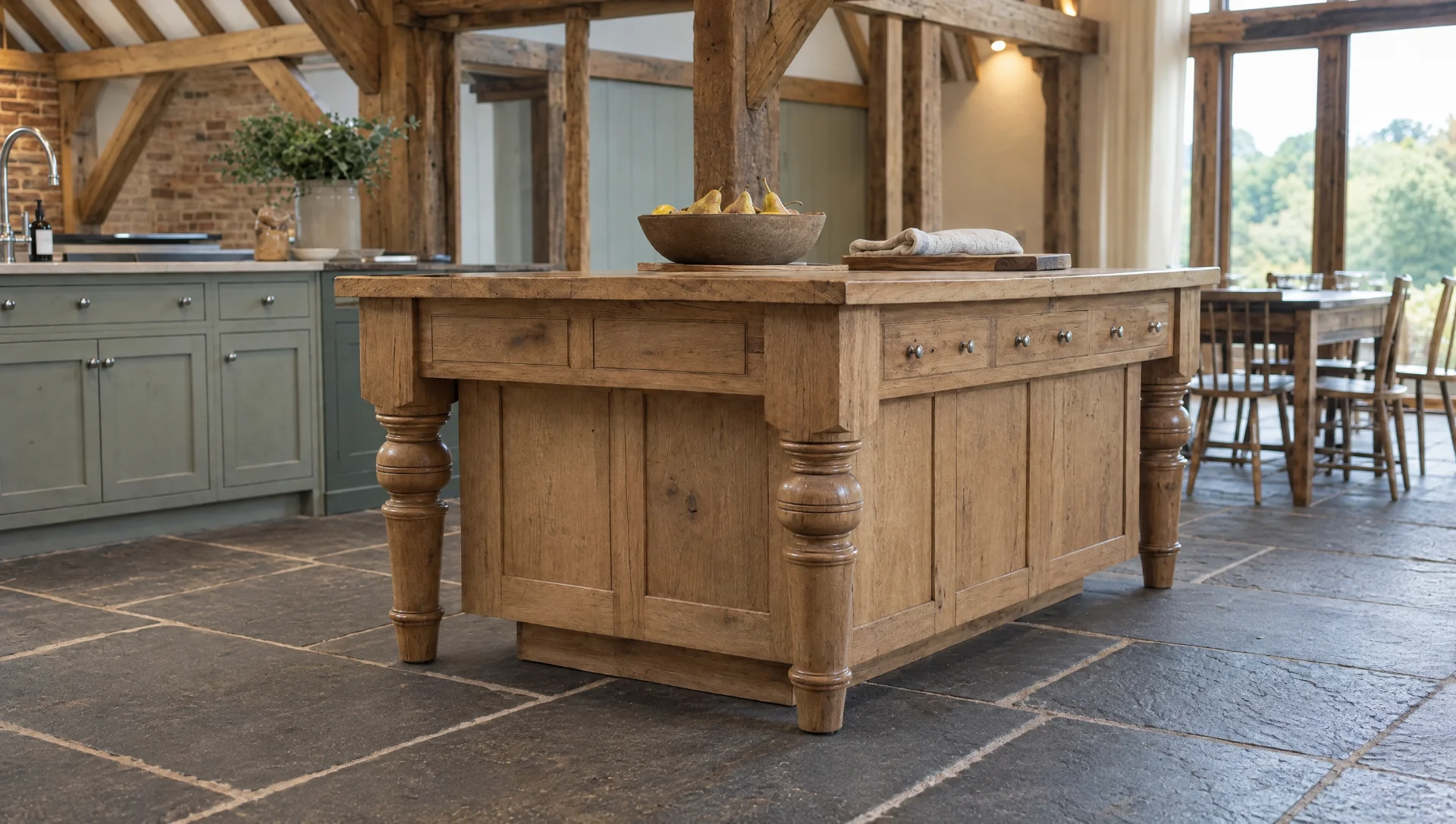
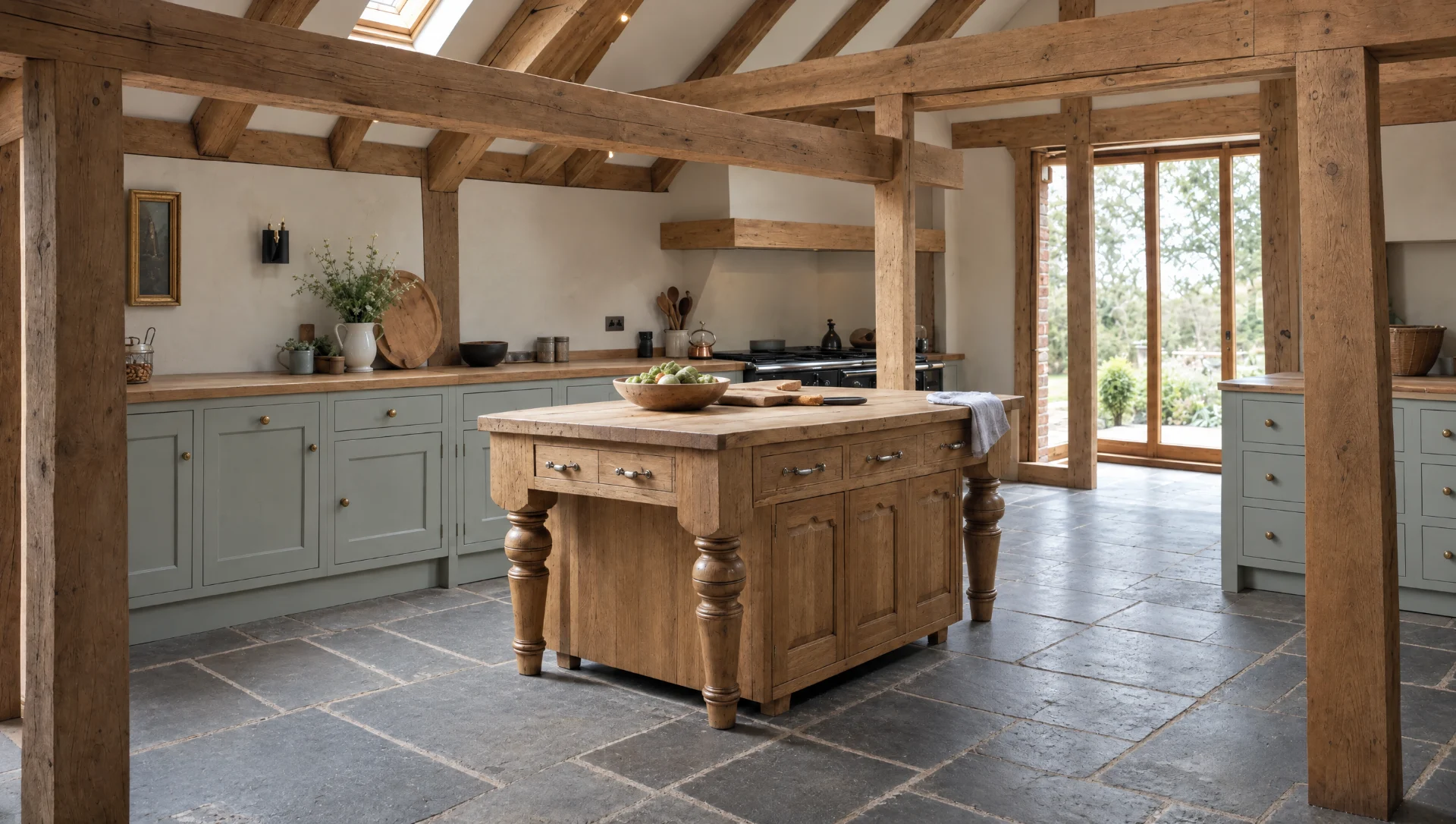
Freestanding kitchen furniture, made as separate pieces: an island on legs, a dresser, a larder cupboard, a sink stand, a prep table. Each one is finished on all six sides, stands clear of the wall, and could be carried out of the room without a saw.
It is not a cheaper way of doing a fitted kitchen. It is a different one, and in some buildings it is the only one that works.
Why freestanding, and when
In a building with an exposed frame, a vaulted ceiling or walls worth looking at, a continuous fitted run fights the architecture. Freestanding pieces sit in the volume rather than lining it, and the room stays legible.
It is also the only arrangement that survives a building that is still moving. An oak frame works for decades after it is converted, and joinery scribed rigidly into it will show that within a couple of winters. A piece standing on its own legs simply does not care.
And it moves. A fitted kitchen is a fixture and stays with the house. An island made as furniture is a chattel and goes with you, which for some clients is the entire point.
How a piece is built
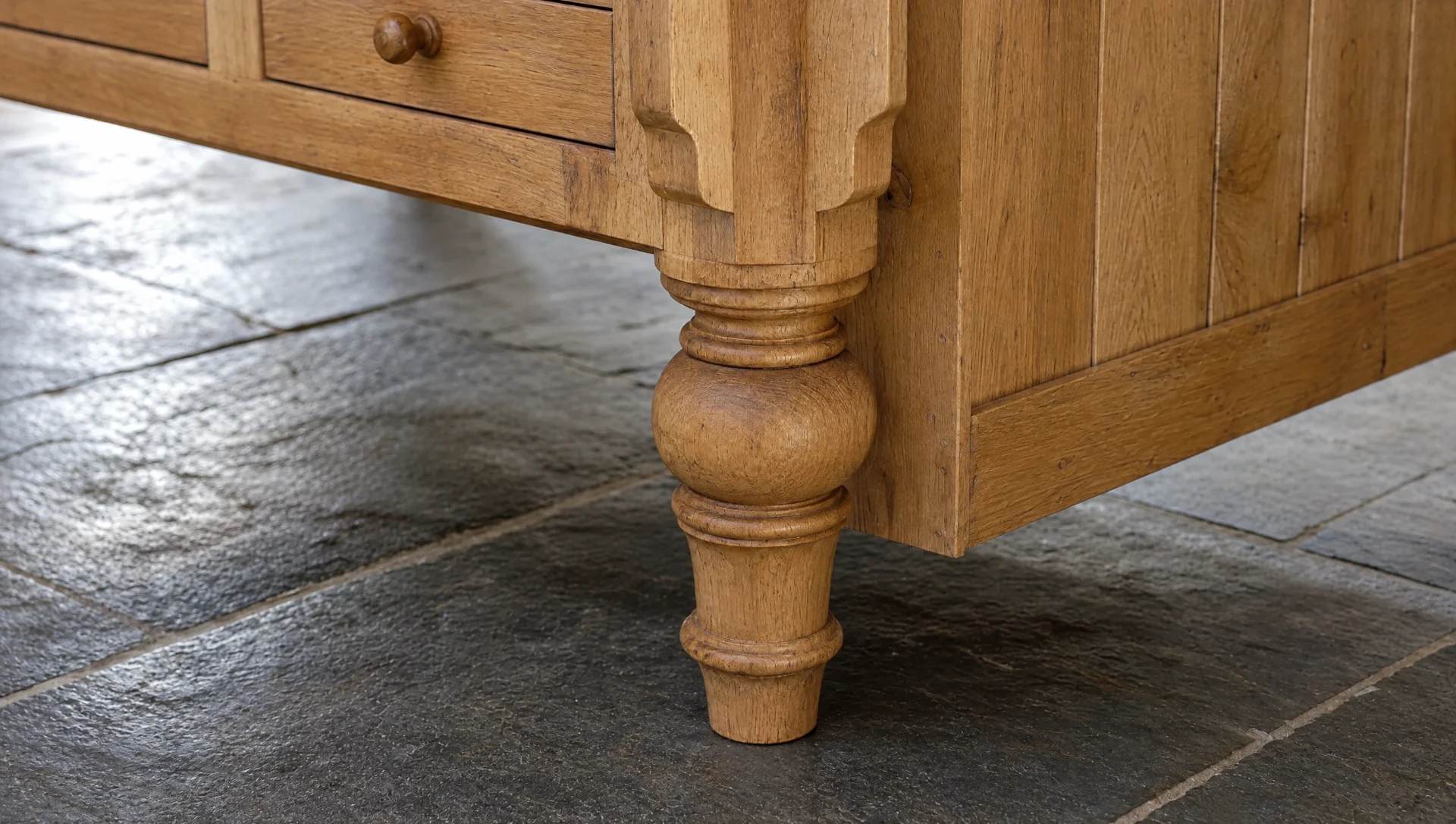
Turned legs are cut from solid stock, not applied to a carcass — the difference shows immediately at the point where the leg meets the rail. Tops are thick enough to be worked on, sanded back and re-oiled rather than replaced.
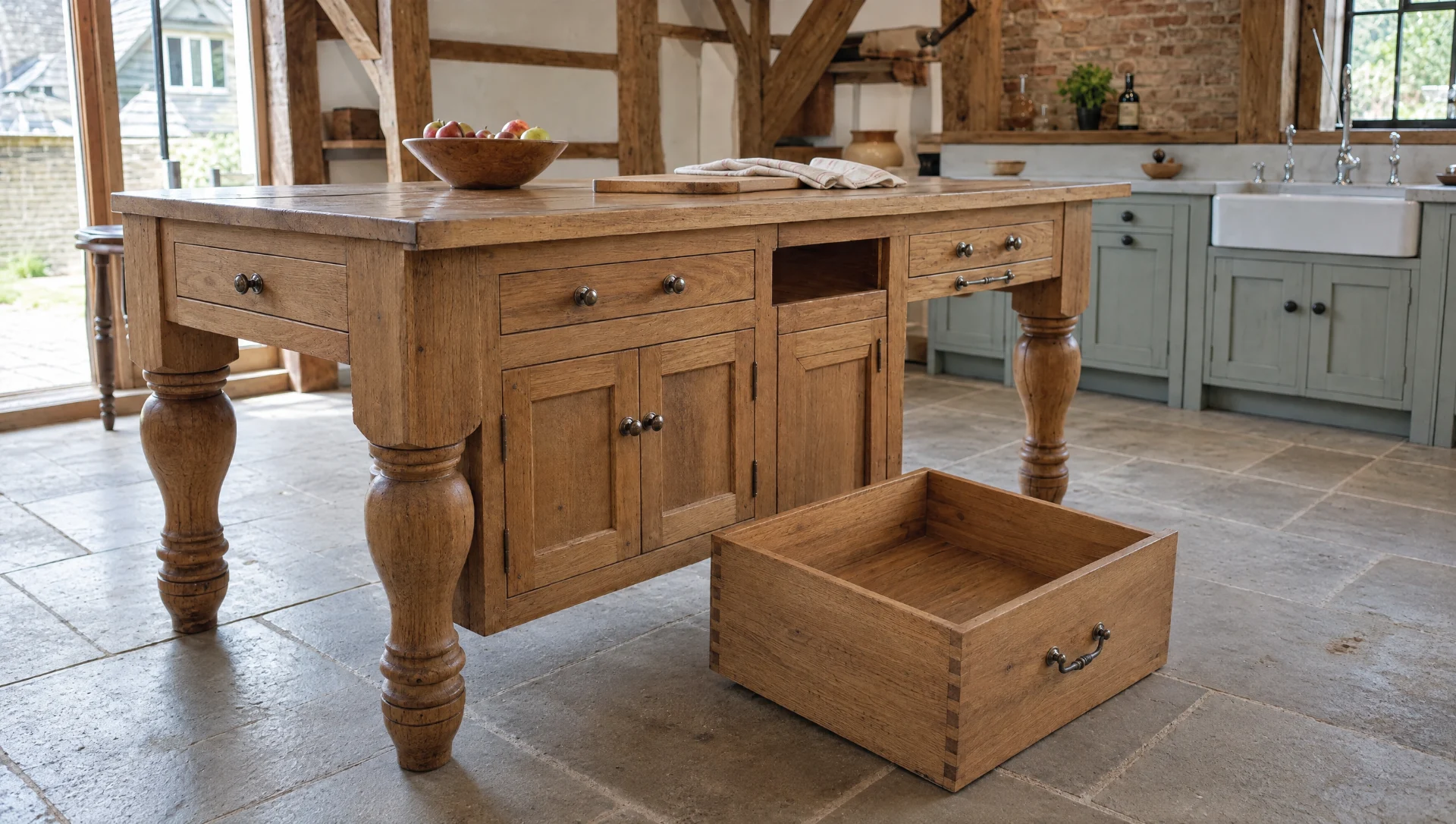
Drawer boxes are solid oak, through-dovetailed front and back by hand. Inside, dividers are made for the cutlery that is actually going in them, which is measured on the kitchen table before anything is machined. Backs are solid and finished, because on a freestanding piece the back is sometimes the front.
Mixing it with a fitted run
Most of the commissions in this range are not entirely freestanding. A fitted perimeter with a freestanding island is the commonest arrangement in the workshop, and a painted run with one oak dresser standing against it is the second.
Everything is made on the same benches, so a piece from this range sits next to any of the other five without a joint showing. Mixing costs nothing but a longer conversation.
Where it belongs
Barns, timber-framed houses, listed interiors where fixing into the fabric needs consent, and rooms where the client wants to take the kitchen with them.
It is the wrong answer where storage is tight, because freestanding pieces waste the corners, and in a small room where every millimetre has to work.
If you want the same work built in rather than standing free, start with The Suffolk. If the room asks for ornament, The Essex is the one that carries it.
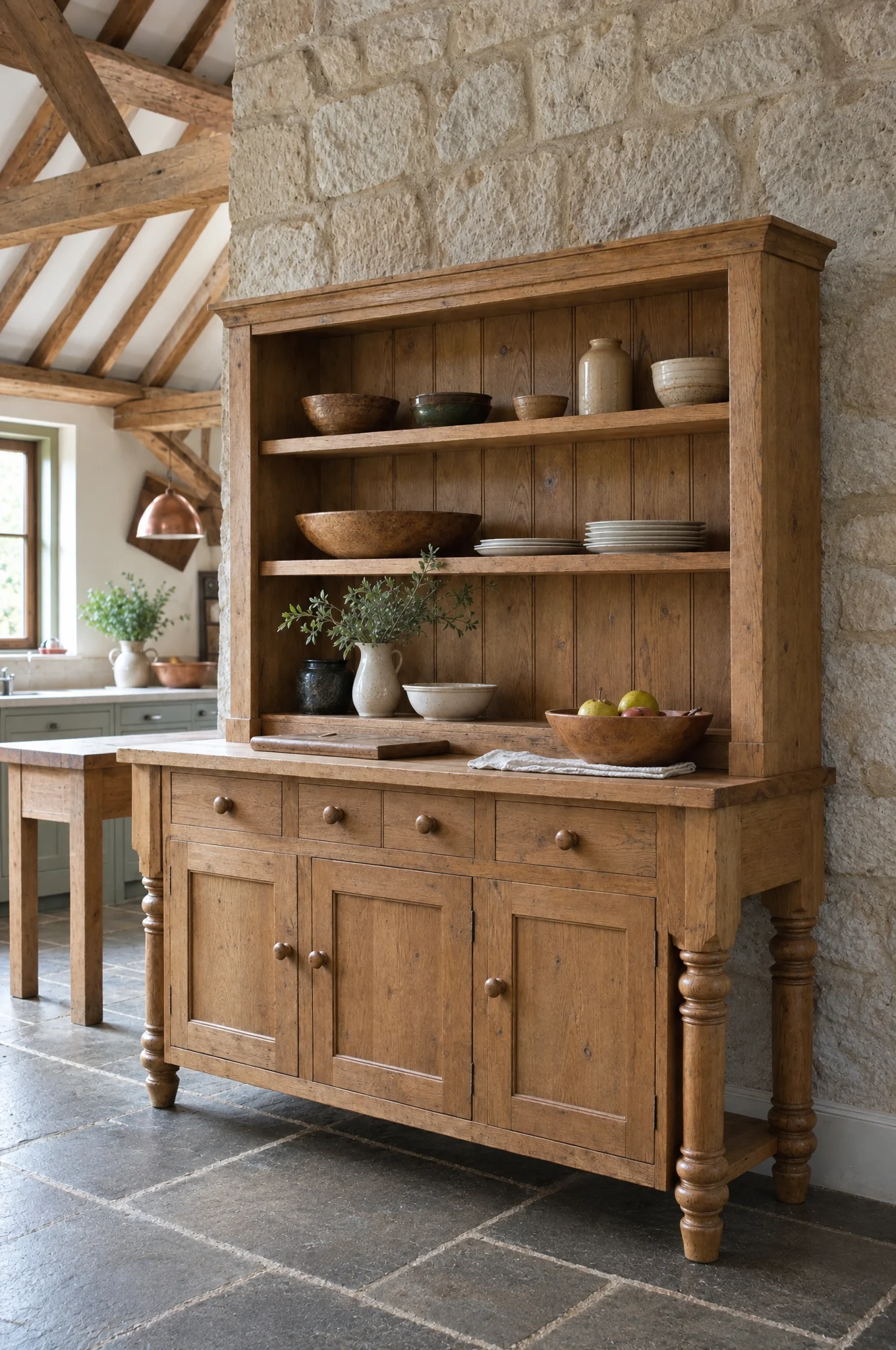
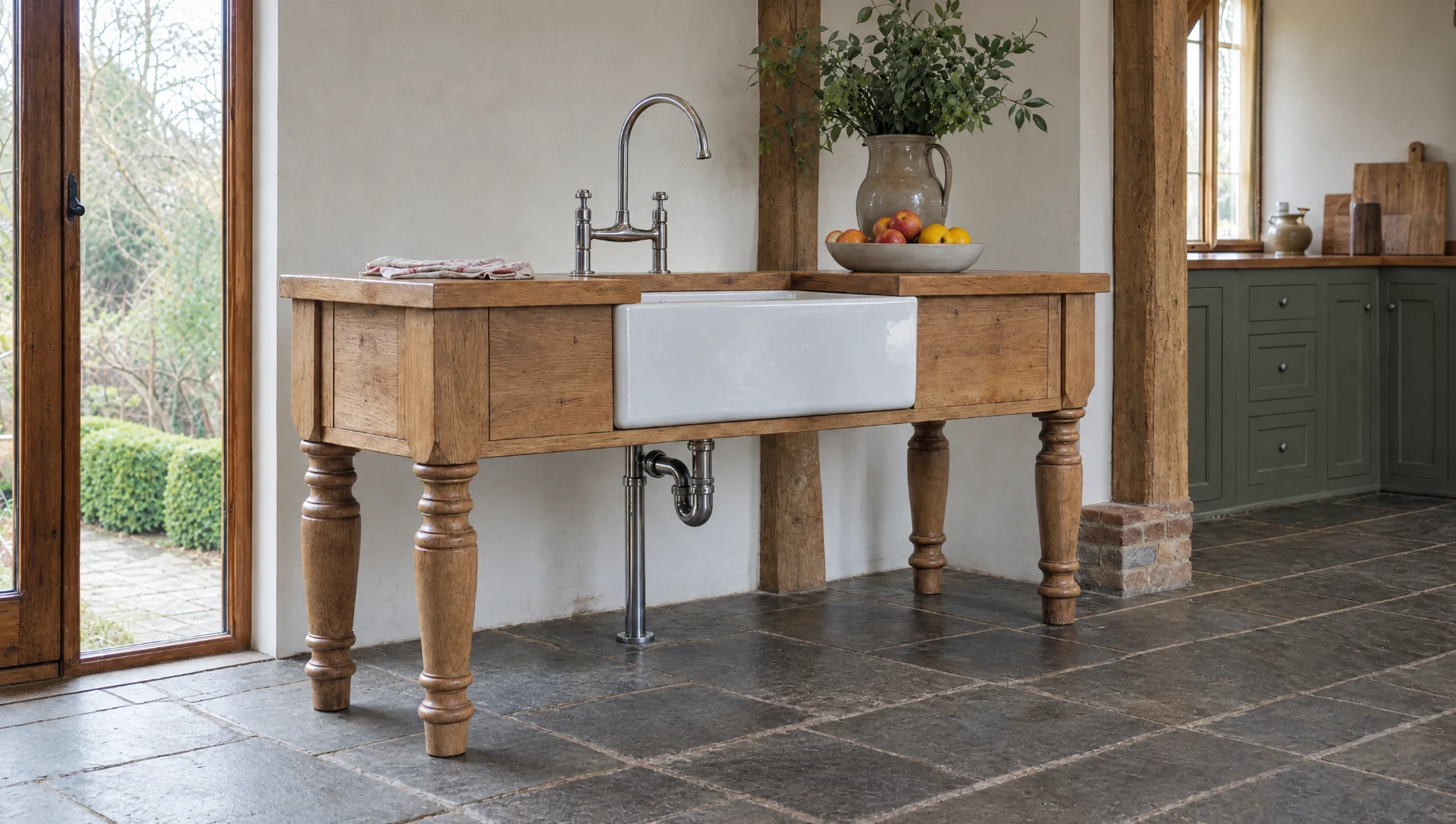
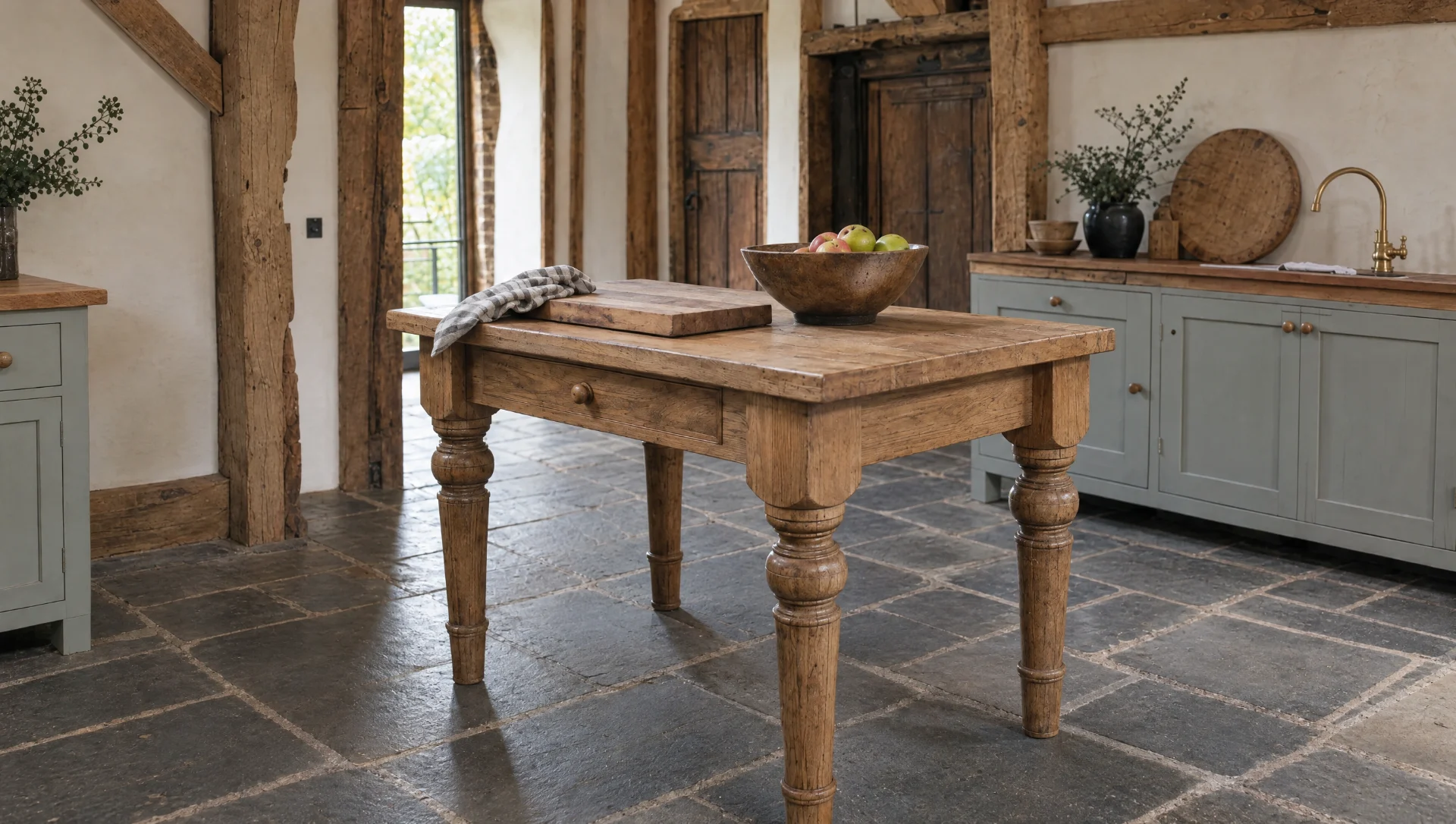
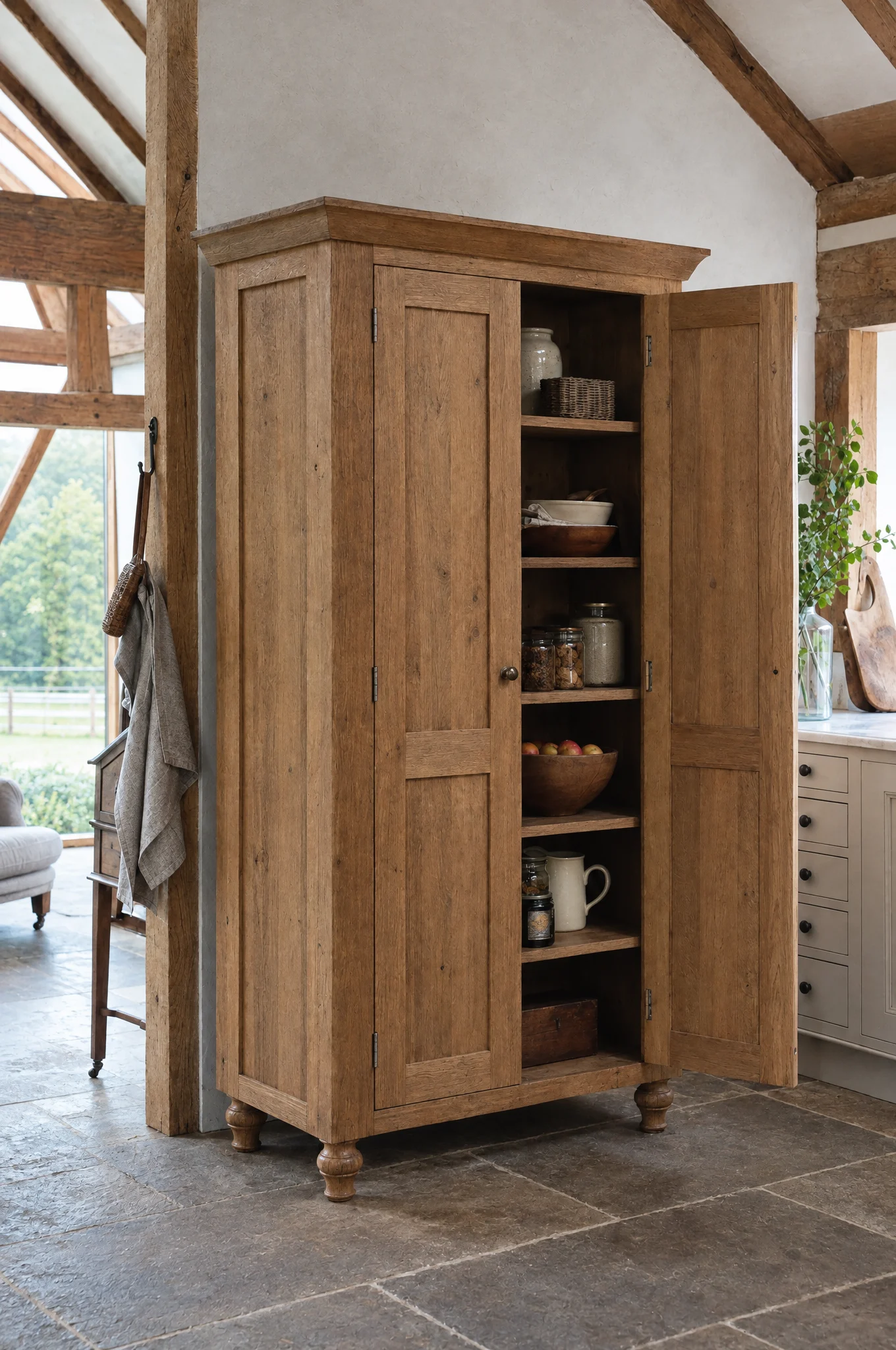
Our clients’ kitchens are private, and most ask that they are not photographed or published. The images and walkthrough films here are visualisations rather than photographs of a client’s house, built from our own workshop drawings and our own photographs of the work on site and finished with AI. None of it is stock imagery and none of it is somebody else’s work. If you would like to see drawings, samples and references for completed work, we will show you in person — visits to the Mickfield workshop are by appointment.
Specification
| Door style | In-frame recessed panel. Flat centre panel, plain stile and rail, no applied moulding. |
|---|---|
| Frame | Solid timber face frame, doors set within it flush. 3mm reveals, drawn before manufacture. |
| Carcass | High-grade birch ply. Solid backs, not stapled hardboard. No MDF, no particleboard. |
| Drawer box | Dovetailed as standard, solid timber, Blum runners, soft close. |
| Timbers | Tulipwood or maple doors and frames. Oak, walnut, cherry or sycamore for interiors and open shelving. |
| Finish | Hand-painted in-house. Little Greene, Farrow & Ball, bespoke mixes, RAL and NCS matching. Sprayed, hand-brushed or both. |
| Hardware | Butt hinges. Cup pulls, bin pulls, knurled T-bars, pewter, unlacquered brass, aged bronze, ceramic. Samuel Heath. Blum and Häfele mechanisms. |
| Worktops | Marble, limestone, slate, granite, Belgian Black; Silestone, Caesarstone, Dekton, Sensa; solid oak, walnut, iroko, end-grain block. Templated and fitted by us. |
| Lead time | 14–20 weeks from brief to installation. Three to seven days on site. |
| From price | From £35,000. Design fee £500, credited in full against the order. |
The name
Named for what it is. The oldest way of furnishing a kitchen, and the only one that survives a building still working after it has been converted.
Questions
What does freestanding kitchen furniture cost?
It depends on how much of it there is, because this range is priced as pieces rather than as a room. A single dresser, larder or island is a smaller commission than a fitted kitchen and is quoted on its own; a full arrangement of island, dresser, larder, sink stand and prep table lands in the same territory as our fitted ranges, from £35,000. The design fee is £500 and comes off the price in full when you order. You get a fixed quote before any timber is cut, and changes before manufacture cost nothing.
How long does a freestanding piece take?
A single piece is typically eight to fourteen weeks from brief to delivery. A whole freestanding arrangement runs to the same fourteen to twenty weeks as a fitted kitchen, because the drawing and the finishing are what take the time rather than the number of carcases. Turned legs, hand-cut dovetails and an oiled or brushed finish all have their own pace. If you are working to a date — a house completion, a wedding, a move — tell us at the first meeting and we will say honestly whether it is achievable.
Is freestanding a cheaper way of doing a kitchen?
No, and we would rather say so at the start. Every piece is finished on all six sides, the backs are solid and finished because on a freestanding piece the back is sometimes the front, and legs are cut from solid stock rather than applied to a carcase. That is more work, not less. Freestanding is a different answer, not a cheaper one, and in some buildings it is the only one that works. If budget is the driver, a fitted run in one of the painted ranges will give you more storage for the money.
Can we mix freestanding pieces with a fitted run?
Most of the commissions in this range are exactly that. A fitted perimeter with a freestanding island is the commonest arrangement in the workshop, and a painted run with one oak dresser standing against it is the second. Everything is made on the same benches by the same people, so a piece from this range sits next to any of the other five without a joint showing and without a colour being nearly right. Mixing costs nothing but a longer conversation at the drawing stage about which pieces stand free and why.
Is an island on legs really movable?
A freestanding island can be carried out of the room without a saw, which is the test we apply to everything in this range. Whether it moves easily depends on what has been run into it: a solid top and a set of drawers is a lift for three or four people, and anything with a sink, a hob or a socket in it is tethered by its services until those are disconnected. If genuine portability matters to you — because you are renting, or because the piece is going with you — say so and we will design the services out of it.
If we sell the house, does freestanding furniture go with us?
That is one of the reasons clients choose it. A fitted kitchen is a fixture and stays with the house; a piece made as furniture, standing on its own legs and not built into the fabric, is a chattel and goes with you. In practice the distinction turns on how it is attached and on what the sale contract says, so if this is a real motive rather than a nice idea, have your solicitor deal with it explicitly in the fixtures and fittings schedule at the point of sale. We will confirm in writing how a piece is fixed.
Where do the services go — waste, water, sockets?
Into the floor or the wall behind, and agreed with your builder before first fix, which is the single most important thing to get right in this range. A freestanding sink stand needs the waste and the supplies coming up inside a leg or through the floor within the footprint, and an island with a hob or sockets needs a floor box or a conduit in the slab. We produce a services drawing with dimensions for your contractor. Getting it wrong means either a visible pipe or a piece that has effectively become fitted.
What guarantee comes with freestanding furniture?
Ten years on our cabinetmaking, joinery and installation. If a joint opens, a leg loosens or a top splits, we come and put it right. There is a six-month visit to adjust doors and drawers once the piece has acclimatised to the house, which matters in a barn or a timber-framed building where humidity swings hard between seasons. We keep parts for life and we keep the drawings, so a piece can be repaired, refinished or added to years later rather than replaced.
What timbers and finishes can we have?
European oak, elm, cherry, sycamore, walnut and iroko where the piece stays in the timber, and tulipwood or maple where it is painted. Hard-wax oil is the usual finish on a timber piece, because it can be sanded and re-oiled in place; paint is four coats brushed by hand in our own prep room. A painted carcase with an oiled oak top is the commonest specification we make, and a dresser painted a different colour from the fitted run is the second. Interiors of glazed cupboards are usually painted a contrasting colour.
How are the drawers made?
Solid oak boxes, through-dovetailed front and back by hand. Not machine-cut and not a rebated box with a false front, because on a freestanding piece a drawer gets pulled out fully and looked at, and the joint is part of the object. Dividers inside are made for the cutlery, the utensils or the linen actually going in them, measured on the kitchen table before anything is machined. Runners are Blum or Häfele where a drawer is heavy and used daily; on a dresser or a side table we will often use traditional timber-on-timber running instead.
Can we start with one piece and add more later?
Yes, and it is a sensible way to commission when a building project is running long or a budget has to be staged. We keep the drawings, the timber specification and the paint reference for every piece we make, so a second and third piece can be added in later years and will belong to the first. The one caveat is timber colour: an oiled oak dresser made five years ago has ambered and a new one has not. It catches up within a couple of years, and we will tell you what to expect.
Will freestanding lose us storage?
Yes, and it is the main reason we talk clients out of it. Freestanding pieces waste the corners, and the gap between a piece and the wall is dead space by design. In a generous room that is a fair trade for letting the architecture read. In a small room where every millimetre has to work, it is the wrong answer and a fitted run in one of the other five ranges will serve you better. We will say which we think it is at the survey, before you have spent anything but time.
Does freestanding work in a listed building?
It is often the route to consent, because a piece standing on its own legs avoids cutting into historic fabric, and that is a materially easier case to make than a fitted run screwed into original timber or lime plaster. We hold Grade I and Grade II* experience and will produce the drawings and specification your architect or heritage consultant needs. The application itself is theirs to make and consent is the local authority’s to give, so do not order until it is granted. Services almost always remain the point that needs most care.
Do you deliver and place it, or fit it?
Both, depending on the piece. A single dresser or table is delivered, placed, levelled and checked by our own people. A full arrangement is treated like any other installation: we template, transport, fit, connect to the services your contractor has provided and seal the stone, over three to seven days. Either way it is our team rather than a haulier, because a finished piece of furniture that has been handled by a pallet network arrives with a story attached.
Can you copy a piece we already own?
Usually, and it is one of the more satisfying things we do. We measure the original, take the mouldings off it and draw it full size, then discuss honestly what should be reproduced and what should quietly be improved — an old dresser is often 100mm too shallow for modern plates, and the drawer runners will be worn. We will not pass a copy off as original, and we will not reproduce a maker’s mark. If the piece is of real antique value, have a conservator look at it before you commission a copy rather than a repair.
What is the smallest commission you will take?
A single piece — an island, a dresser, a larder cupboard, a sink stand, a prep table. There is no minimum room size and no requirement to buy a kitchen first, and a number of the pieces we make each year go into houses whose kitchens we did not make. What we will not do is make one piece badly to hit a number: the drawing, the setting out and the finishing are the same whether it is one cupboard or a whole room, and that is reflected in the price.
Start a conversation
Tell us about the room, the house and roughly when you would like to be cooking in it. We will tell you honestly whether we are the right people for it.
Make an enquiry