
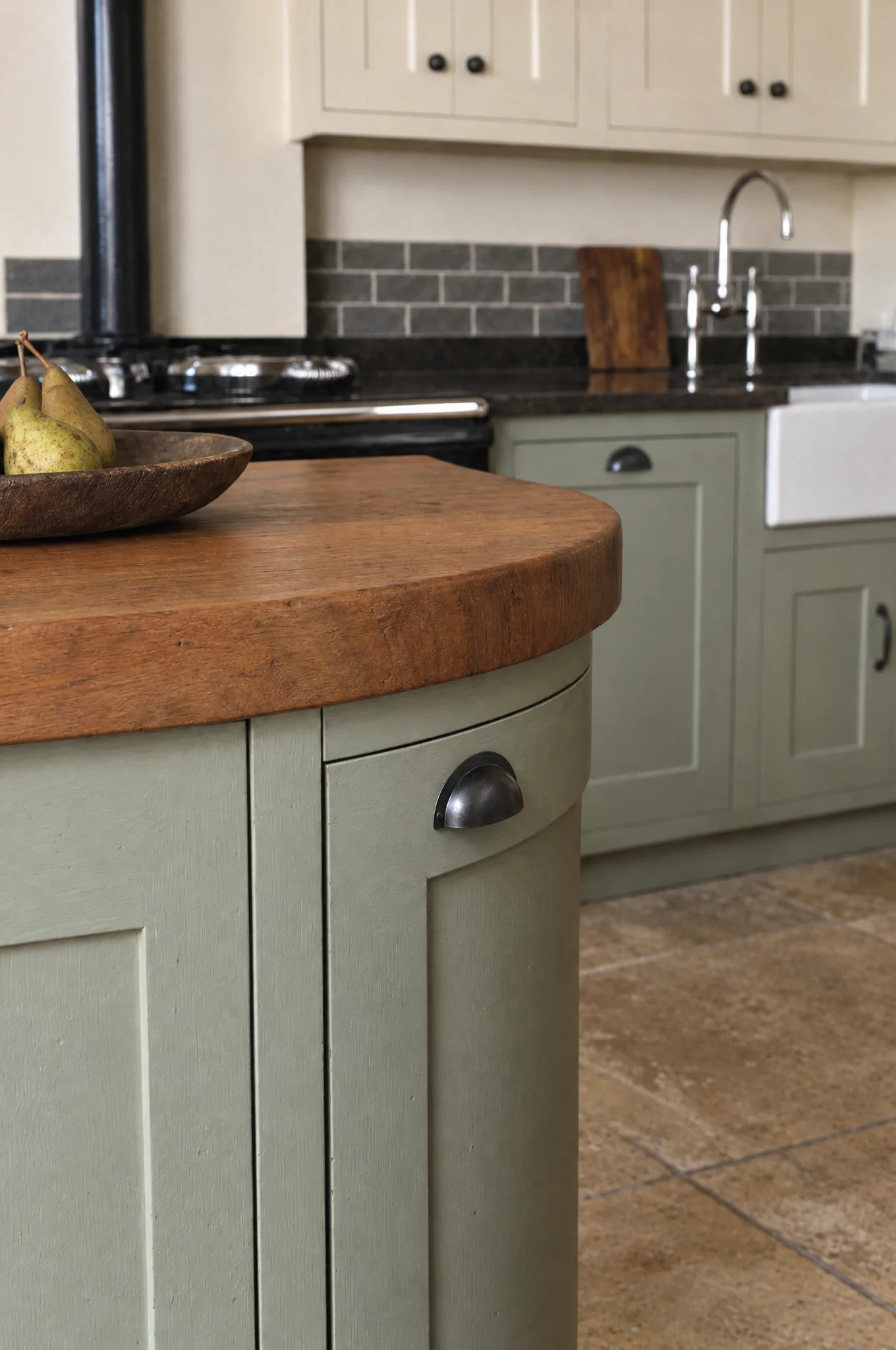
Worktops: stone, timber, composite
Four families of material, each good at something and bad at something else. What we specify, where, and what we tell clients before they choose marble.
The question is not which is best
A worktop has to survive heat, water, acid, knives and impact, and no material does all five well. Choose by what happens on that particular stretch of surface, and use more than one material in a room if the room asks for it. Most of the kitchens we make have two.
The bands below are what work of this kind costs, supplied and fitted, for a normal kitchen of around 8 to 12 square metres including an island. They move with the slab, the fabricator and how many cut-outs there are.
Natural stone
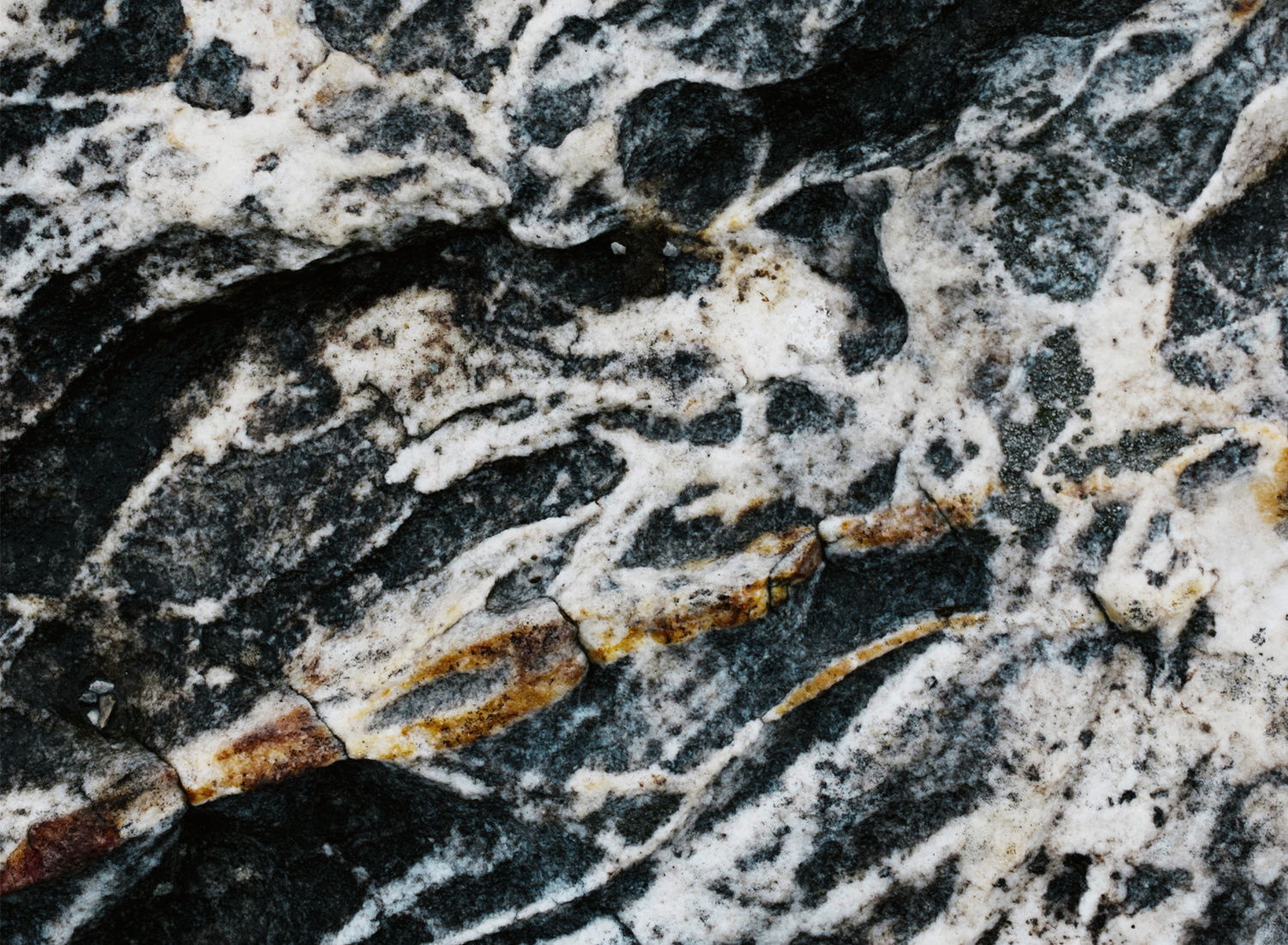
Granite is the tough one: dense, effectively heatproof, unbothered by lemon juice, and needing a sealer every year or two. It has been unfashionable for a decade because of the speckled slabs of the 1990s, but the plainer honed blacks and greys are quietly excellent. £4,000 to £8,000.
Quartzite is the connoisseur’s choice — the look of marble with the hardness of granite, because it is metamorphosed sandstone rather than limestone. Harder than a steel knife, so it does not scratch. It does need sealing and some slabs have fissures the fabricator will want to discuss. £7,000 to £15,000.
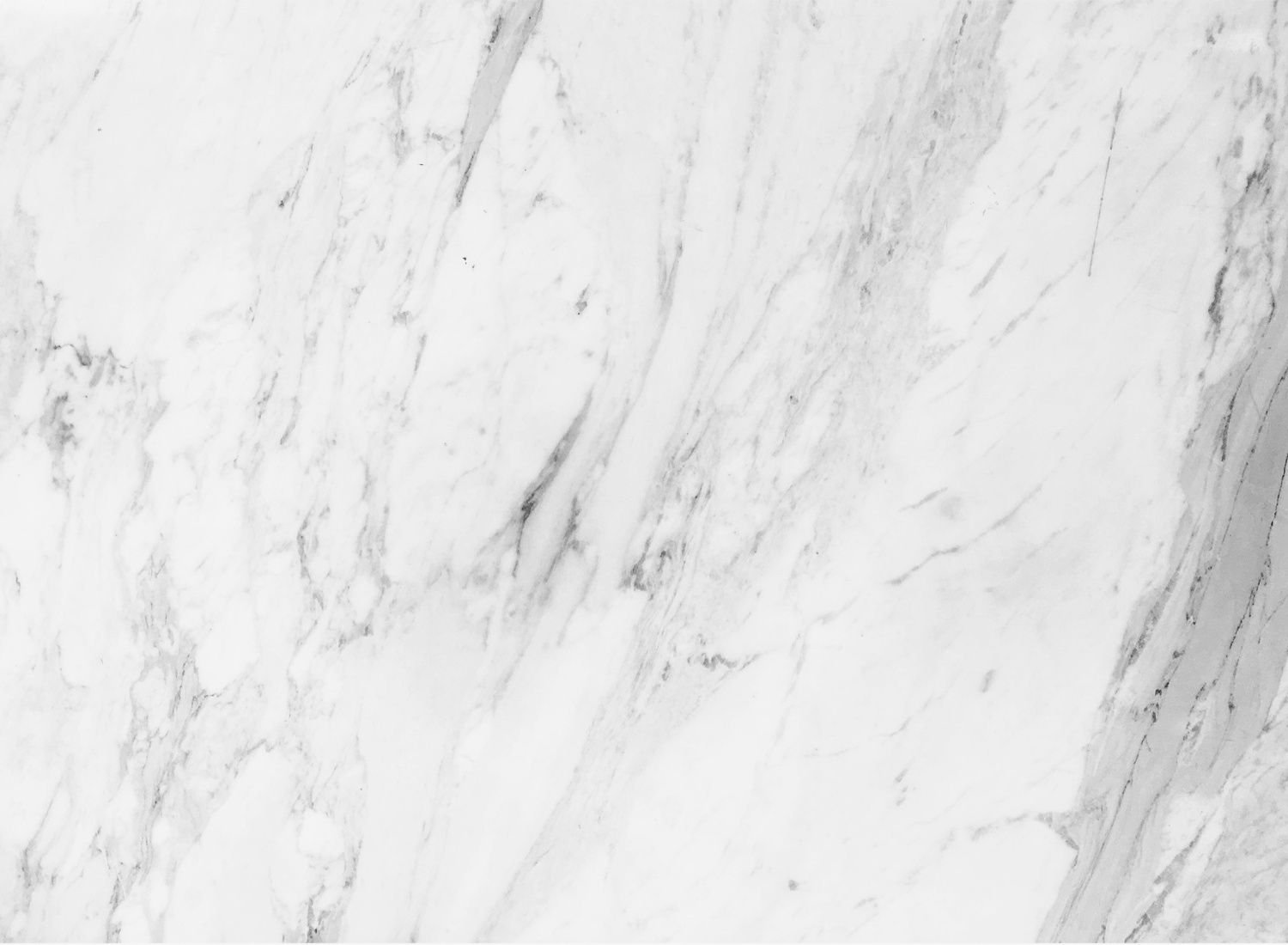
Marble is calcium carbonate, which means acid dissolves it. A slice of lemon left on honed Carrara for ten minutes leaves a dull mark you can feel with a fingertip. That is etching, not a stain, and it is polished out or lived with. Anybody who tells you a sealer prevents etching is selling sealer. Marble is nonetheless the best pastry surface there is, and it acquires a patina that a great many people love. Ours goes on islands and in pantries, honed rather than polished, and we make the client put a coffee cup on a sample for a week before they commit. £6,000 to £18,000.
Thickness: 20mm or 30mm on the slab, or a mitred edge built up to 40, 60 or 100mm for an island. A mitred edge is a 45-degree joint the whole length of the top, and on a patterned stone it should be mitred so the veining runs over the edge. That is skilled fabrication and it is not cheap.
Engineered quartz and sintered stone
Engineered quartz — Silestone, Caesarstone and the rest — is around 90 per cent crushed quartz in a polymer resin. It is non-porous, needs no sealing, resists acid, and comes in consistent slabs, which matters if you are matching a second slab later.
Its weakness is the resin. Above roughly 150°C the resin scorches, and a pan straight off a hob will leave a mark. Pigment behaviour under strong ultraviolet varies by product, so ask the fabricator for the manufacturer’s own guidance before putting a pure white on a peninsula in front of a south-facing bifold. It is worth asking before you specify rather than after. £4,000 to £9,000.
Sintered stone — Dekton, Neolith, Laminam — is mineral powder fused under heat and pressure with no resin at all. It is genuinely heatproof, ultraviolet-stable, and effectively unscratchable. It comes as thin as 12mm, which allows very fine details.
Its weakness is brittleness at edges and cut-outs. A chip on a sintered edge is harder to make good than one in stone, because on many products the colour is a surface layer rather than a body colour; ask the maker what their repair looks like. Cut-outs need generous radii and careful handling. Fabricators charge more to cut it because it eats tooling. £6,000 to £13,000.
Timber, which we make ourselves
Timber tops are the one family that comes off our own benches, which means the grain is chosen, the joints are ours and the finish matches the rest of your kitchen.
We make them 40mm thick as standard, either full-stave — boards 100 to 140mm wide running the full length, which is the handsome, expensive way — or in narrower staves for stability where a run is very long. Iroko is the workhorse: oily, stable, and it takes water better than anything else we use. European oak darkens beautifully. American black walnut is soft enough that you must accept marks.
Finish is hard-wax oil, three coats in the workshop, then oiled by you monthly for the first three months and two or three times a year afterwards. This is the whole deal with a timber top: it is the only surface in the kitchen that asks something of you and the only one you can completely renew with an orbital sander and an afternoon.
Around a sink, timber works if the detail is right and the maintenance happens. Undermount is fine — we saturate the exposed end grain with three extra coats of oil and seal the joint with a clear neutral-cure silicone. What kills a timber top is standing water in the same spot for a year, not the occasional splash. In a household that will not oil anything, put stone at the sink and timber everywhere else. £1,800 to £4,500 for a kitchen’s worth.
Where each belongs
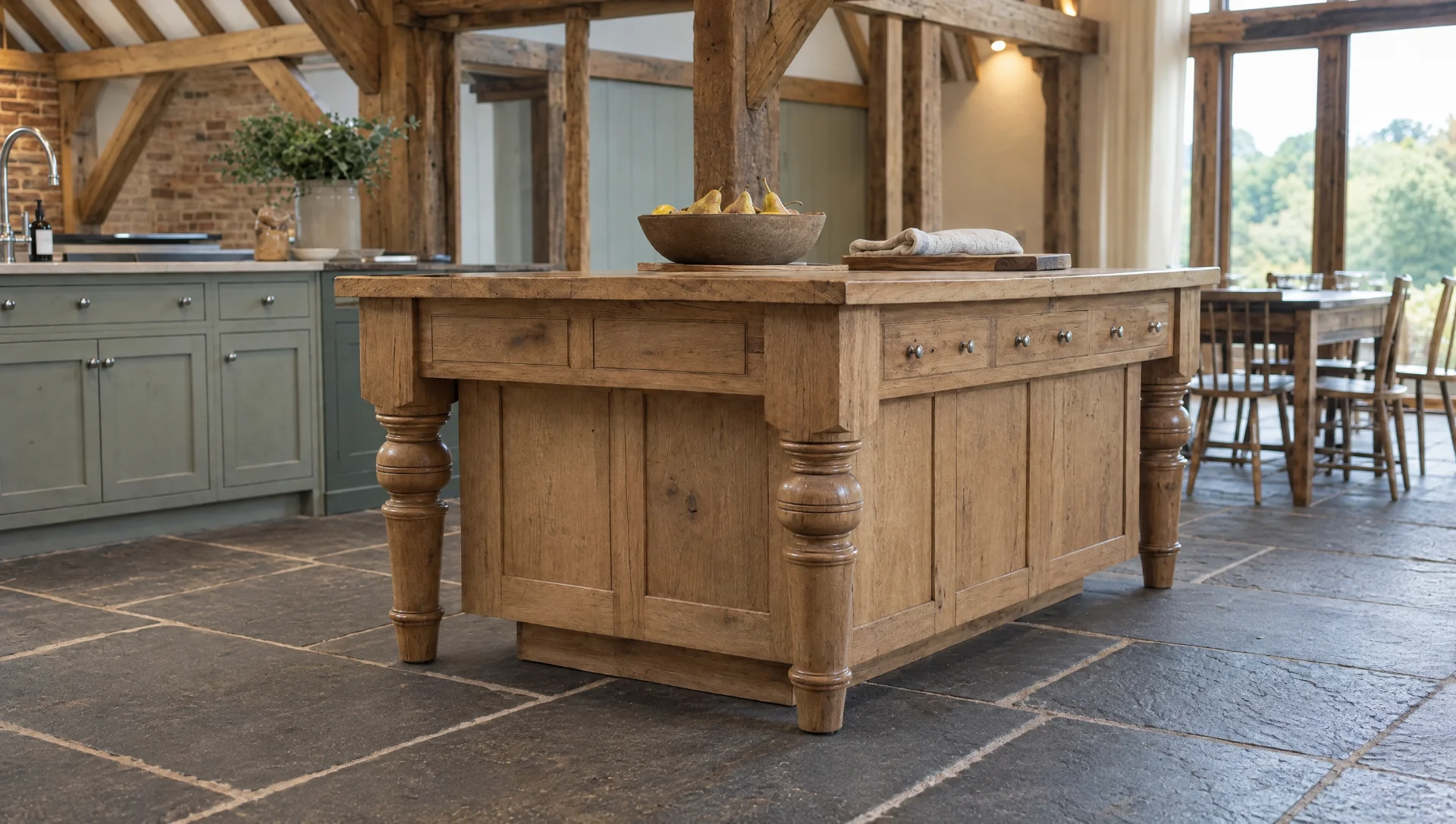
Our most-specified arrangement, and it is not a compromise: timber on the perimeter runs, stone on the island and behind the hob. Timber where you stand, chop and put things down, because it is warm and quiet. Stone where the heat and the water and the audience are.
One material everywhere is also a legitimate answer, and in a small room usually the right one. Two materials need enough space between them to read as a decision rather than as an economy.
Details and timings
Stone is templated after the cabinets are installed and levelled, not before, and never from a drawing. The template is a day; fabrication and fitting follow 10 to 14 working days later. Plan to be without a worktop for a fortnight, which is why we leave a temporary ply deck and connect the sink last.
Upstands versus splashbacks. A 100mm upstand in the same material is tidy and forgiving of a wall that is not flat. A full-height splashback behind a hob is easier to clean and shows the material off, and it must be templated to the wall’s actual undulation.
Finally, dust. Cutting engineered stone releases respirable crystalline silica, which is a serious occupational disease risk and now tightly controlled. Any fabricator who dry-cuts a slab in your garden without water suppression and extraction should be sent home. Ours cut wet, in the works, and only trim on site with water-fed tools.
Start a conversation
Tell us about the room, the house and roughly when you would like to be cooking in it. We will tell you honestly whether we are the right people for it.
Make an enquiry