
The argument that matters
A kitchen that is stripped, repainted and refitted after thirty years has a better environmental account than one replaced after twelve, and no amount of workshop solar changes that ranking. Everything else on this page is secondary to it.
So we build for repair. Solid timber face frames can be filled, rubbed down and repainted. Dovetailed drawer boxes can be knocked apart and re-glued. Solid backs can be unscrewed and refixed. Doors hang on butt hinges that a person can replace with a screwdriver in 2050.
We do not use foil-wrapped or thermofoil fronts, because they cannot be refinished at all. We keep the drawings and the specification for every commission, so a single replacement drawer can be made to the original dimensions years later.
Refinishing, not replacing
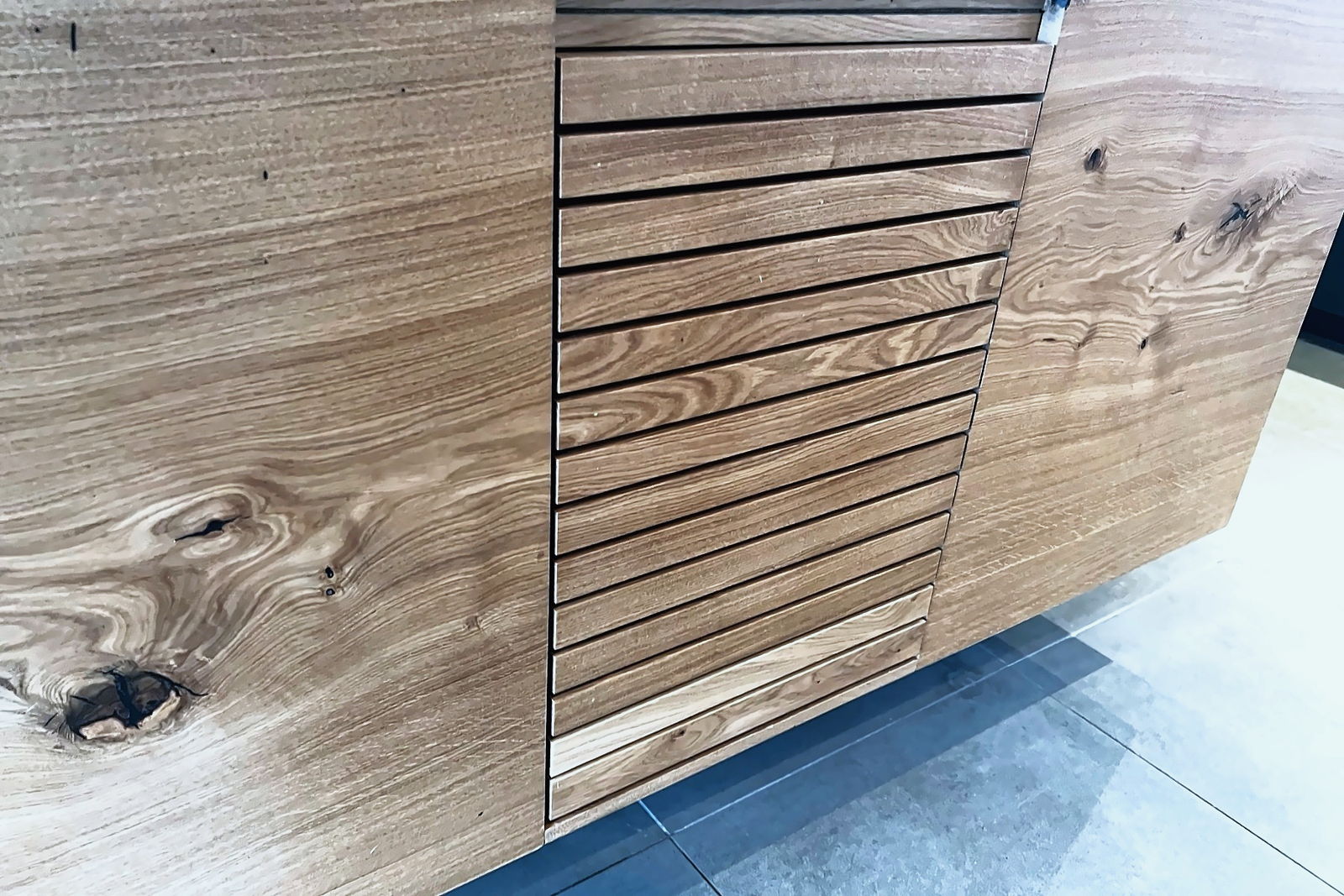
Hard-wax oil can be spot-repaired on the spot. Painted in-frame work can be rubbed down and resprayed, either in situ or back at the workshop, and a colour change is a fraction of the cost and the material of a new kitchen.
Because the carcasses are separate boxes rather than a bonded run, a kitchen can be taken out and refitted in a new room, or altered around a new appliance, without scrapping the whole. We have done both.
This is the claim we are prepared to make and stand behind: the furniture is repairable and adaptable. We are not claiming it is carbon neutral, because we have not measured that and we are not going to imply it.
The workshop
Solar generation is planned for the workshop roofs. It is not installed yet, so we are not counting it, and we will say what it actually covers once it has been through a full year rather than what the brochure says it will.
Heating is biomass, fuelled by the workshop’s own clean, untreated offcuts and the dust off the extraction. It uses waste we have already created rather than fuel bought in, which we think is a genuine saving, though burning wood is not the same as burning nothing.
There are EV charging on site, used by staff and visitors. Our delivery vans are not all electric. Installations in London are made in one trip with a full load rather than several part-loads, which is a real reduction and an easy one.
Finishes and timber
We use water-based finishes where they suit the job. Some work needs a solvent-based product for durability or to match existing finishes, and where we use one it is extracted at source, COSHH-assessed and disposed of through a licensed waste contractor. We are not a solvent-free workshop and will not say we are.
We buy from European mills and specify certified stock where it is available for the timber and the cut we need. We cannot say every board that comes through the door is certified: small parcels, reclaimed boards and estate timber often come without certification, and a fumed quarter-sawn oak in a particular width may only exist uncertified.
If a project requires certified timber throughout, say so at the start. We can specify it and we will tell you honestly where it changes the price, the lead time or the availability of a particular figure.
Waste
Clean, untreated offcuts and shavings go to the biomass boiler or to local farms for bedding. Sheet material offcuts are kept and used for jigs, drawer bases and packing before anything is skipped.
We deliver in reusable blankets and padded covers where the job and the site allow it, which is most of the time. Some items still need single-use protection to survive a stair.
When we take out an existing kitchen, we will ask first whether it can be sold, given away or reused before it goes in a skip. Sometimes it can.
What we do not claim
We are not carbon neutral and we do not buy offsets in order to say that we are. We have not measured our full footprint. We hold no environmental certification scheme badge.
If you need evidence for BREEAM, a planning condition or a client’s own reporting, ask and we will send what we actually hold: the certificates supplied with the parcels that carry them, technical and safety data sheets for the finishes we are using on your job, and our own energy figures. If we cannot evidence something, we will tell you that instead of writing it on a website.
Start a conversation
Tell us about the room, the house and roughly when you would like to be cooking in it. We will tell you honestly whether we are the right people for it.
Make an enquiry