The one question that sorts the field
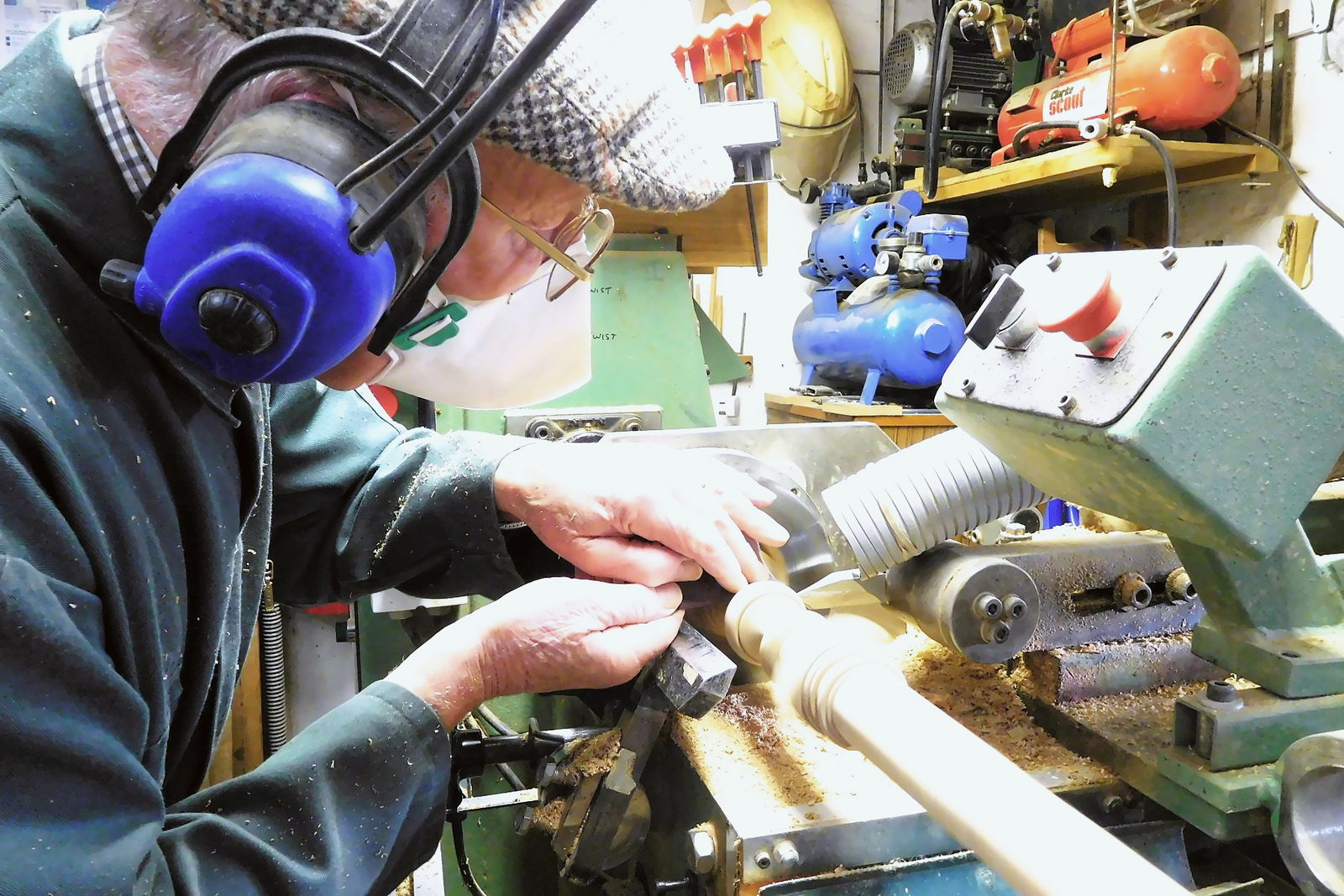
Who actually makes it?
Ask it plainly, and then ask where. A great deal of what is sold in Britain as a bespoke or handmade kitchen is designed in a showroom, ordered from a factory — sometimes in this country, often not — and assembled on site by a fitting team who have never met the person who drew it.
That is not a scandal and it is not always the wrong answer. Factory-made cabinetry can be very good, and it is usually cheaper and faster. But it is a different product from a kitchen made at a bench by somebody who will be standing in your house when it goes in, and you should know which one you are buying before you pay for it, not after.
The follow-up question is the one that gets the truth: can I come and see it being made? A workshop will say yes and suggest a day. A showroom will explain why that is difficult.
Eleven more, and what the answers tell you
What is the carcass made of? The answer should be birch plywood or solid timber. If it is MDF or chipboard — even good chipboard, even moisture-resistant — you are buying a fitted kitchen with a nicer door on it. A plywood carcass costs more, holds a screw for decades, and survives a leak.
How are the drawer boxes made? Solid timber, dovetailed, is the answer you want. Dowelled, stapled or a metal-sided system are all cheaper and all perfectly serviceable, but they are not bespoke cabinetmaking and should not be priced as though they were. Open a drawer in the showroom and look at the corner.
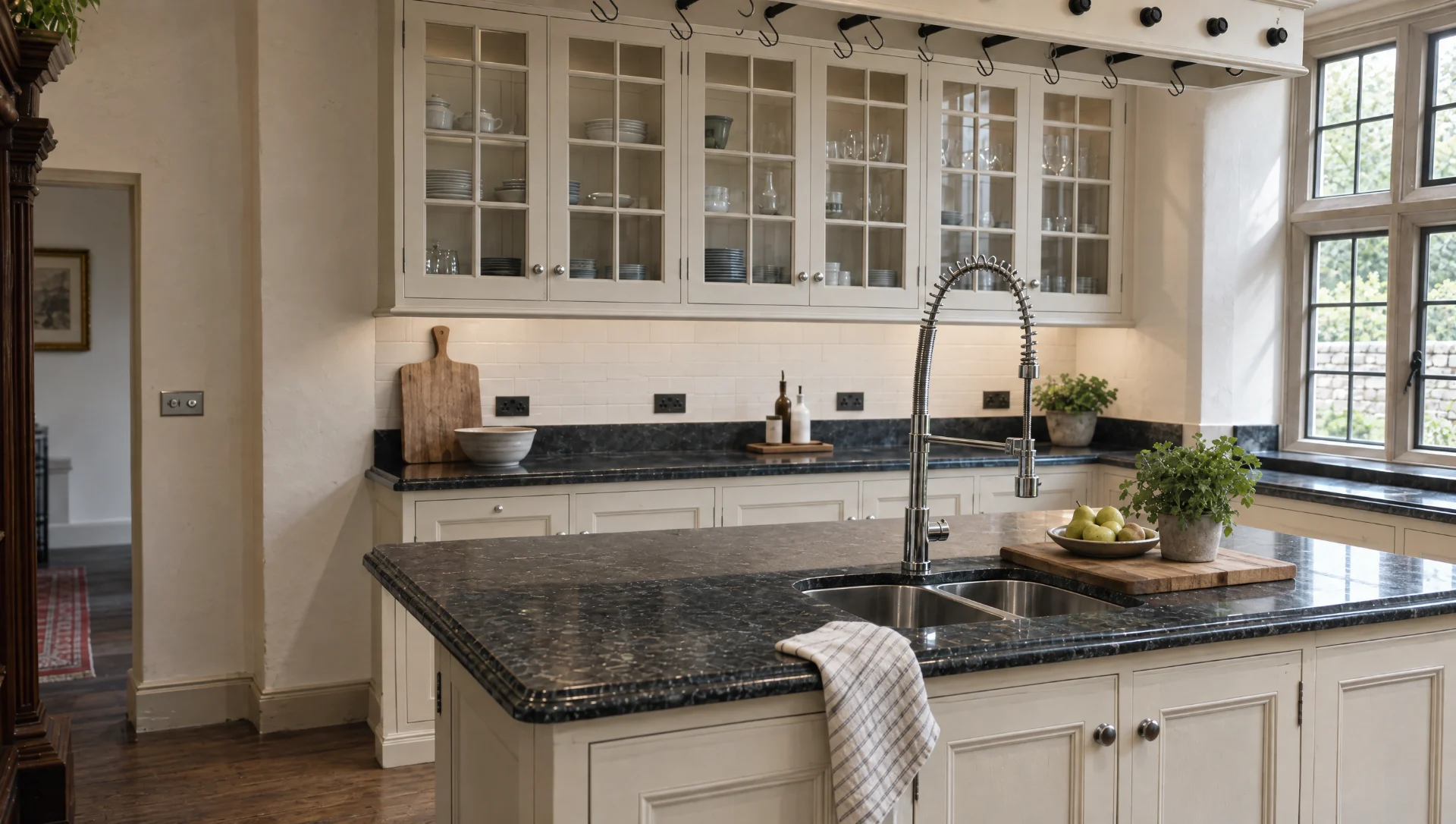
Is it in-frame, and if so is the frame real? In-frame means the door sits inside a solid timber face frame, flush with it. It is slower to make and punishing to fit, because a three-millimetre reveal shows every error. Some kitchens are sold as in-frame with a frame that is applied to the front of a standard box. Ask which.
Who paints it, and where? In-house or sent out. Neither is wrong. But sent out means the person who mixed the colour is not the person who will touch it in on handover day, and a forty-door kitchen made over five weeks needs one hand on it if the sheen is going to match.
How many coats, and brushed or sprayed? Both are legitimate. Sprayed is flatter and more uniform; hand-brushed has a texture that catches light and is easier to repair invisibly in ten years. What matters is that somebody can tell you the system, the number of coats and whether the final coat goes on before or after fitting.
Will you draw it at full size? Very few will, and it is the single best predictor of how the kitchen will fit. At 1:20 on a screen everything looks fine. At full size on a sheet of ply, a reveal is either right or obviously wrong. A maker who sets out on a rod is telling you something about how they work.
What happens if the room is not square? No room is. The answer should involve scribing, adjustable feet, and a survey that recorded wall lengths at three heights. If the answer is “we will trim it on the day”, the joinery will look delivered rather than built in.
Can I have a fixed price before you cut anything? Yes is the only acceptable answer. Provisional sums for stone and appliances are normal, because those are templated and specified later. A provisional sum for the cabinetry is not.
What is the payment structure? Stage payments against work done are normal in this trade. What you are looking for is whether the last payment falls after installation is complete rather than before it, and whether there is a written snagging process.
What is the guarantee, and does it cover the finish? Ten years on the cabinetmaking is a reasonable benchmark. Finishes are usually covered against defect rather than wear, which is honest — no paint survives a decade beside a bin drawer without attention. Be more suspicious of a guarantee with no exclusions than one that names them.
Will you come back? Timber moves through its first heating season. A maker who returns at six months to re-adjust every door and drawer is planning to still be trading, and is confident enough to look at their own work a year later.
What a good quotation looks like
It is itemised. You can see what the cabinetry costs, what the worktops cost, what the ironmongery costs and what the installation costs, as separate numbers. A single figure with no breakdown is not a quotation, it is a price, and it cannot be compared with anything.
It states the construction. Carcass material and thickness, face frame timber, drawer box construction, runner rating, finish system and number of coats. If it does not, you are comparing two kitchens on price alone without knowing whether they are the same thing.
It says what is excluded. Appliances, stone, electrical work, plumbing, plastering and making good are commonly outside a joinery contract. A quotation that is silent on them is going to produce a conversation later.
It has a programme in it. Not just a lead time — a sequence, with the point at which changes stop being free clearly marked.
Five answers that should worry you
“This price is only valid until Friday.” Bespoke joinery is not sold on a deadline. A discount that expires is a retail tactic and it has no place in a commission that will take four months to make.
“We can start next week.” A good workshop is booked two to three months ahead. Immediate availability in this trade usually means somebody has just cancelled, which is worth asking about, or that the work is going somewhere else.
“Design is free.” Design is never free. It is either paid for in the price of the kitchen, in pressure to sign on the night, or in a drawing thin enough that it has to be done again later at your cost. A design fee that is credited back against the commission is the honest version.
“Everything is handmade.” Nothing is entirely handmade and nobody should want it to be. A carcass part cut on a CNC is more accurate than one cut by hand, and the machine time is what pays for hand time on the joints and the finish. A maker who claims otherwise is either exaggerating or inefficient.
An unwillingness to name what is bought in. Runners, hinges, sinks, taps and appliances are bought in by everybody, including us. There is no shame in it. Vagueness about it is a different matter.
How to compare two quotations that look the same
Put them side by side and compare four numbers: the linear metres of frame, the number of drawers, the carcass specification and the finish specification. Those four account for most of the difference between any two prices in this market.
Then look at what is not in the cheaper one. Solid backs rather than a stapled panel. Dovetailed boxes rather than dowelled. A face frame that is mortice and tenoned rather than pocket-screwed. Four coats rather than two. None of those is visible on the day the kitchen goes in, and all of them are visible in ten years.
And be honest with yourself about whether you want the difference. A well-made factory kitchen at half the price is the right answer for a great many houses and a great many budgets. It is only the wrong answer if you paid bespoke money for it.
Where we sit, since you are on our website
We make everything in one building at Mickfield in Suffolk. Birch ply carcasses, solid timber face frames, hand-cut dovetails, four coats of paint applied in our own finishing room, and installation by the people who made it. Every commission is set out at full size on a rod before anything is machined.
Kitchens start at £35,000 and most finish between £65,000 and £120,000. If that is not the right number for your house, we would rather tell you now than take a design fee off you — and we are happy to say what we would look at instead.
The workshop is open by appointment, most weeks, and you are welcome to bring your architect.
Start a conversation
Tell us about the room, the house and roughly when you would like to be cooking in it. We will tell you honestly whether we are the right people for it.
Make an enquiry