
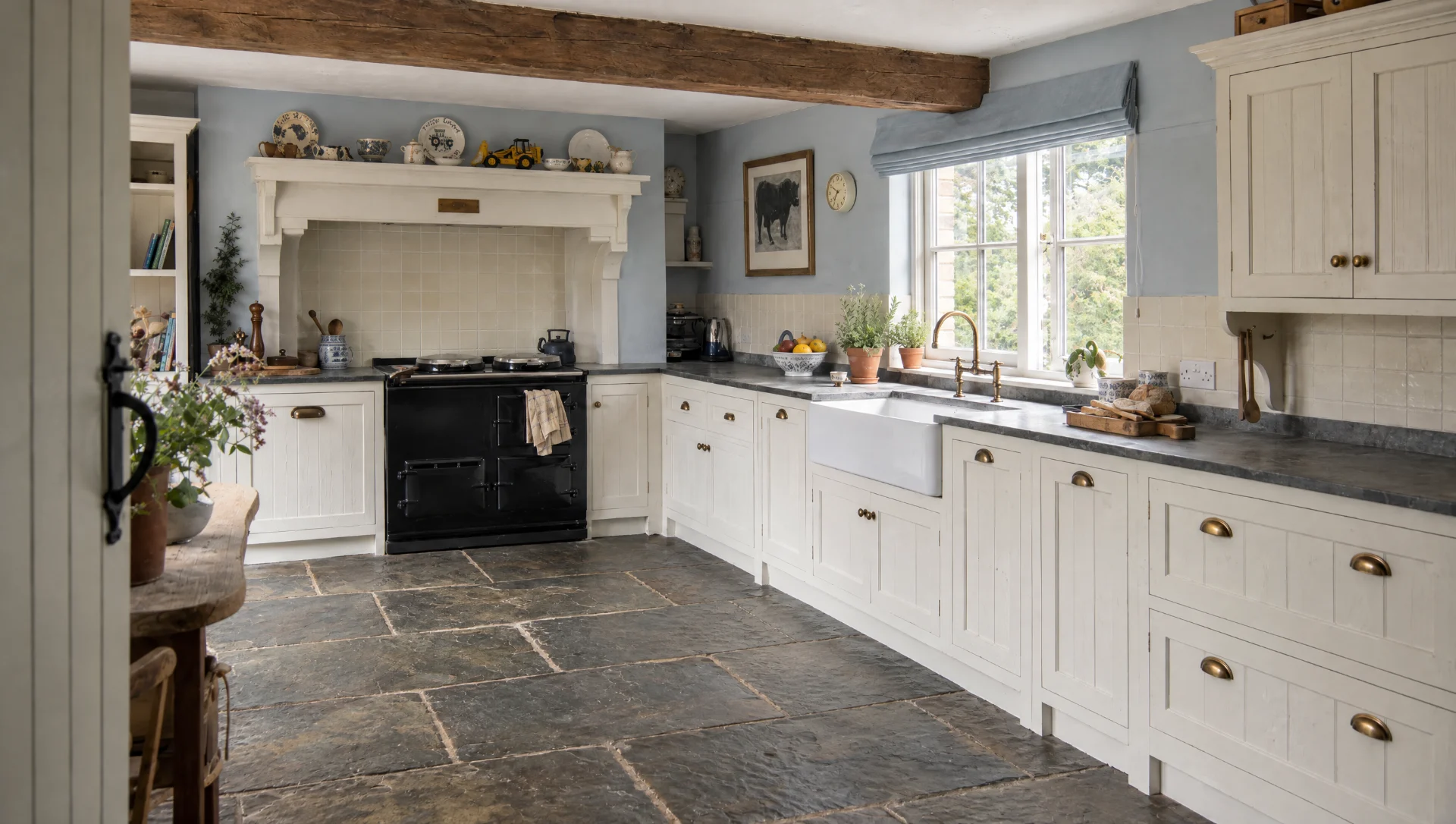
From brief to installation
The fourteen to twenty weeks, laid out week by week, including the parts where nothing appears to be happening and the parts where the decision is yours.
Why it is not eight weeks
Because timber has to settle, paint has to cure and doors have to be fitted by hand, and none of the three can be hurried by wanting them more.
The critical path is roughly: three weeks conditioning timber, three weeks machining, five to six weeks at the bench, three weeks in the finishing room, then delivery. Some of those overlap and some cannot. The finishing room in particular is a single room with a single finisher, and it is the constraint that most often decides your date.
Fourteen weeks is a straightforward kitchen in an unlisted house with early decisions. Twenty is a large one with two colours, a scullery, a curved island end and an ironmongery lead time. We tell you which you are at the point of order, and then we hold it.
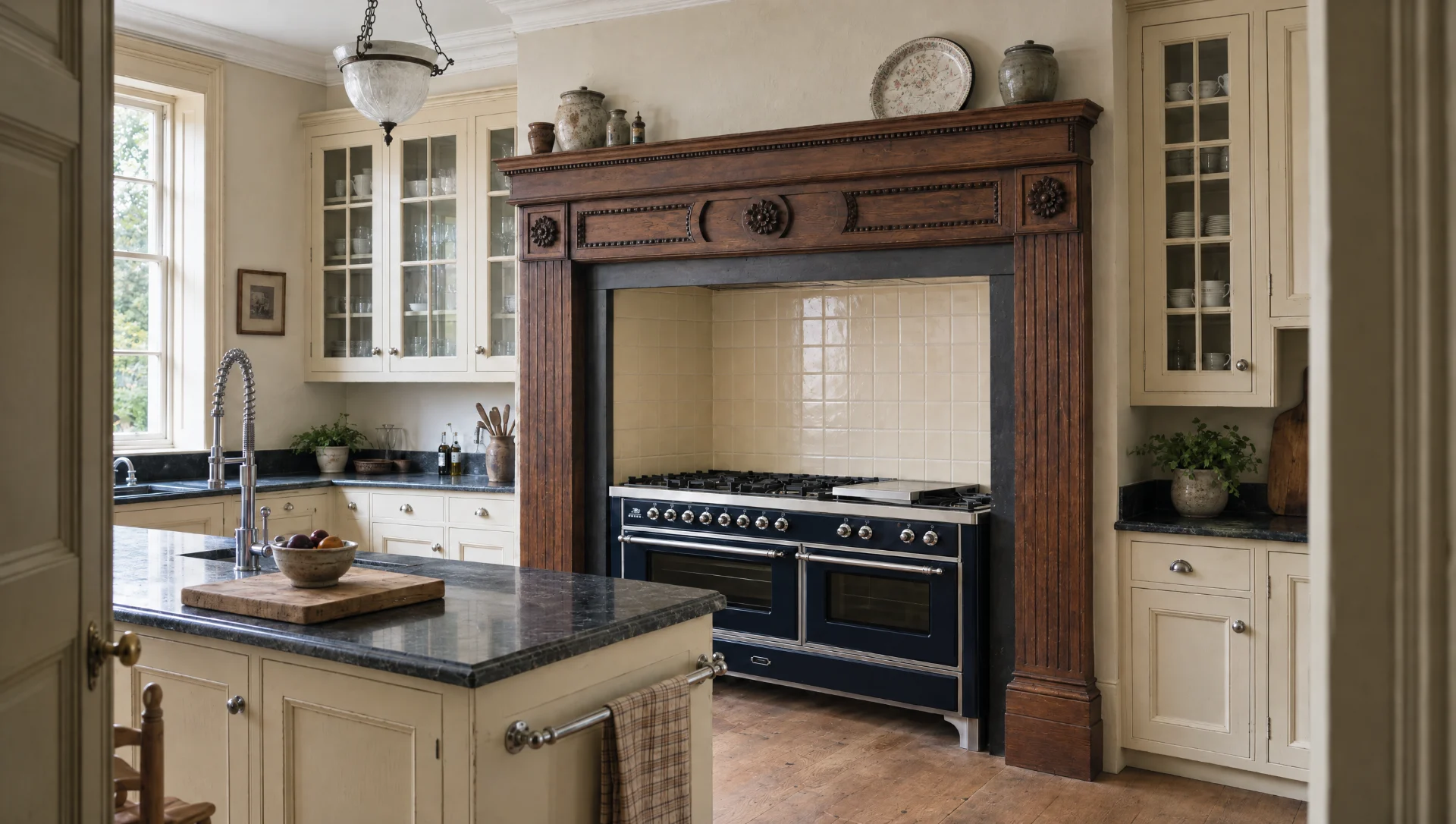
Before the clock starts
The telephone call, twenty minutes, no charge. Then either a workshop visit or straight to the £500 design consultation, which is two to three hours at your house with a laser, a tape and a pad.
Fifteen working days later you have the drawings: a 1:20 plan, elevations of every run, a hand-drawn perspective, an itemised specification and a fixed price valid for ninety days.
Then revisions. Two rounds are included and most clients use one and a half. This stage takes as long as it takes, and it is the correct place to spend time: a change here costs an evening, the same change in week nine costs a cabinet.
The clock starts at week zero, which is the day the design is signed off, the deposit is paid — 40 per cent — and we write your installation dates in the diary. We do not book a fitting slot before that, because a date without a deposit is a wish.
Weeks 1 to 6: nothing visible happens
Weeks 1 to 3. Timber is ordered and delivered, then stickered in the store to condition. We meter it before it is touched, and anything above 11 per cent moisture content stays on the sticks. This is the block of time clients find hardest, because their kitchen at this point is a stack of boards. It is also the block that decides whether the doors bind in three years.
Ironmongery is ordered in the same fortnight. Unlacquered brass and bronze from the good makers run 6 to 10 weeks, and hand-forged iron can be twelve. If your handles are the long pole we will tell you in week one, not week fifteen.
Setting out. Oliver and Paul make the rod — the full-size drawing on ply — and produce the cutting lists. Services drawings go out to your electrician and plumber at this point, eight weeks or more before we arrive, showing every socket, switch, waste, feed and appliance position with dimensions.
Weeks 4 to 6. Machining. Boards are ripped oversize, left, thicknessed, then moulded, morticed and tenoned. Panels are cut. This is the loud part and it is over quickly.
Weeks 6 to 15: the making
Weeks 6 to 11 are the benches. Face frames cramped and cleaned up. Carcasses assembled, backs housed in. Drawer boxes dovetailed. Doors hung, fitted, taken off, numbered on the top edge in pencil.
Weeks 10 to 15 are the finishing room, overlapping the tail of the bench work. Doors and frames prepared, knotted, primed twice, denibbed, topcoated twice. Two and a half to three weeks for a kitchen, and it cannot be compressed by adding people; the room only holds so many trestles and each coat needs its night.
Your colour must be signed off by week 8 at the latest. We make sample boards on your actual timber and you look at them in your actual room. Changing a colour after week 10 puts three weeks on the programme and we will say so plainly.
Week 13 or 14: dry assembly. We stand the kitchen up in the workshop, all of it, and look at it. Doors are checked against their apertures now that four coats of paint have added a couple of tenths to every face. Drawers are loaded. Hinges adjusted. You are welcome to come and see it, and about half of clients do. It is the best day.
The week before we arrive
We send a readiness note at week 11 and we telephone at week 13. The site needs to be genuinely ready, because two men and a van cannot wait.
Plastering finished and dry. Walls painted, at least in mist coat, and ideally finished — decorating around fitted joinery is slower and worse.
Floor down and protected. Fitting cabinets before the floor goes in means plinths that never sit right.
First fix electrics and plumbing complete, to our drawing, and tested. Heating on and the house at a normal temperature for at least a week beforehand, so the timber arrives into the conditions it will live in.
If your builder is running late, tell us at week 11 and not week 15. We can usually move you within the diary if we know early. If we arrive to a site that is not ready, the cost of the wasted days is real and we have to pass it on, which is a conversation neither of us enjoys.
Installation and afterwards
Three to seven days, two men, usually Steve and Jason plus whoever made the tricky part. Day one is the datum: a level line struck round the room with a laser at worktop height, and everything set to it. Then base cabinets, then tall units, then wall units, then scribing — plinths, end panels, cornices, pilasters, all cut in the room.
The stone is templated the day the cabinets are level, which is usually day three or four, and fitted 10 to 14 working days later. You will have a temporary ply deck in between. Timber worktops, being ours, go on during the fit.
Second fix follows the stone: sink and taps connected, appliances installed, handles fitted last so nothing gets caught on them.
Then we snag it ourselves, in writing, before you do. We would rather find the eleven small things than have you find three of them over six months.
Six months later we come back once, at no charge, and adjust. Doors settle, houses dry out, hinges want a quarter turn. It takes an afternoon and it is the visit that tells us whether we got it right.
Start a conversation
Tell us about the room, the house and roughly when you would like to be cooking in it. We will tell you honestly whether we are the right people for it.
Make an enquiry