Kitchens
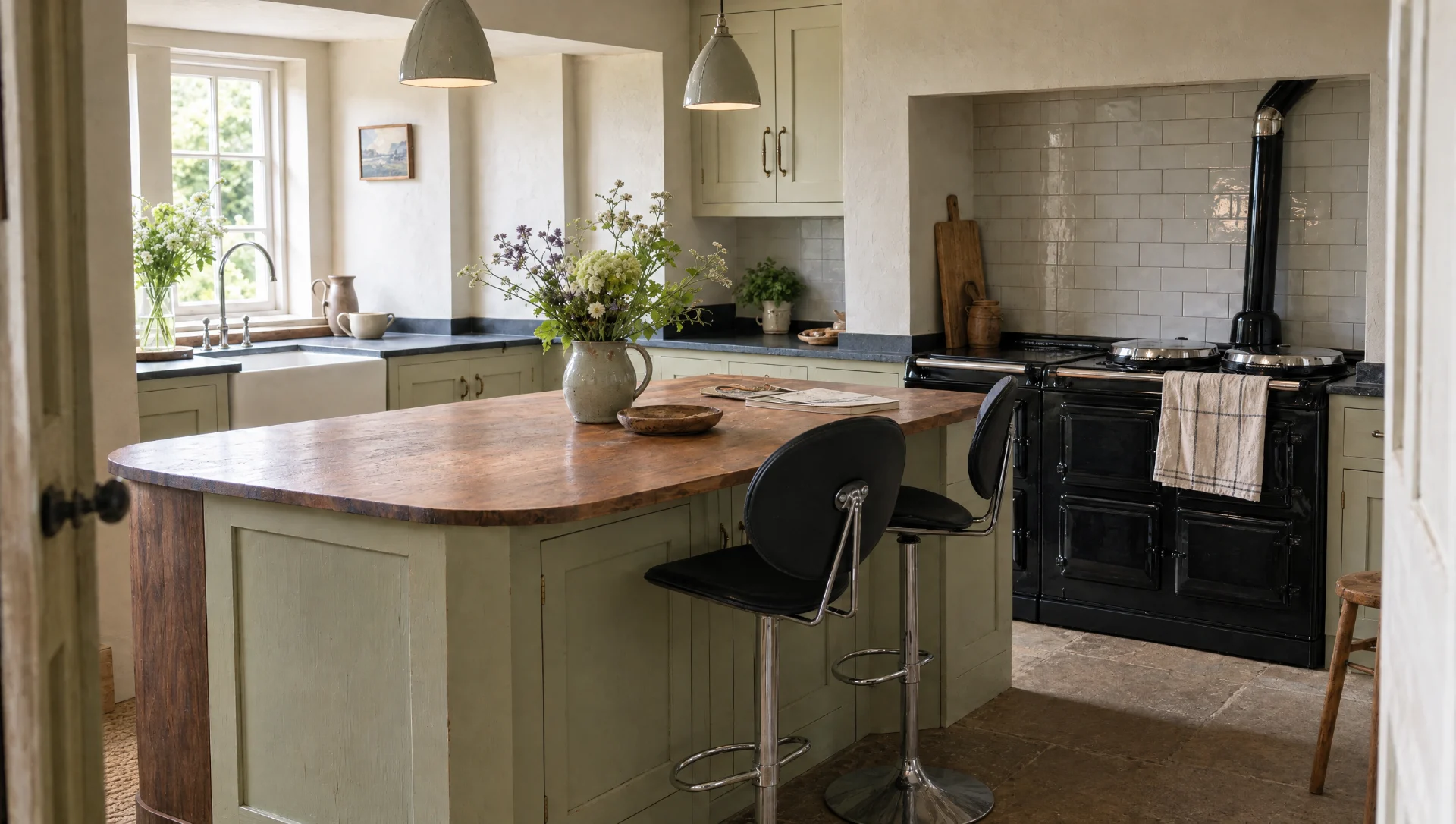
Seven ranges, all of them bespoke. The range decides the door and the ornament; everything behind it is built the same way.
The Suffolk
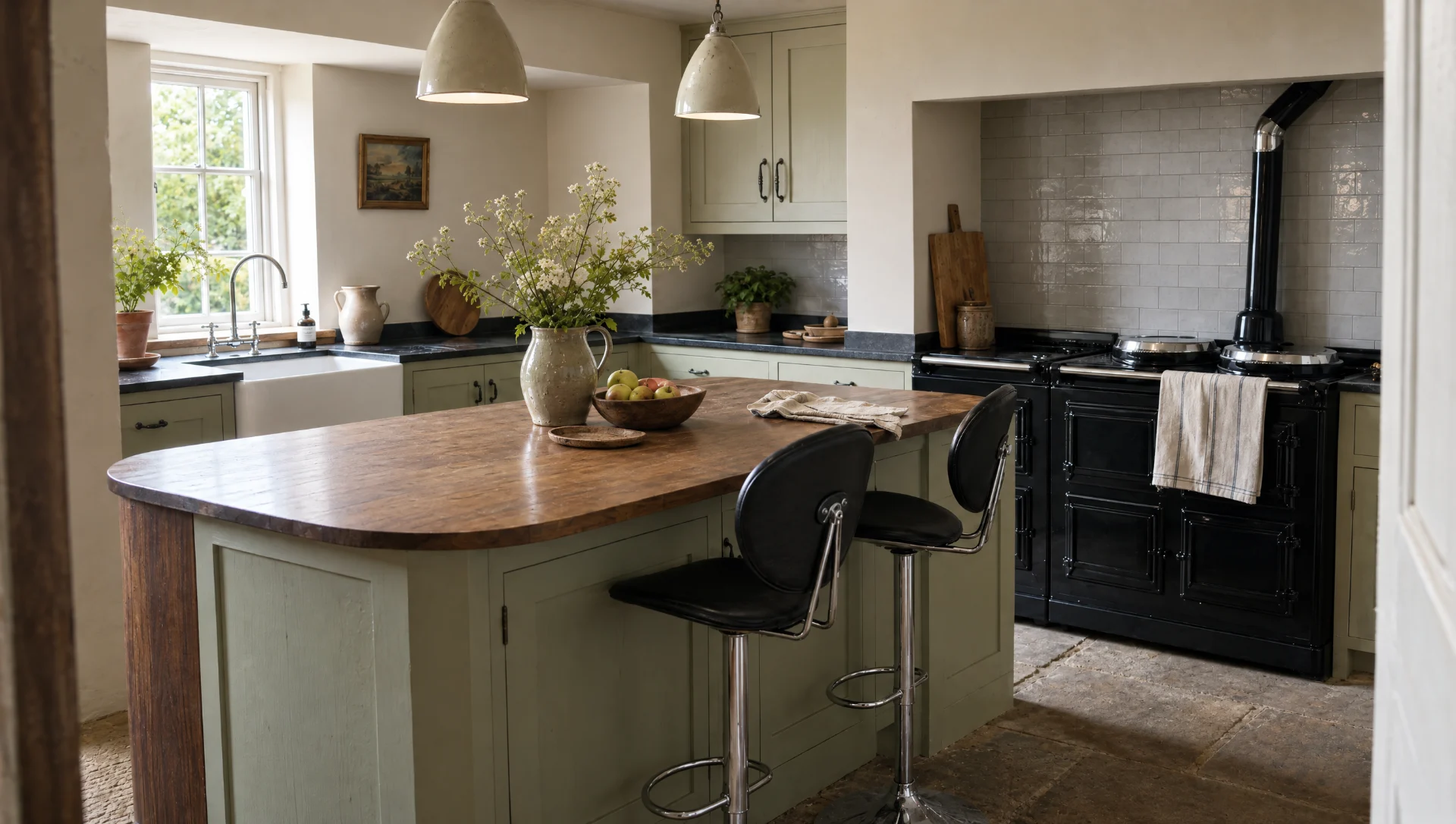
Our hand-painted in-frame shaker kitchen. A flat recessed panel, no mouldings, no carving — the quietest of the seven and the one we make most.
The Essex
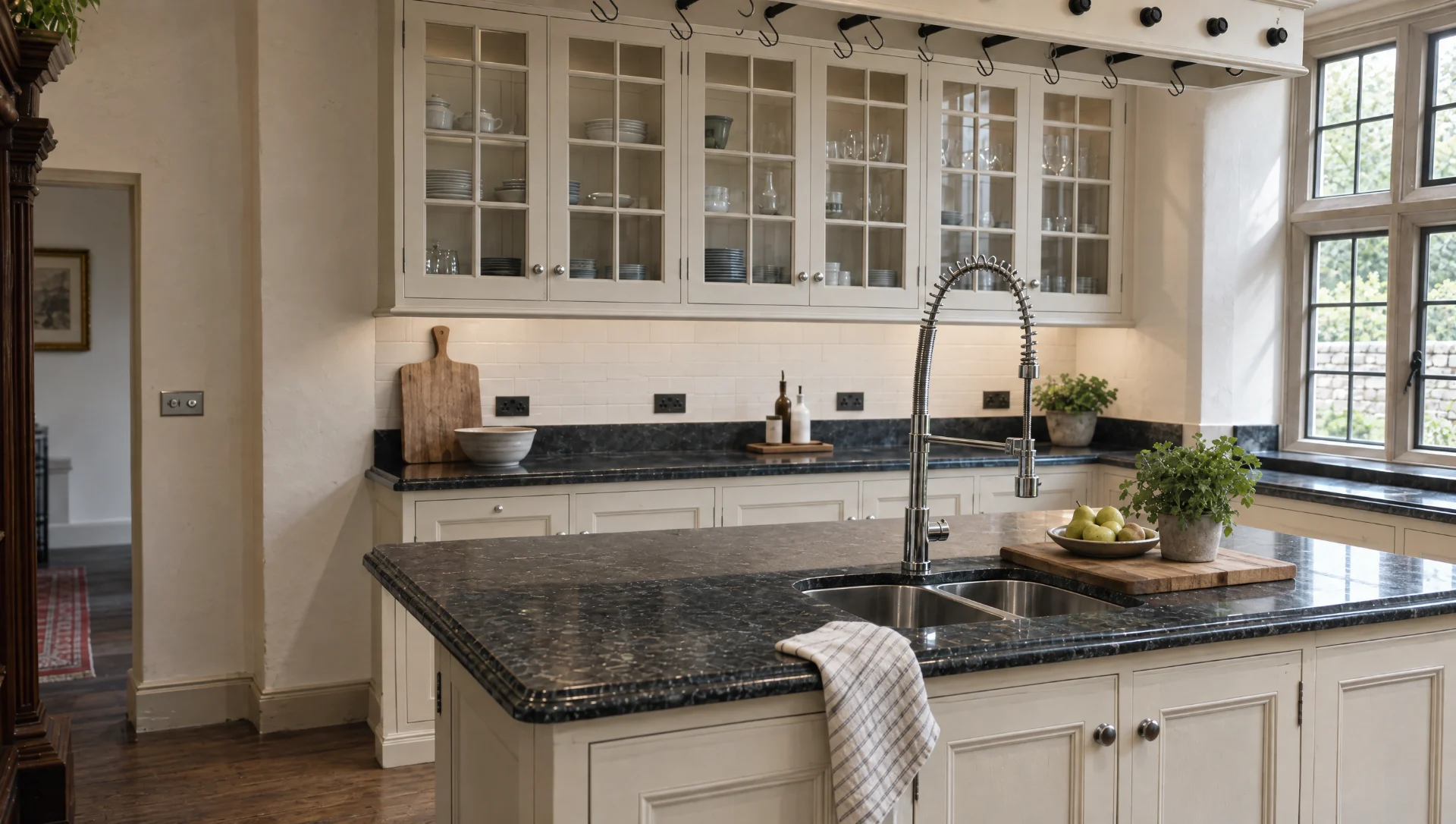
Run mouldings, astragal glazing and hand-cut carving. For houses that are already carrying that language and deserve to be matched rather than argued with.
The Scandi
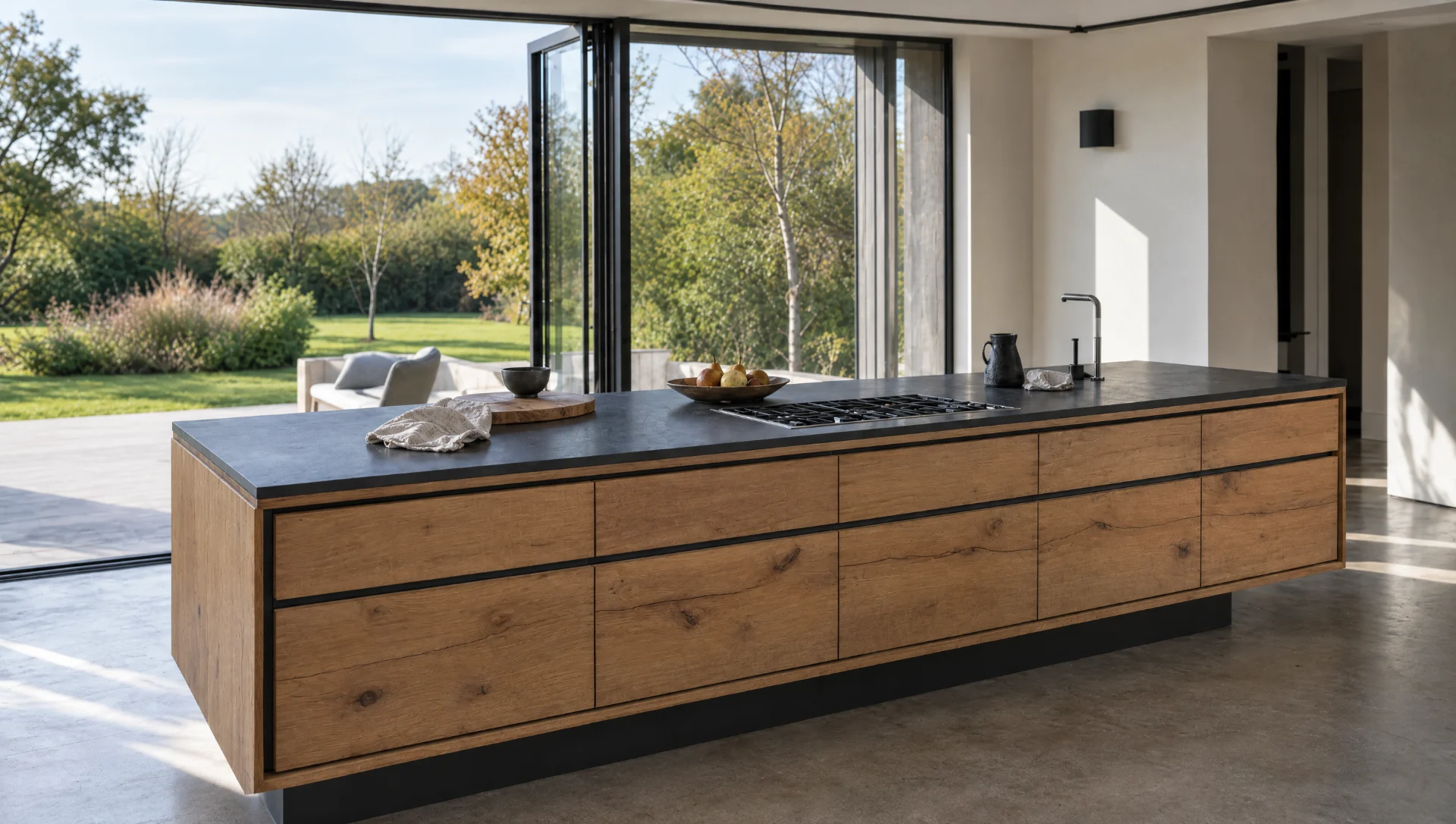
Handleless solid timber against matt black, finished in hard-wax oil. No frame, no moulding, no paint on the timber. The grain is the detail.
The Kensington
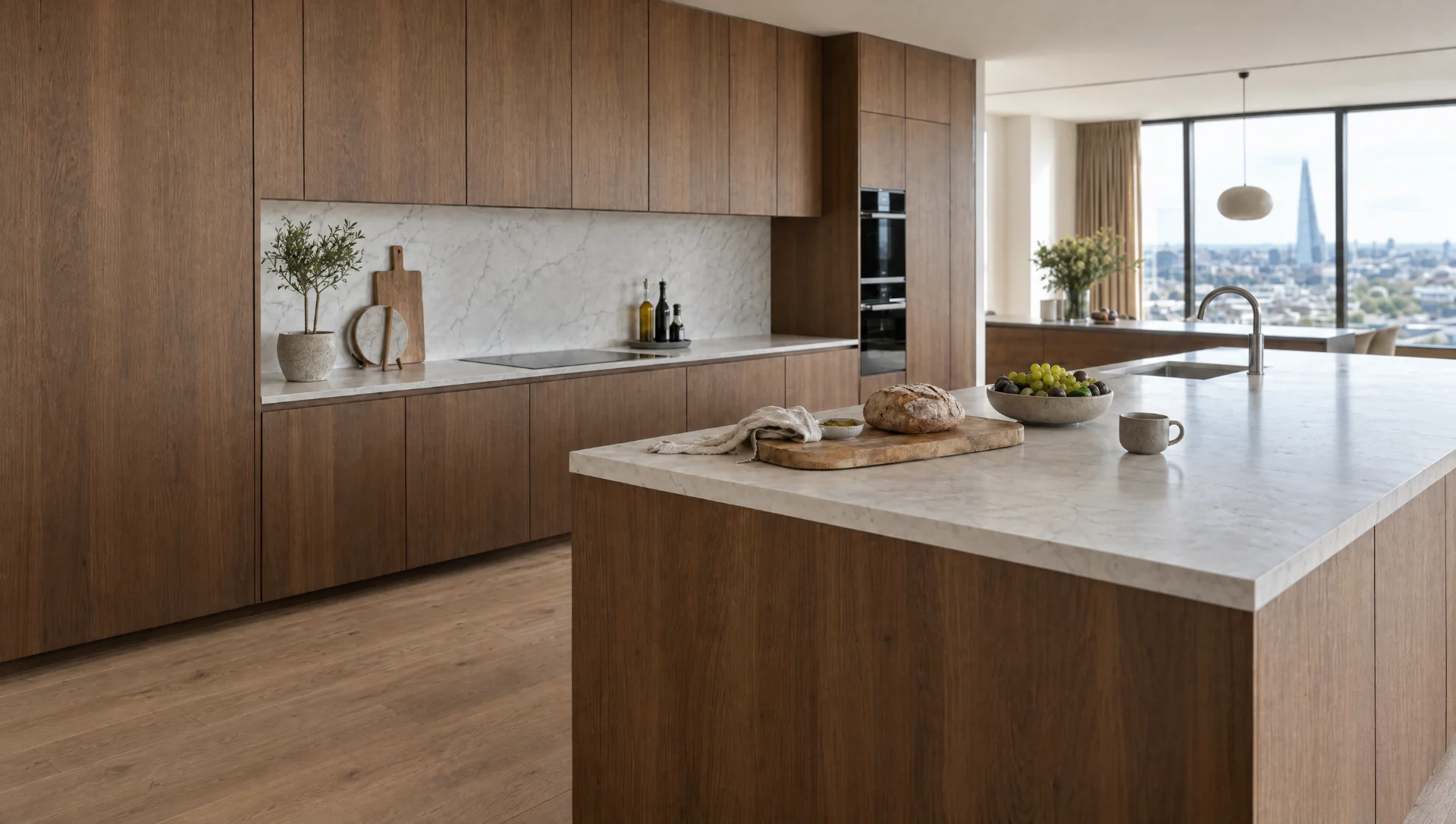
Sprayed and veneered, book-matched and sequenced. Flush fronts, integrated appliances, and a reveal that has to be right because there is no handle to look at instead.
The Farmhouse
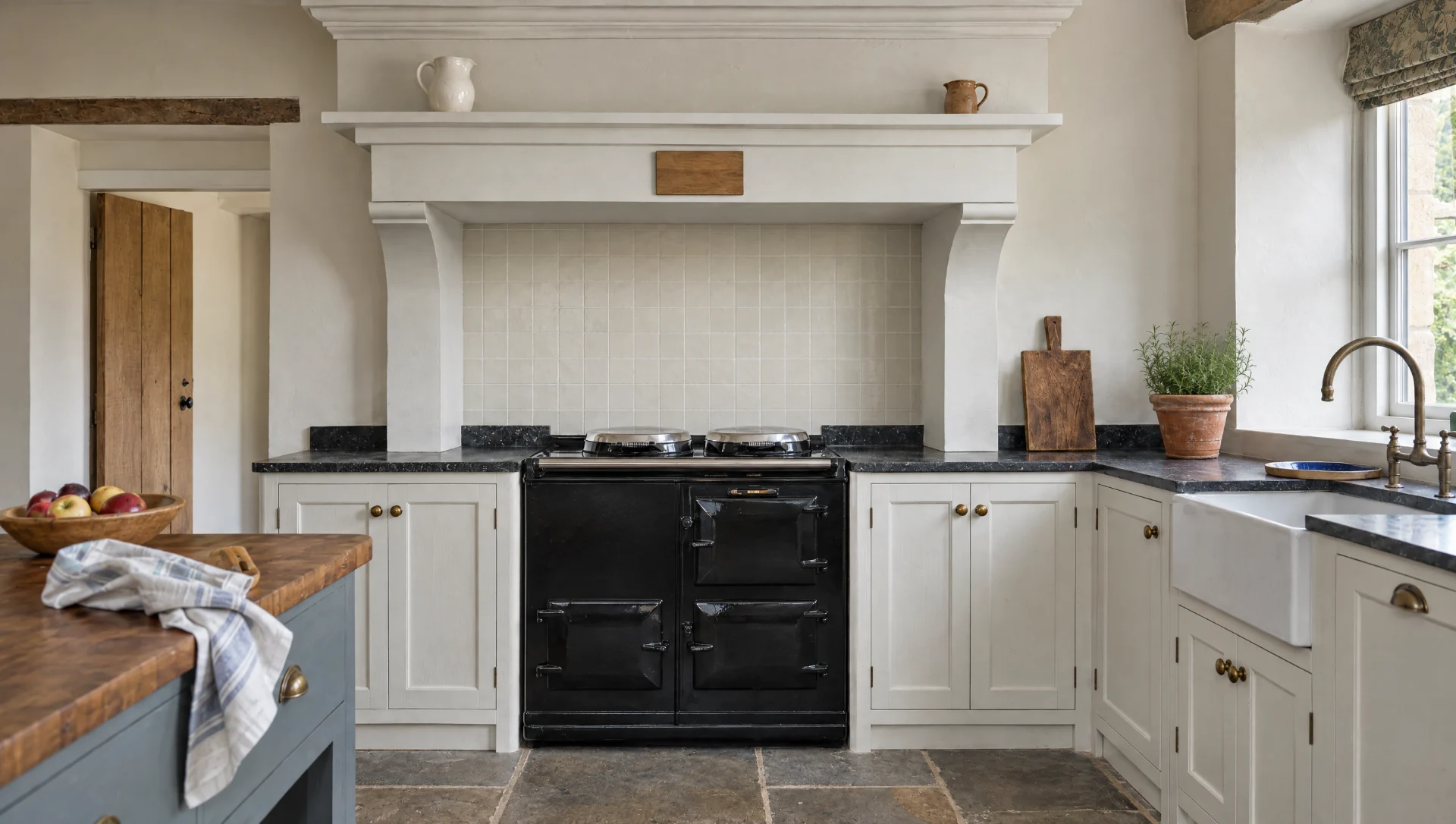
A working room. Painted in-frame, built around the range and the sink, and scribed to a building that was never square and never will be.
The Norfolk
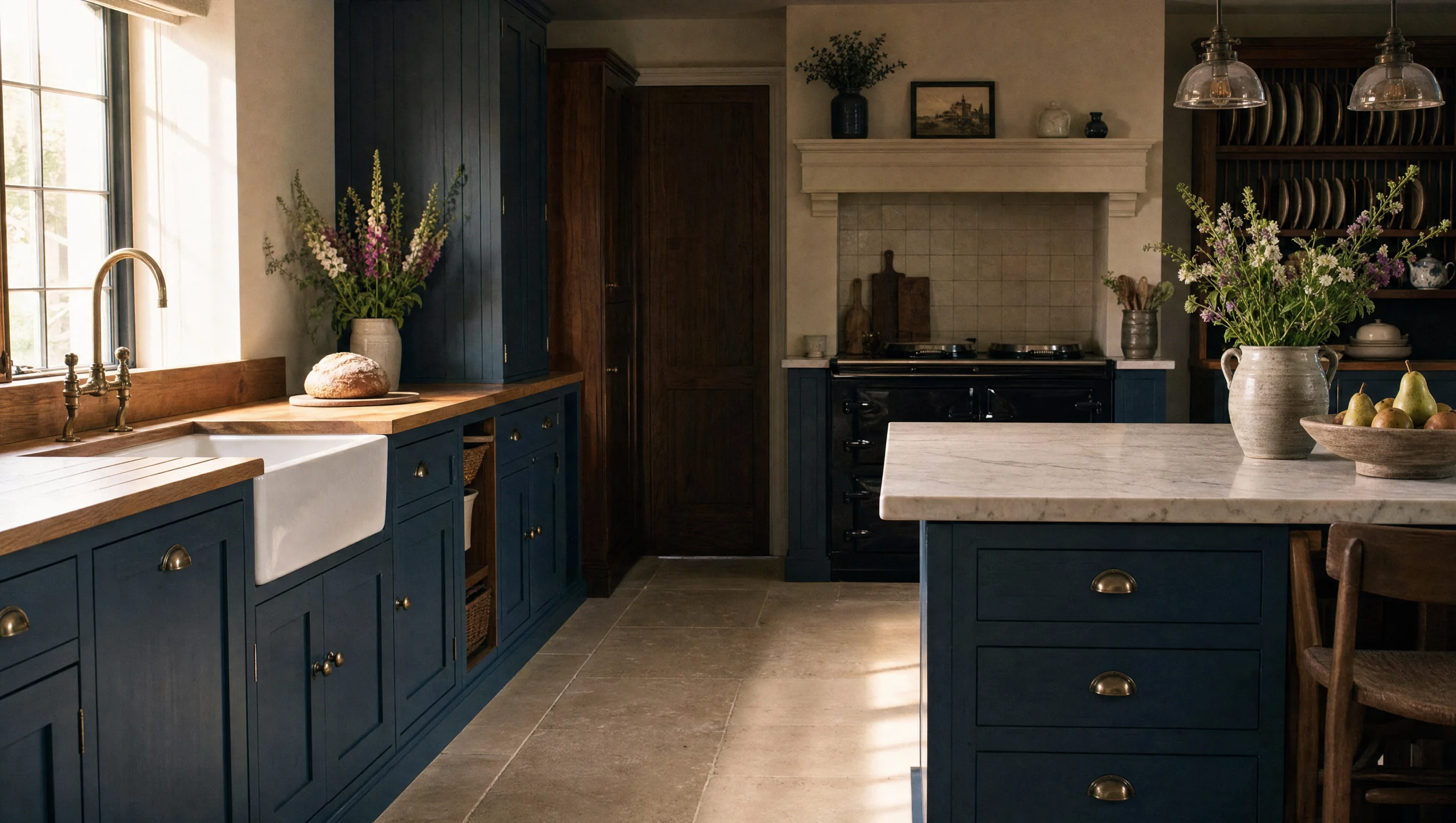
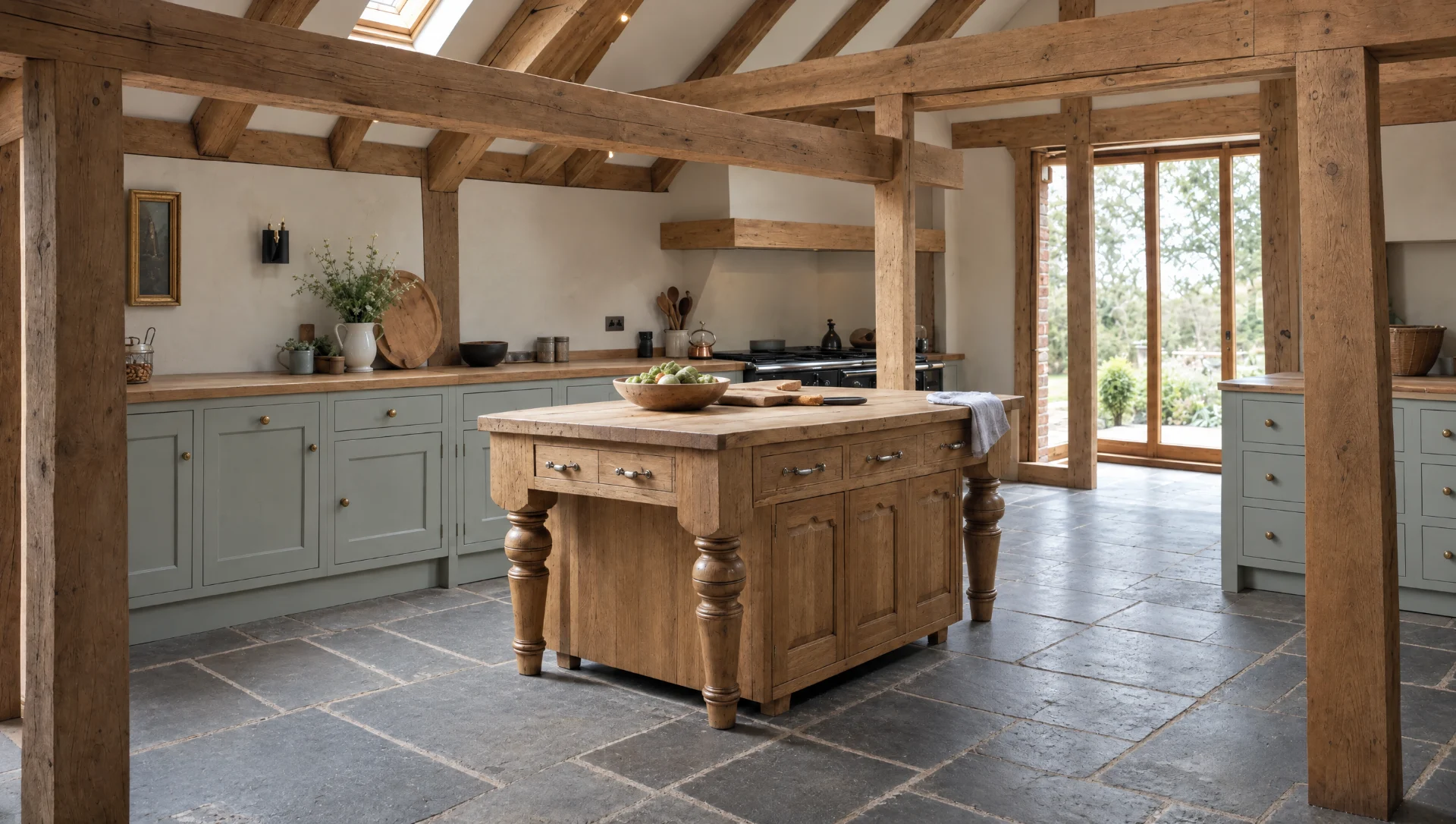
Painted in-frame in strong colour set against unpainted oak, with oiled oak on the runs and stone on the island. For rooms that want colour without losing the timber.
Modular & Freestanding
Made as furniture rather than as a fitted run. Islands, dressers, larder cupboards and sink stands that stand clear of the wall and can be moved.
What is the same in all seven
Cabinets are made from 18mm birch-faced plywood, glued and screwed, with solid timber face frames jointed with mortice and tenon. Backs are 9mm, housed in, not pinned on. Nothing is flat-packed and nothing arrives here as a carcass with someone else’s label on it.
Drawer boxes are solid oak, 16mm sides, through-dovetailed front and back, running on full-extension soft-close runners rated at 40kg. A pan drawer 900mm wide will hold a Le Creuset collection and still shut with one finger.
Every commission is set out full size on a rod before machining. Every kitchen is finished in our own finishing room and fitted by the people who made it.
So the choice between ranges is not a choice between good and better. It is a choice about the face of the cabinet, the timber underneath it, and the way light lands on it.
The Suffolk
In-frame, hand-painted, with a flat or lightly bevelled panel and no applied moulding. Doors and frames in tulipwood, with maple for narrow sections and anything turned. Four coats, brushed by hand.
The Suffolk is the quiet one. It sits well in a Georgian rectory and equally well in a plastered extension where the joinery is meant to defer to the window. If you cannot decide, this is usually the right answer.
The Essex
In-frame with carved and moulded detail: ovolo and ogee profiles, bolection panels, reeded pilasters, dentil and cavetto cornices. The profiles are cut here on our own spindle moulder, on blocks ground to sections taken from real houses, which means we can match a moulding that already exists in your hall.
The Essex belongs in a house that is already carrying that language. In a plain room it will look like a costume.
The Scandi
Solid European oak, handle-less, with routed finger pulls and a hard-wax oil finish. Doors are slab or lightly framed, sequenced across a run so the grain reads left to right.
It is warm, it is quiet, and it takes a knock better than any painted finish because the repair is a scuff of abrasive and a wipe of oil rather than a visit from a painter. It also moves and darkens. Both of those are the point.
The Kensington
Sprayed and veneered. Doors are veneered MDF or lippped ply, book-matched and sequenced across the elevation, sprayed in two-pack lacquer to a flat, hard, even film with no brush texture at all.
This is the range for tall, wide, uninterrupted elevations and for rooms where the architecture is doing the talking. It is also the least forgiving: a flat sprayed surface shows every undulation, which is why it costs what it costs.
The Farmhouse
Painted in-frame, plain panels, and the whole elevation built around the range in a mantel rather than a canopy. A fireclay sink, a plate shelf that gets used, and every plinth scribed individually to a floor that was laid on earth and lime.
It is the least fashionable of the seven and the one that dates the slowest. Choose it if the kitchen is the room the house actually lives in.
Modular & Freestanding
Kitchen furniture made as separate pieces — an island on turned legs, a dresser, a larder cupboard, a prep table — each finished on all six sides and standing clear of the wall.
It is the right answer in a building with an exposed frame or one that is still moving, and the only one that goes with you when you leave. Most commissions in this range are a fitted perimeter with one or two freestanding pieces against it.
How to choose
Start with the house, not the kitchen. Stand in the doorway of the room next door and look at what the joinery is doing there. A kitchen that argues with the hall is a kitchen you will keep noticing.
Then think about the light. Hand-painted work has a faint brush texture that comes alive in raking north light and disappears in flat downlight. A sprayed finish is the reverse: even and calm in flat light, unforgiving of any wall it has to meet.
Then be honest about wear. Small children, dogs and a lot of cooking are hardest on painted door edges near the sink and the bin. Oil is easier to live with; paint is easier to change colour.
You can mix, and many commissions do: The Suffolk through the main room with The Scandi on the island, or The Kensington tall units with a moulded cornice to tie them to the rest of the house. Everything is made on the same benches, so mixing costs nothing except a longer conversation.
Our clients’ kitchens are private, and most ask that they are not photographed or published. The images and walkthrough films here are visualisations rather than photographs of a client’s house, built from our own workshop drawings and our own photographs of the work on site and finished with AI. None of it is stock imagery and none of it is somebody else’s work. If you would like to see drawings, samples and references for completed work, we will show you in person — visits to the Mickfield workshop are by appointment.
undefined
| The Suffolk | The Essex | The Scandi | The Kensington | The Farmhouse | Modular & Freestanding | |
|---|---|---|---|---|---|---|
| Door | In-frame, flat or bevelled panel, no applied moulding | In-frame, carved and moulded, historic profiles cut on our own blocks | Handle-less slab or lightly framed, routed finger pull | Flat sprayed, veneered, book-matched and sequenced | In-frame, plain recessed panel. Cup handles and turned knobs. | Freestanding pieces — panelled, framed and finished on all four sides. |
| Timber | Tulipwood, maple for narrow sections and turnings | Tulipwood and maple; oak or walnut where the house calls for it | Solid European oak throughout, including drawer fronts | Veneered MDF and lipped ply on solid frames; oak, walnut or eucalyptus veneer | Tulipwood or maple for the painted work; oak where timber shows. | Solid oak throughout, with painted carcasses where a piece is painted. |
| Finish | Hand-brushed paint, four coats, any colour matched | Hand-brushed paint, four coats; moulding picked out in a second tone if wanted | Hard-wax oil, three coats, re-oiled by you every two to three years | Two-pack sprayed lacquer, 30–35 microns, matt, satin or gloss | Hand-brushed, four coats, cut in on site after fitting. | Hard-wax oil on the oak, hand-brushed paint on the painted pieces. |
| Handles | Ironmongery to choose: unlacquered brass, bronze, iron, nickel | Cup handles, knobs and latches, usually unlacquered brass or iron | None. Routed pulls, integrated rails | None, or a machined recess. Push-latch where a run must stay unbroken | Cup handles, turned knobs, bin pulls. Unlacquered brass or pewter. | Turned knobs and cup handles, or none at all on a plain drawer. |
| Best for | Almost any house. Georgian, Victorian, farmhouse, new build | Houses with existing moulded joinery, listed interiors, formal rooms | Rooms with strong daylight, families, boot rooms and sculleries, anyone who dislikes touching up paint | Tall uninterrupted elevations, modern architecture, rooms where the joinery should read as a plane | Farmhouses, rectories and barn conversions with a range cooker. | Barns, timber-framed and listed interiors, and anyone who wants to take it with them. |
| Not for you if | You want the joinery to be the loudest thing in the room | The house has no moulded language of its own — it will read as costume | You want a colour, or you want a surface that never changes | You want visible handwork, or your walls and ceilings are too far out of true to meet a flat plane | You want the kitchen to disappear into the wall. | Storage is tight — freestanding pieces waste the corners. |
Start a conversation
Tell us about the room, the house and roughly when you would like to be cooking in it. We will tell you honestly whether we are the right people for it.
Make an enquiry